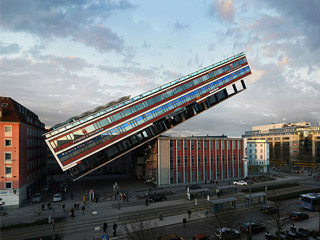
In 2013 Enrich produced NHDK, a series of 88 manipulated photographs - one for each piano key classical - of the Deutscher Kaiser hotel in Munich. The images, which all display the building from the same angle, imagine it variously with parts rotated, duplicated, removed and floating in the sky.
I find beautiful to connect two different disciplines, such as digital photography and graphic arts with piano. —Victor Enrich.
Victor Enrich (Spain, 1976). A catalan artist and a lover of nature, literature and architecture. Since childhood has been dedicated through various techniques to create images of fictional scenarios, always linking cities and architecture. Enrich currently dedicated exclusively to the development of his art, which is inseparably associated with his other great passion: traveling. Their work is highly valued abroad and he has succeeded in countries like Israel, where he has made several exhibitions.
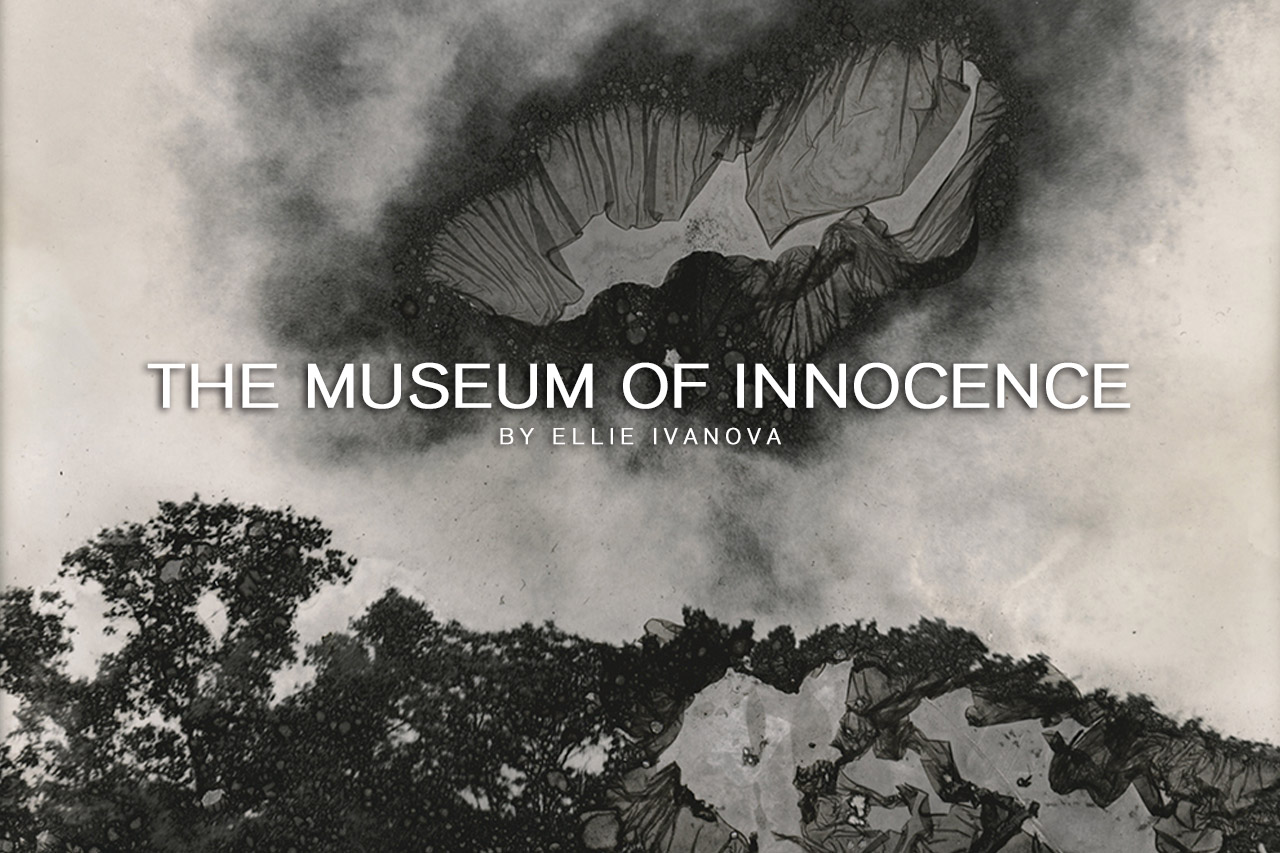
The Museum of Innocence
Written by Ellie Ivanova
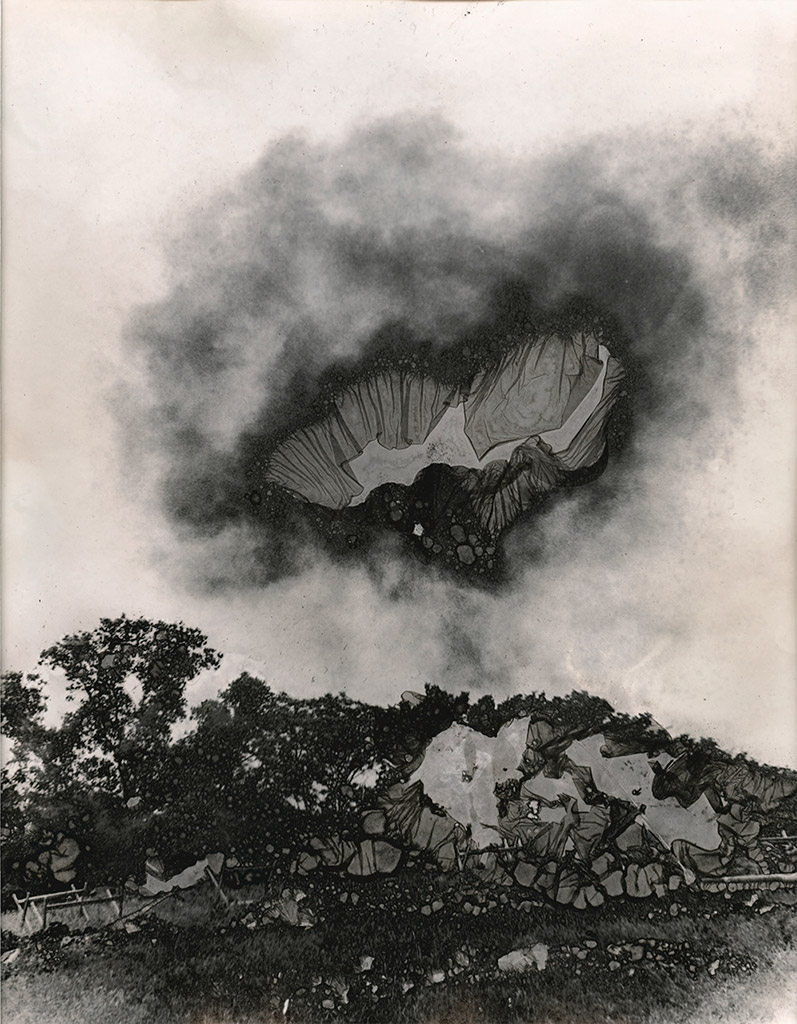
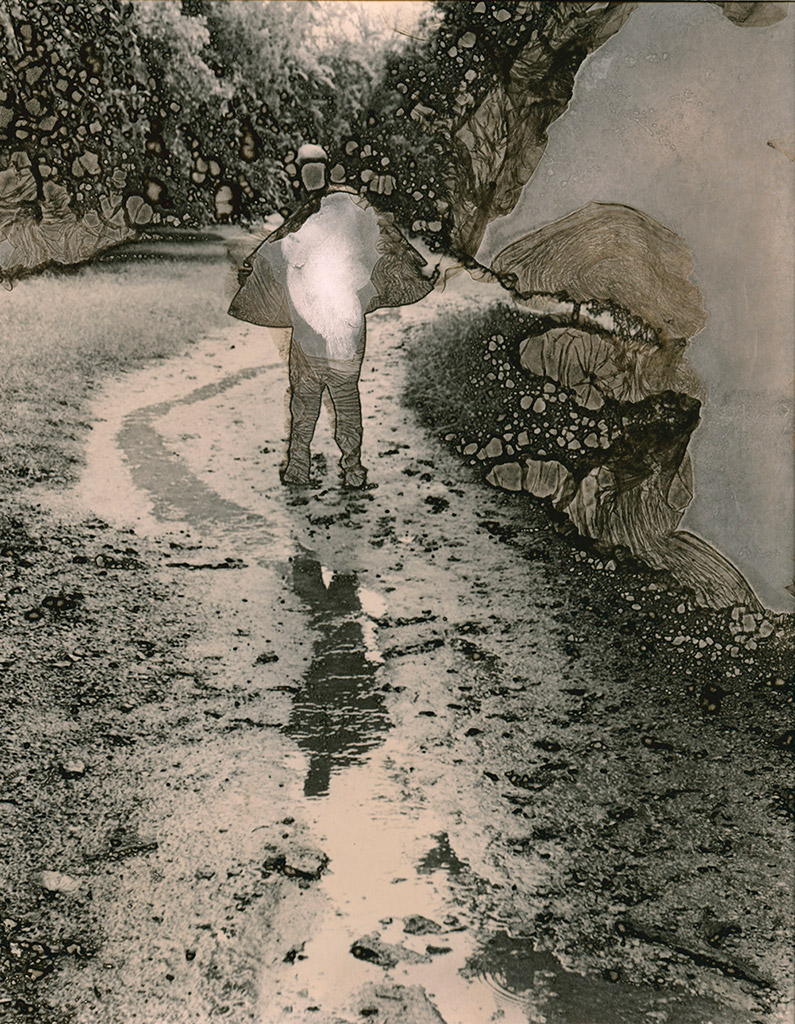
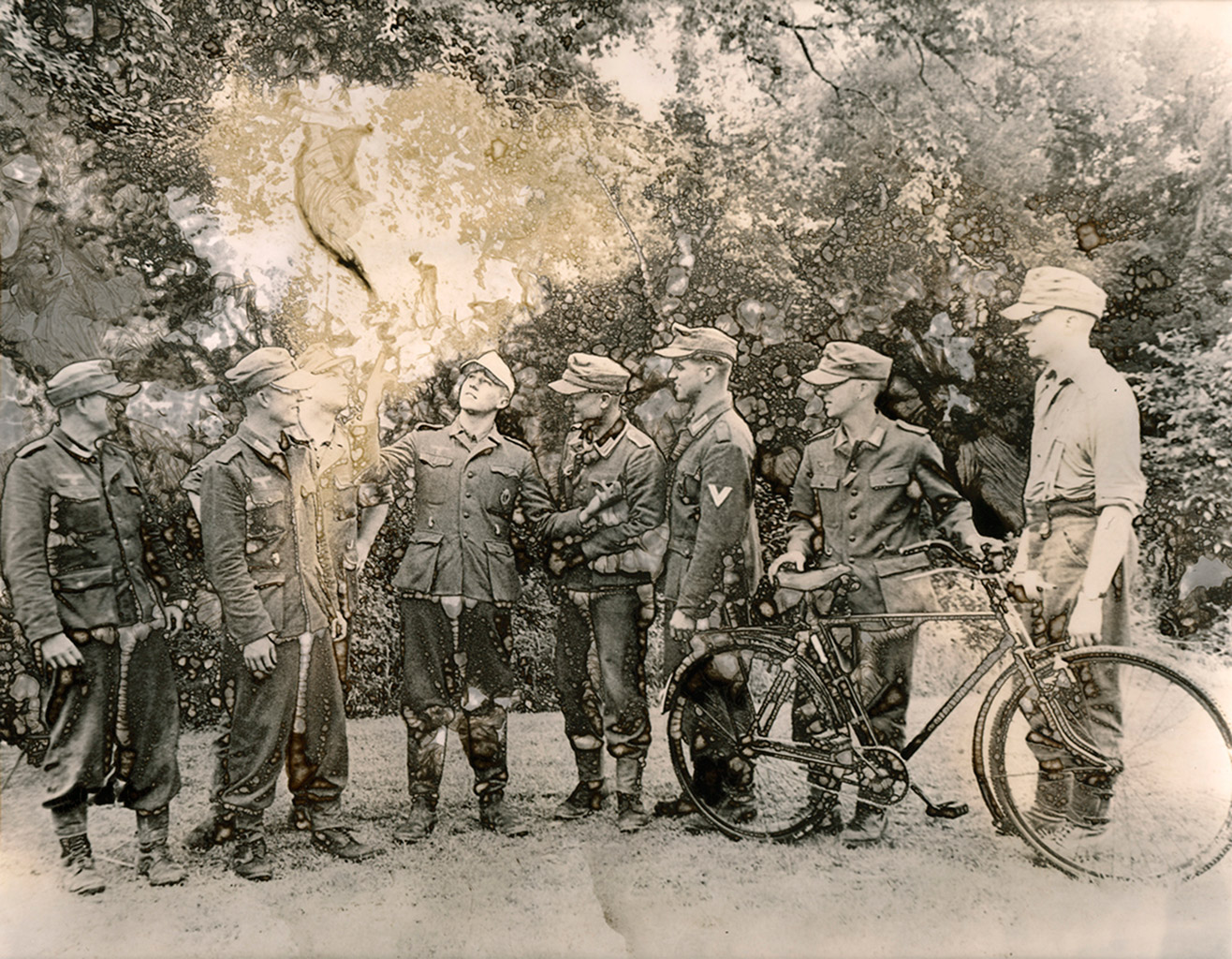
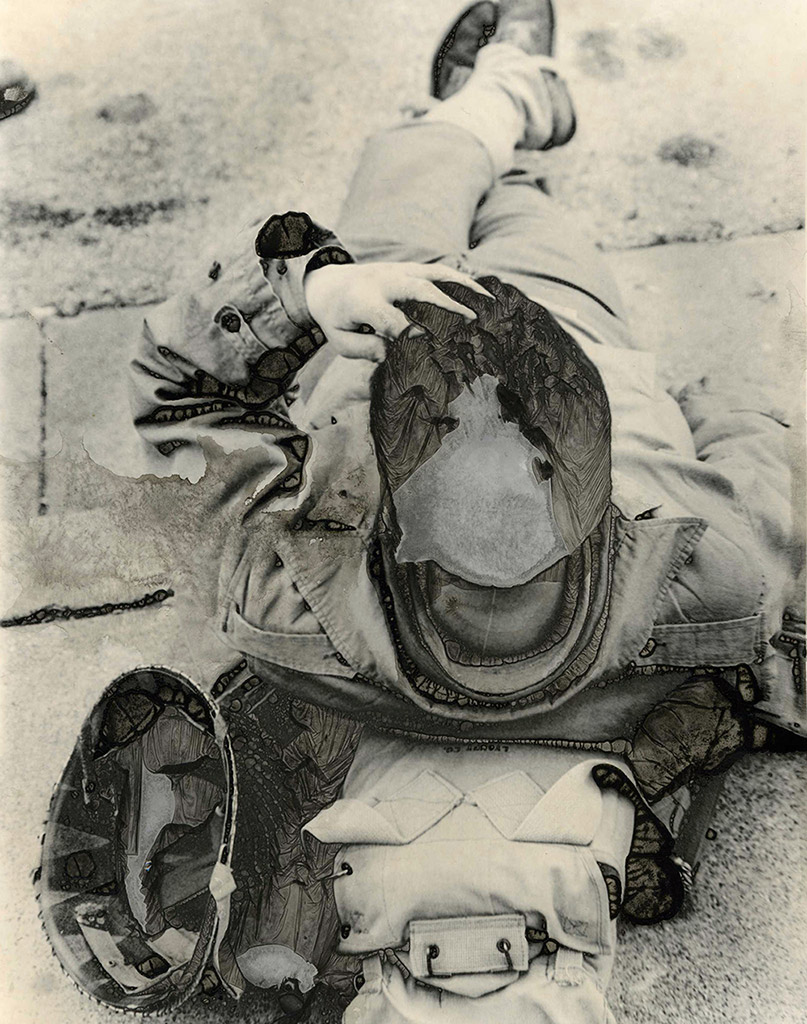
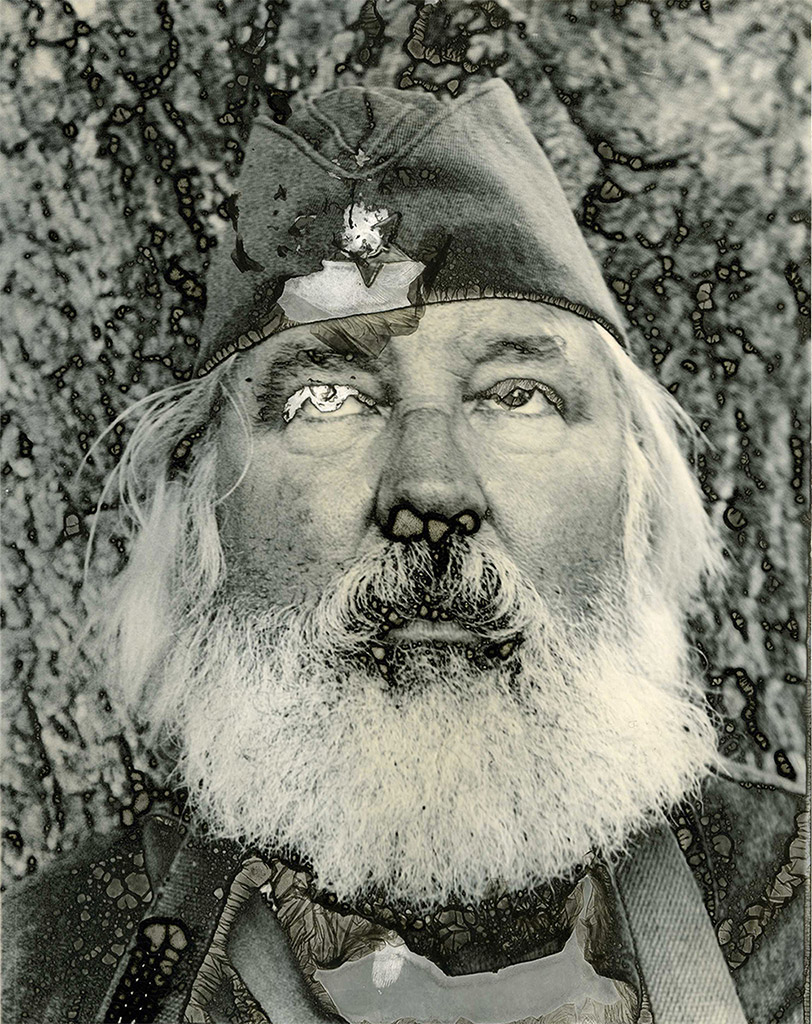
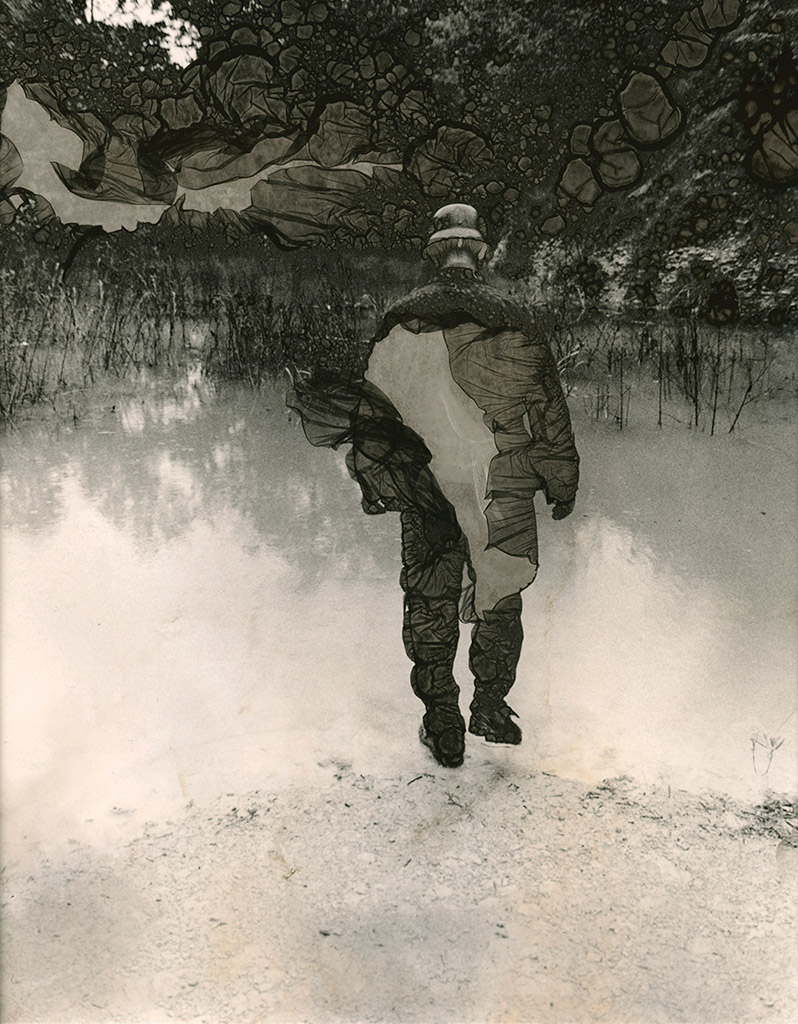
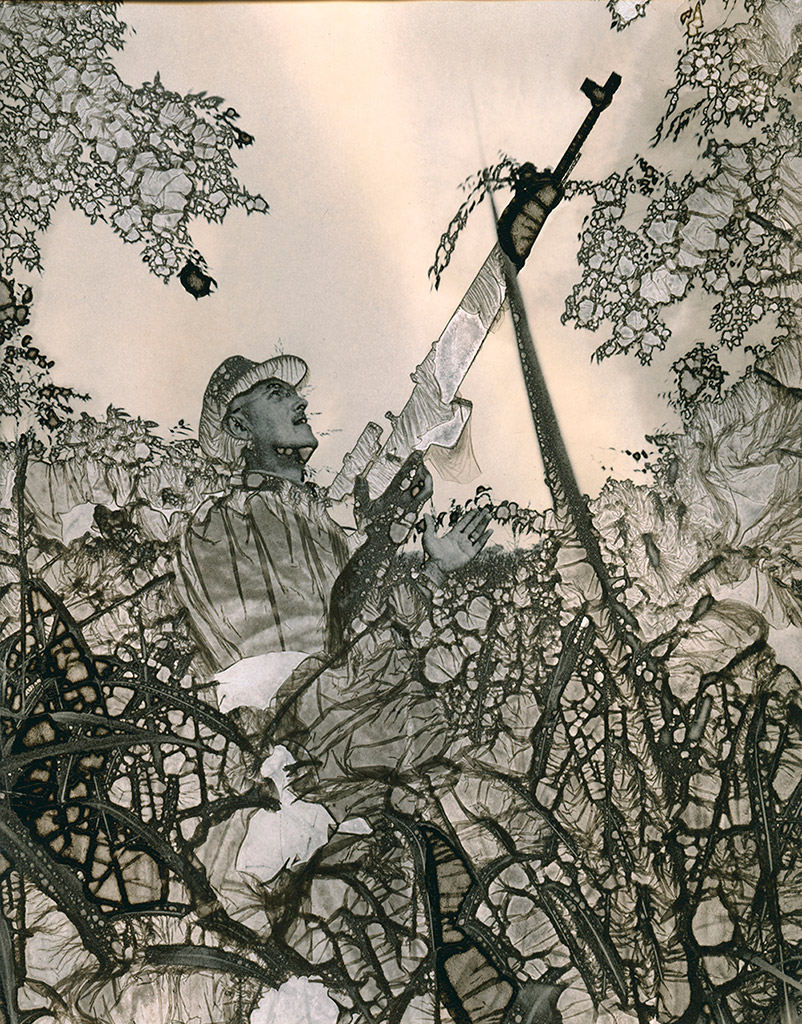
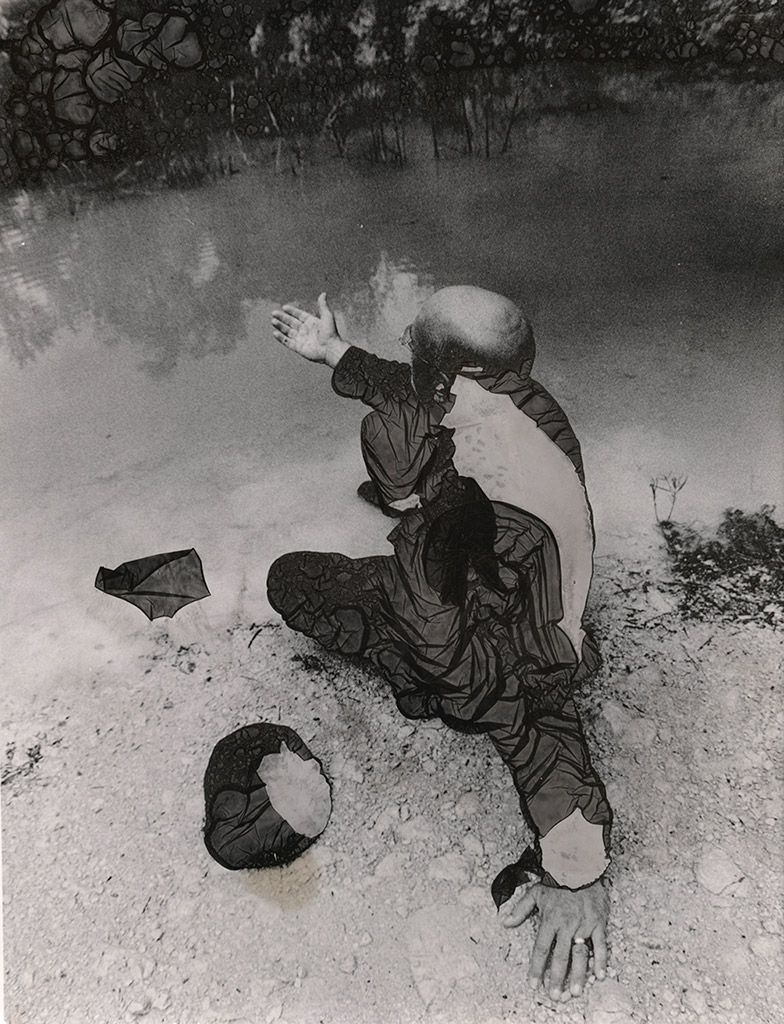
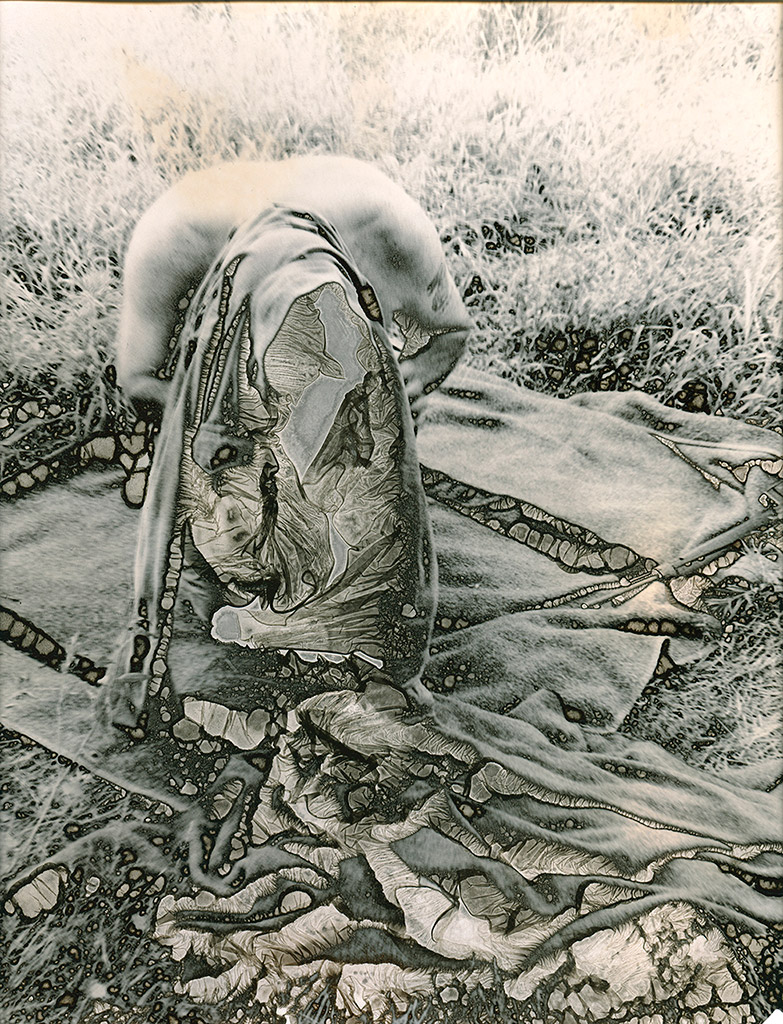
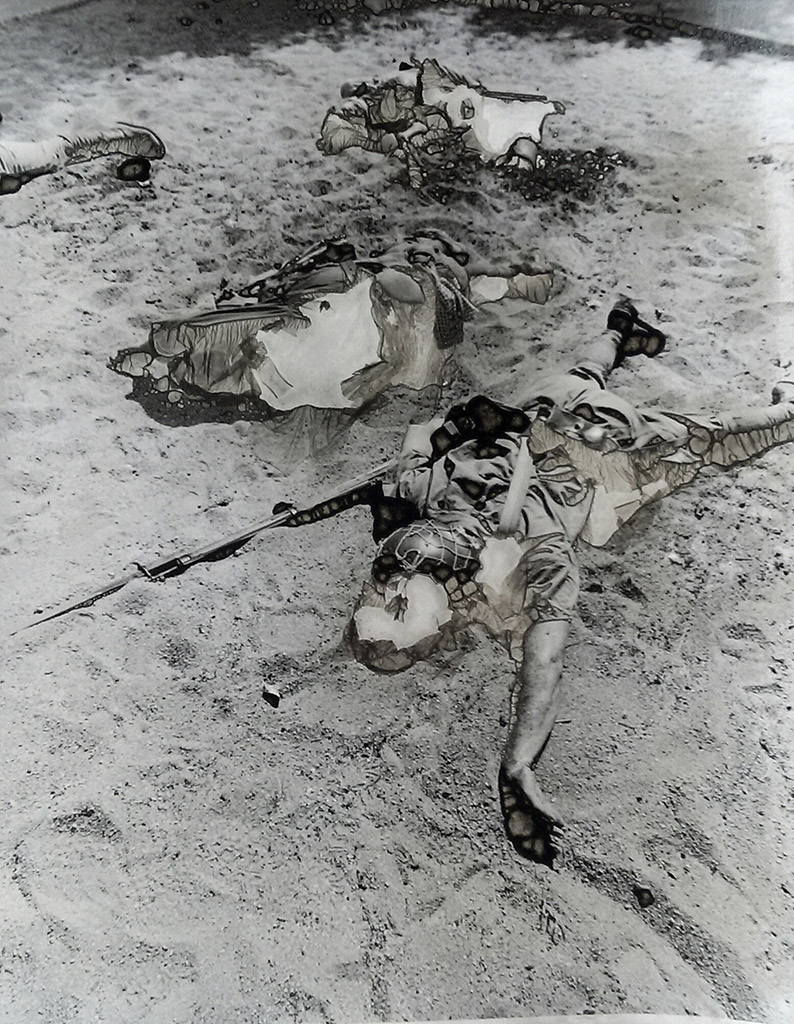
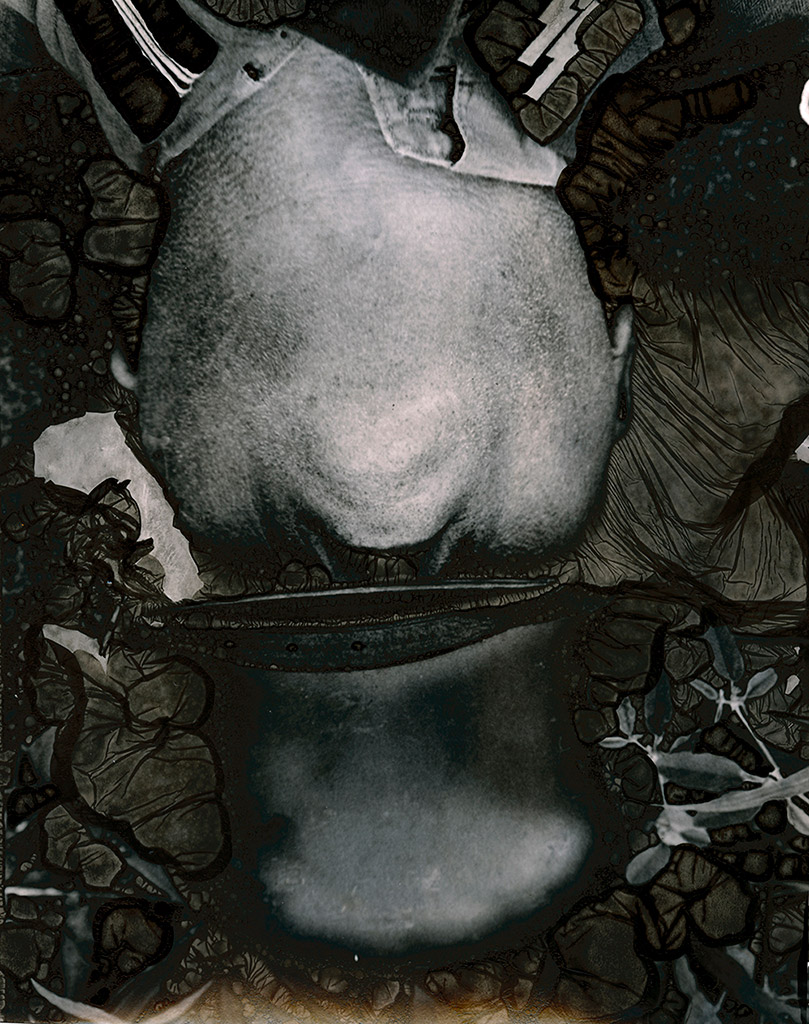
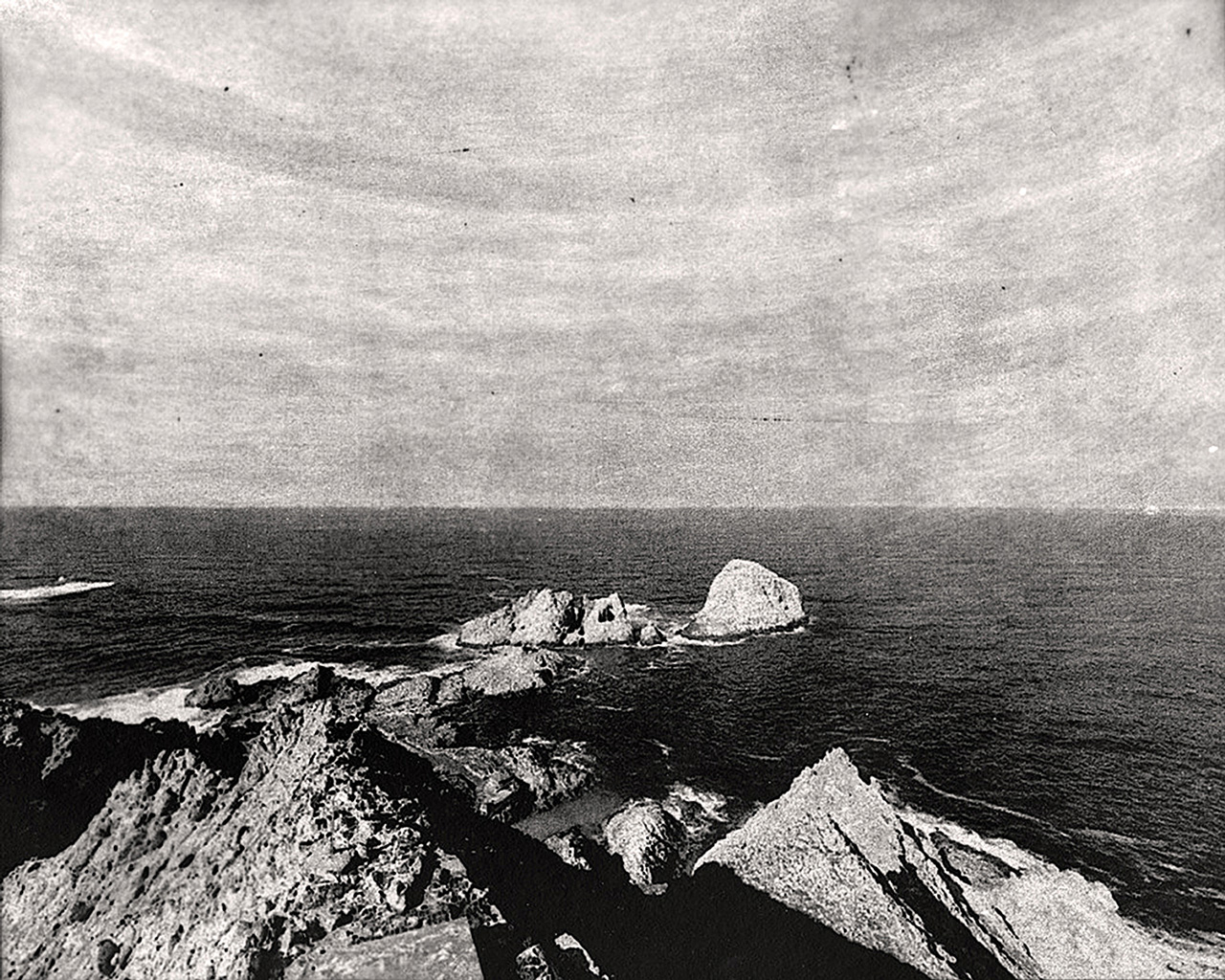
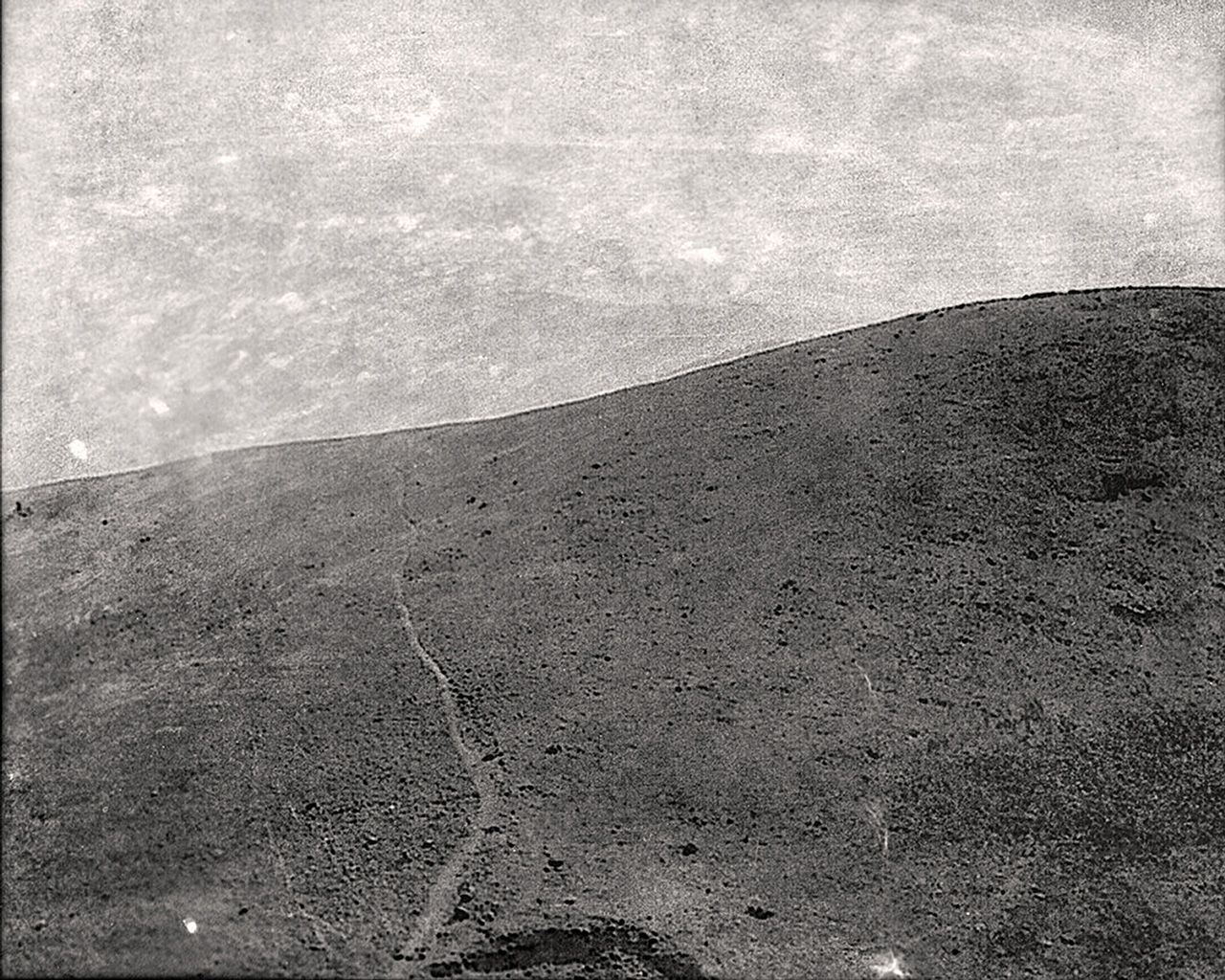
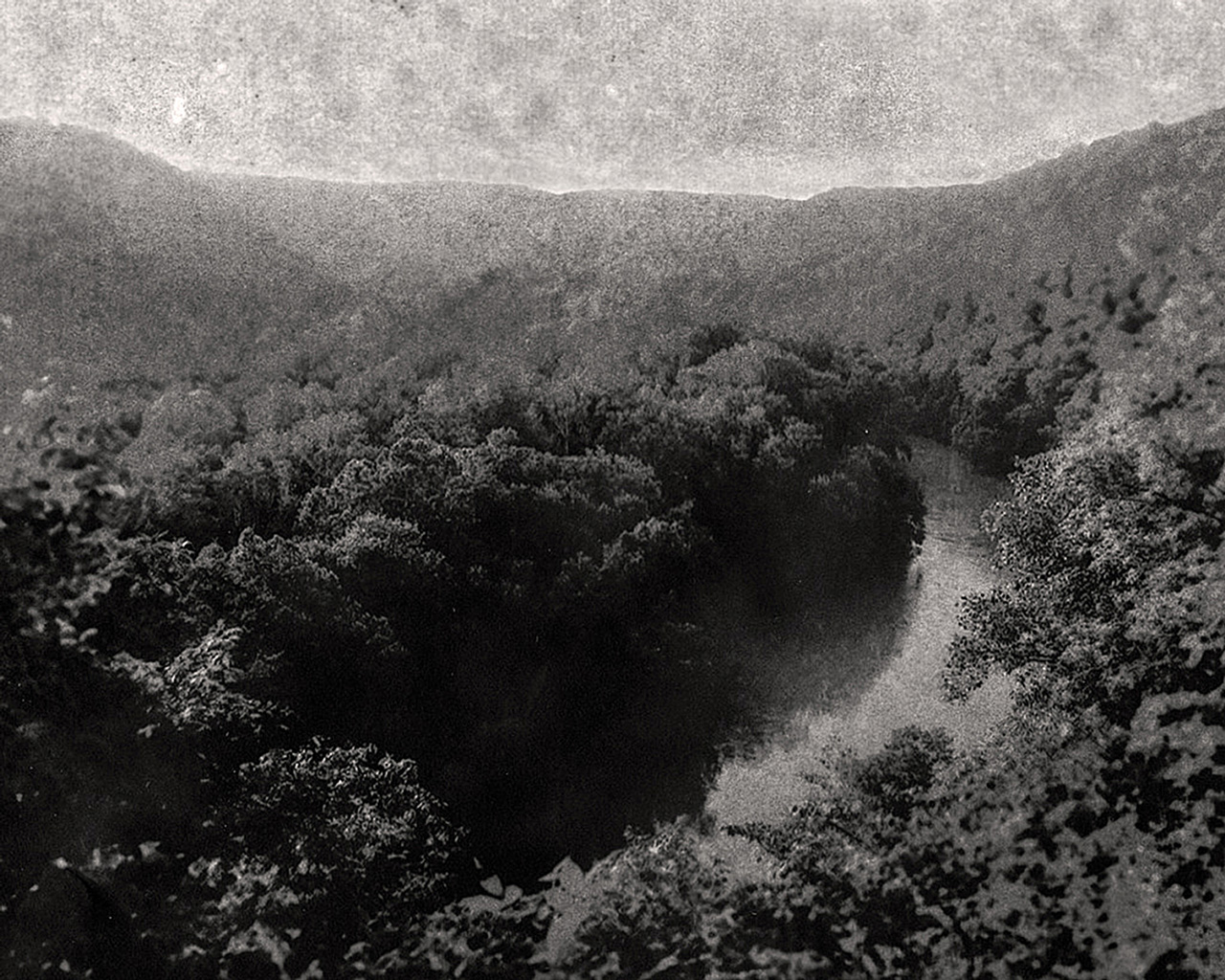
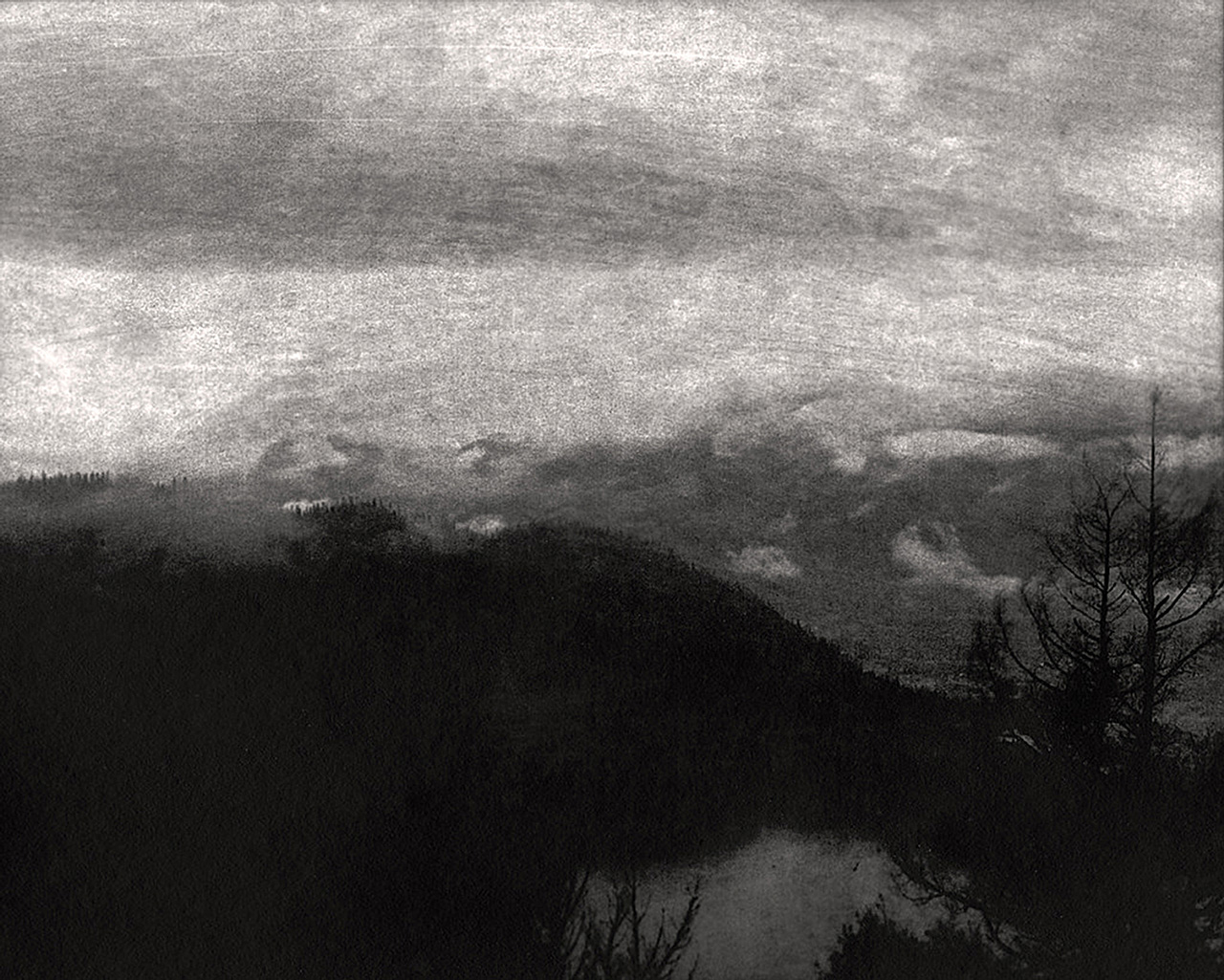
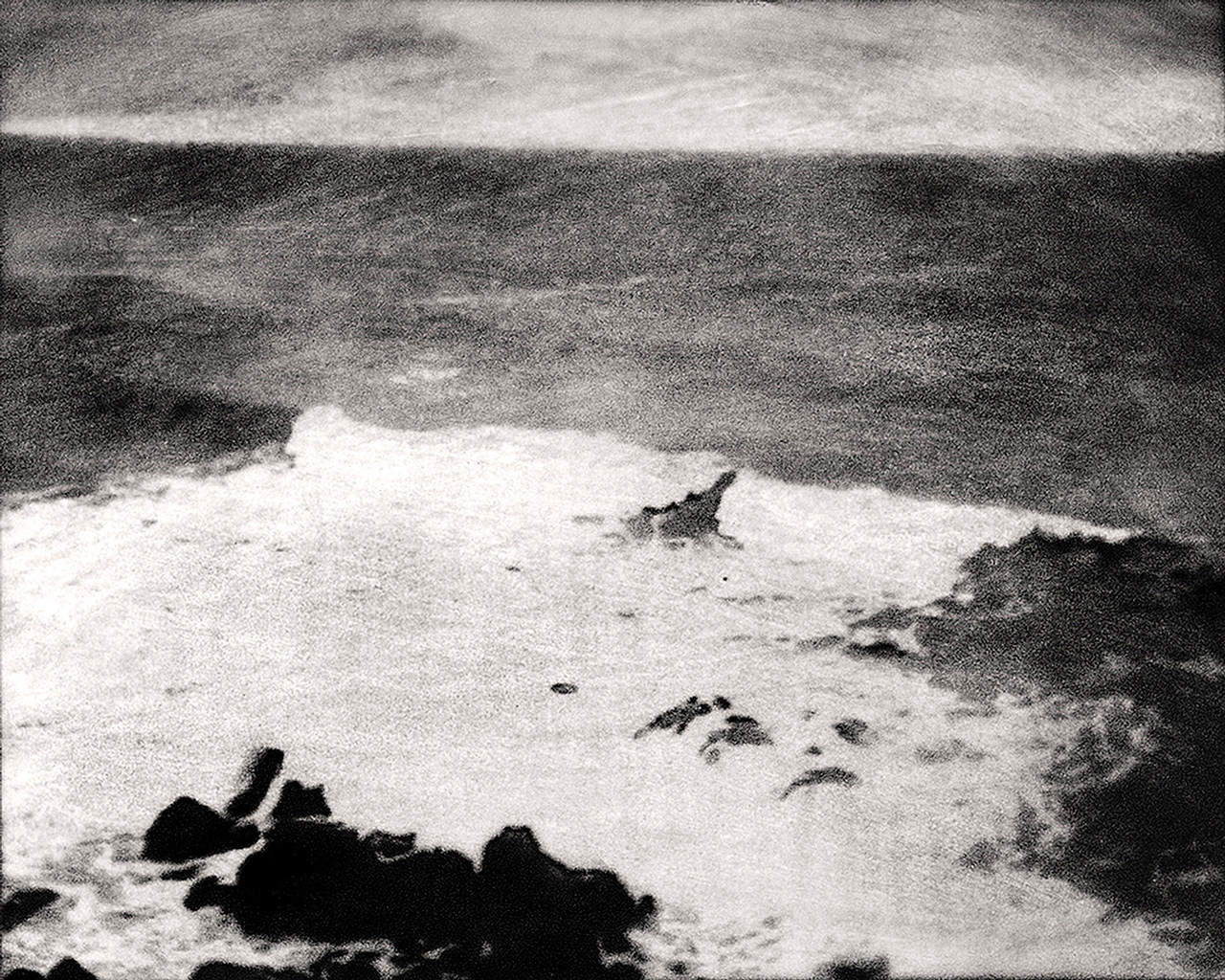
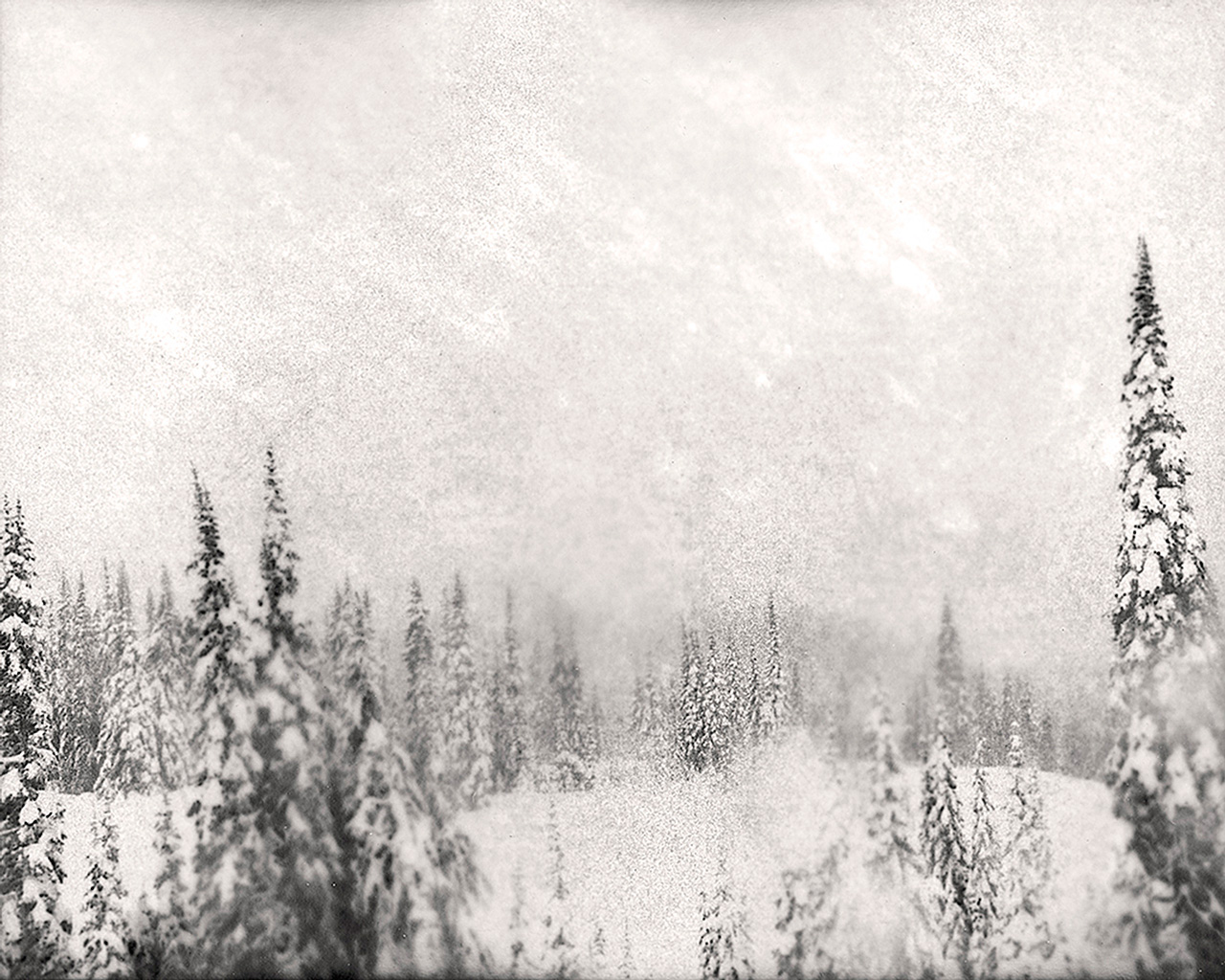
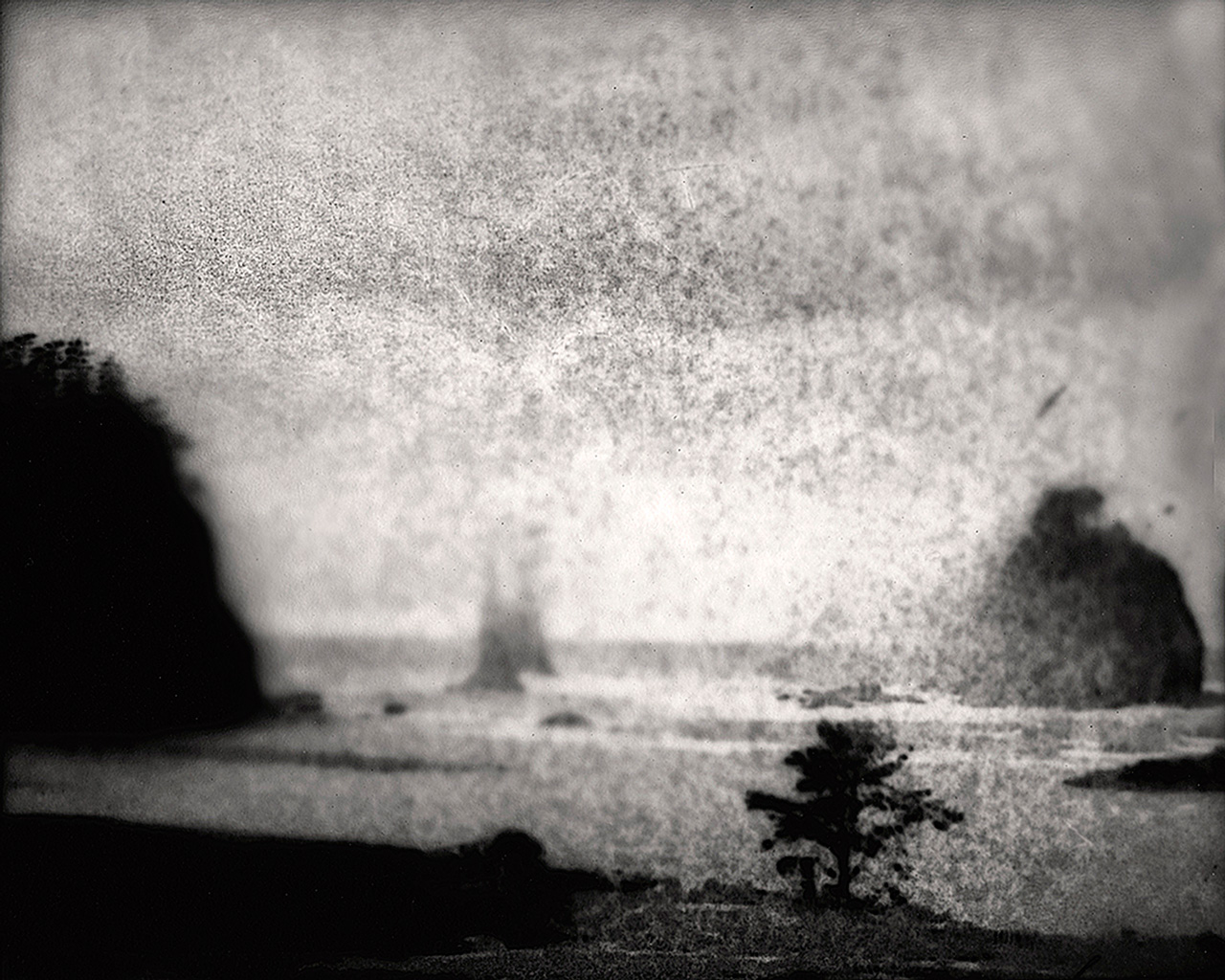
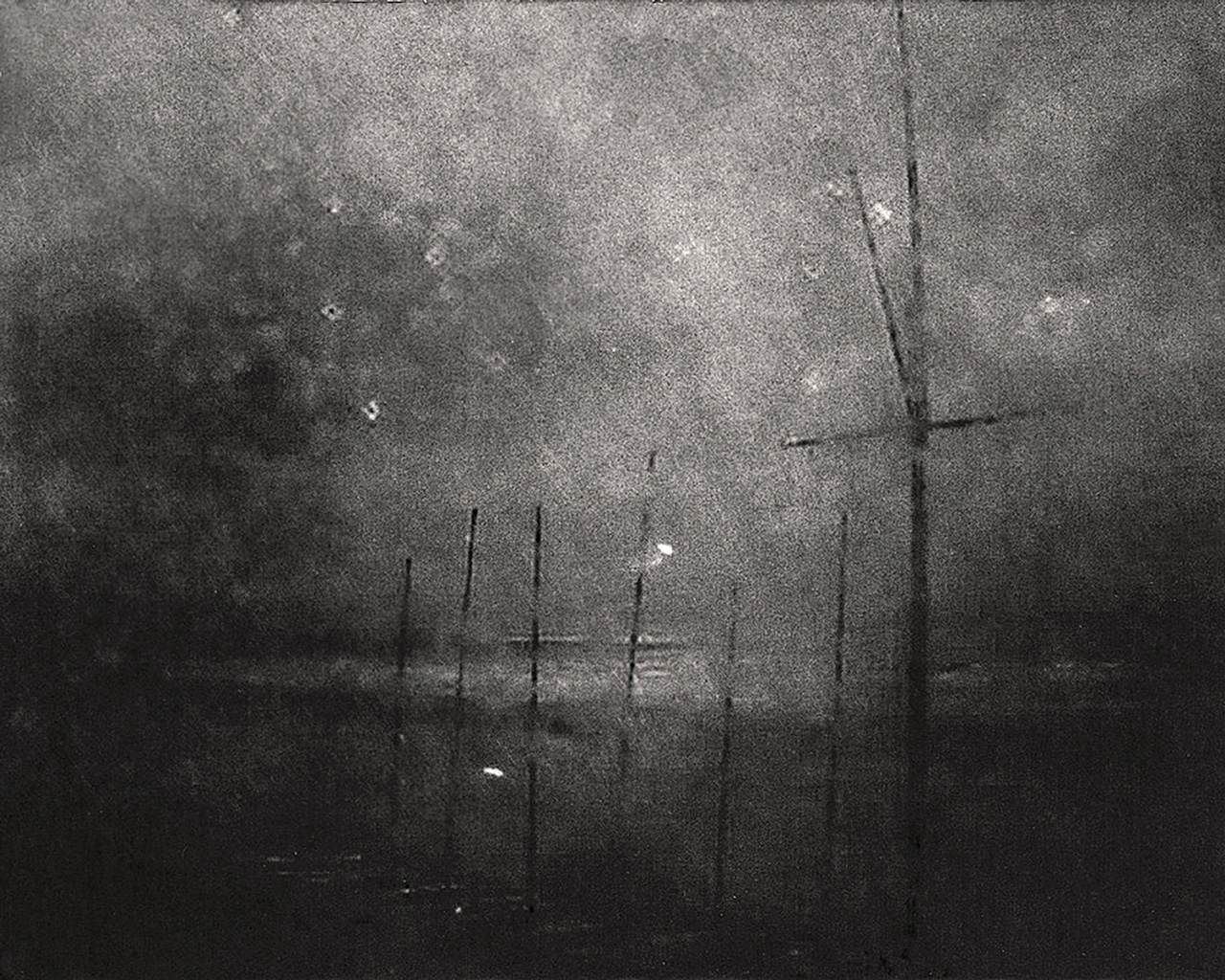
As a photographic artist, I am interested in the fraught relationship between photography and memory that creates a new reality in the gradual process of shifting and distortion. This project explores how memory appropriates history through photography and how it changes our perceptions of the past.
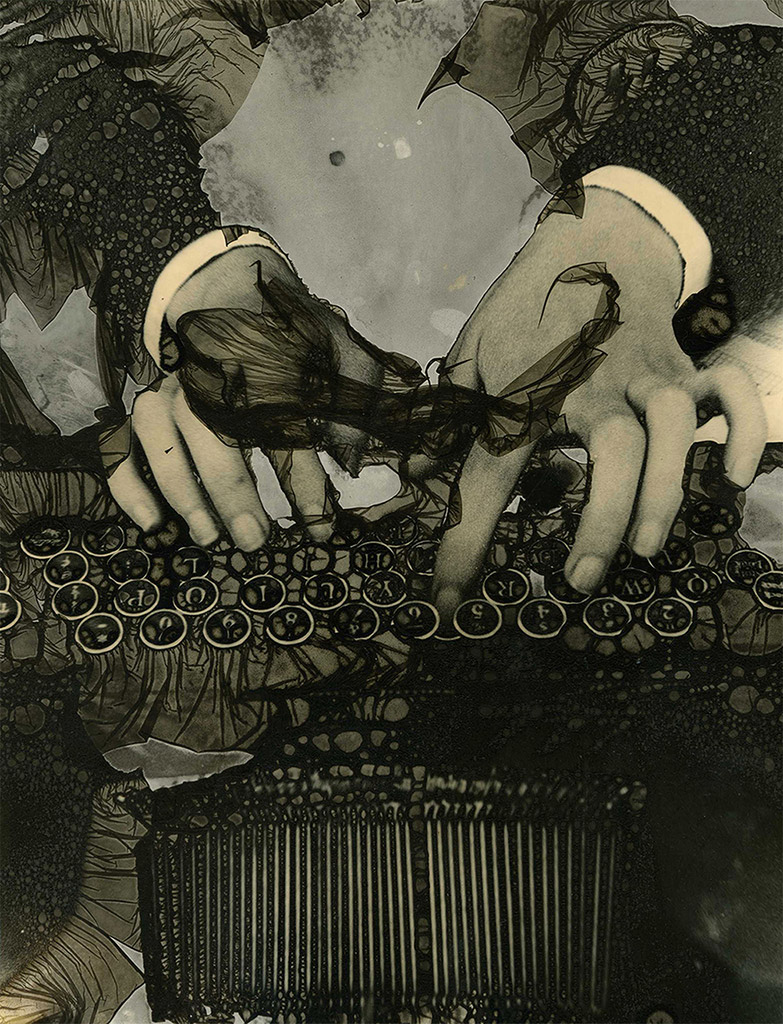
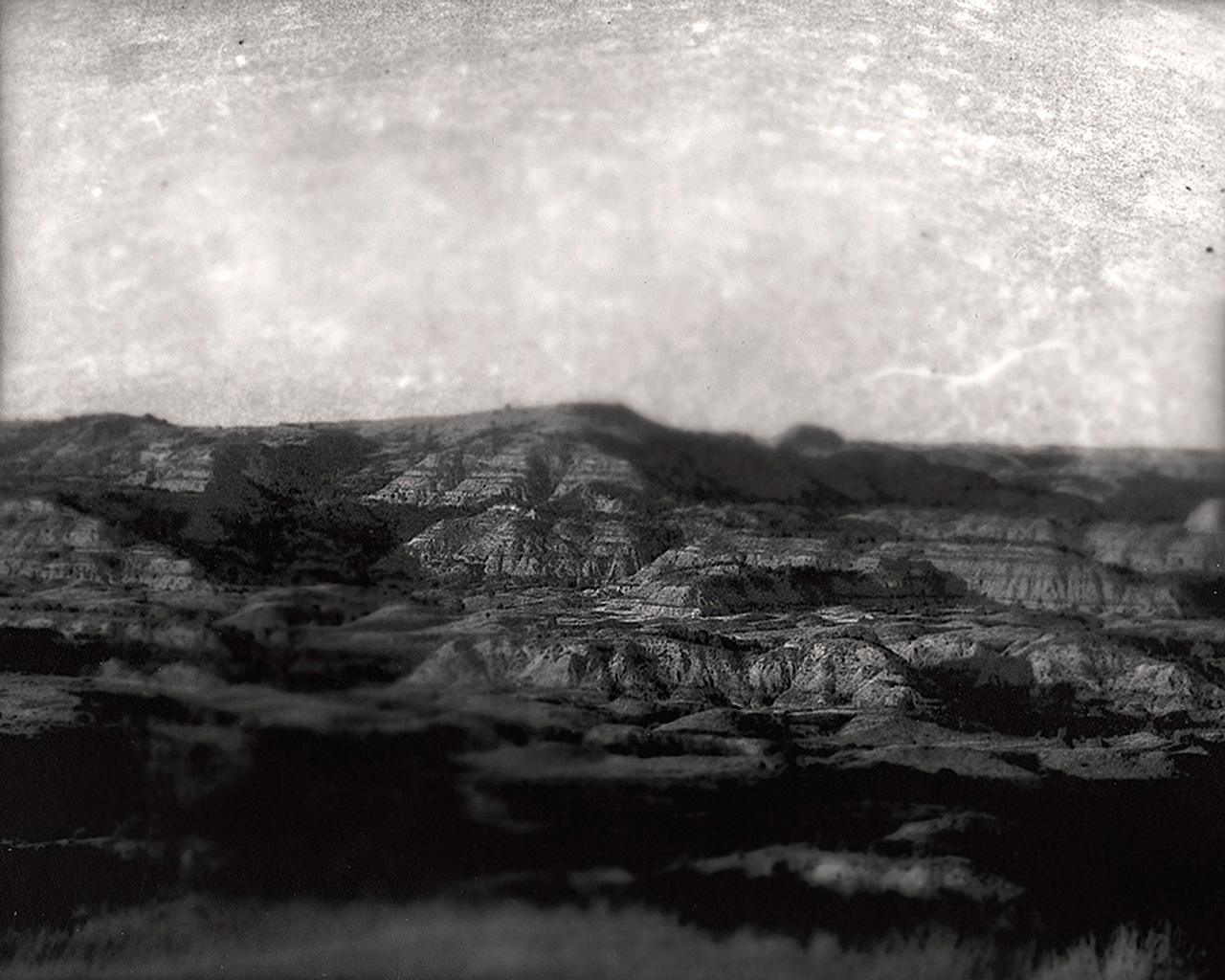
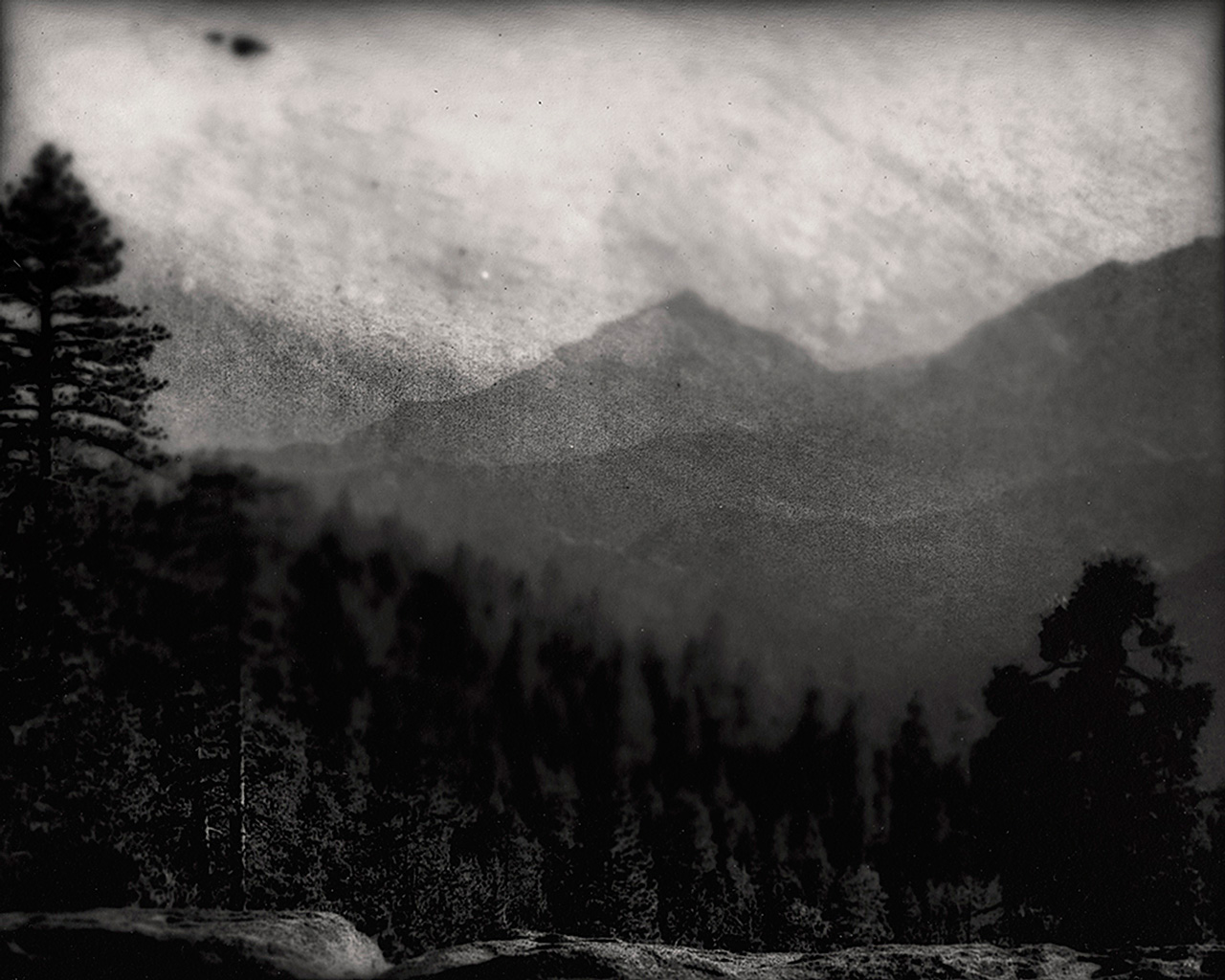
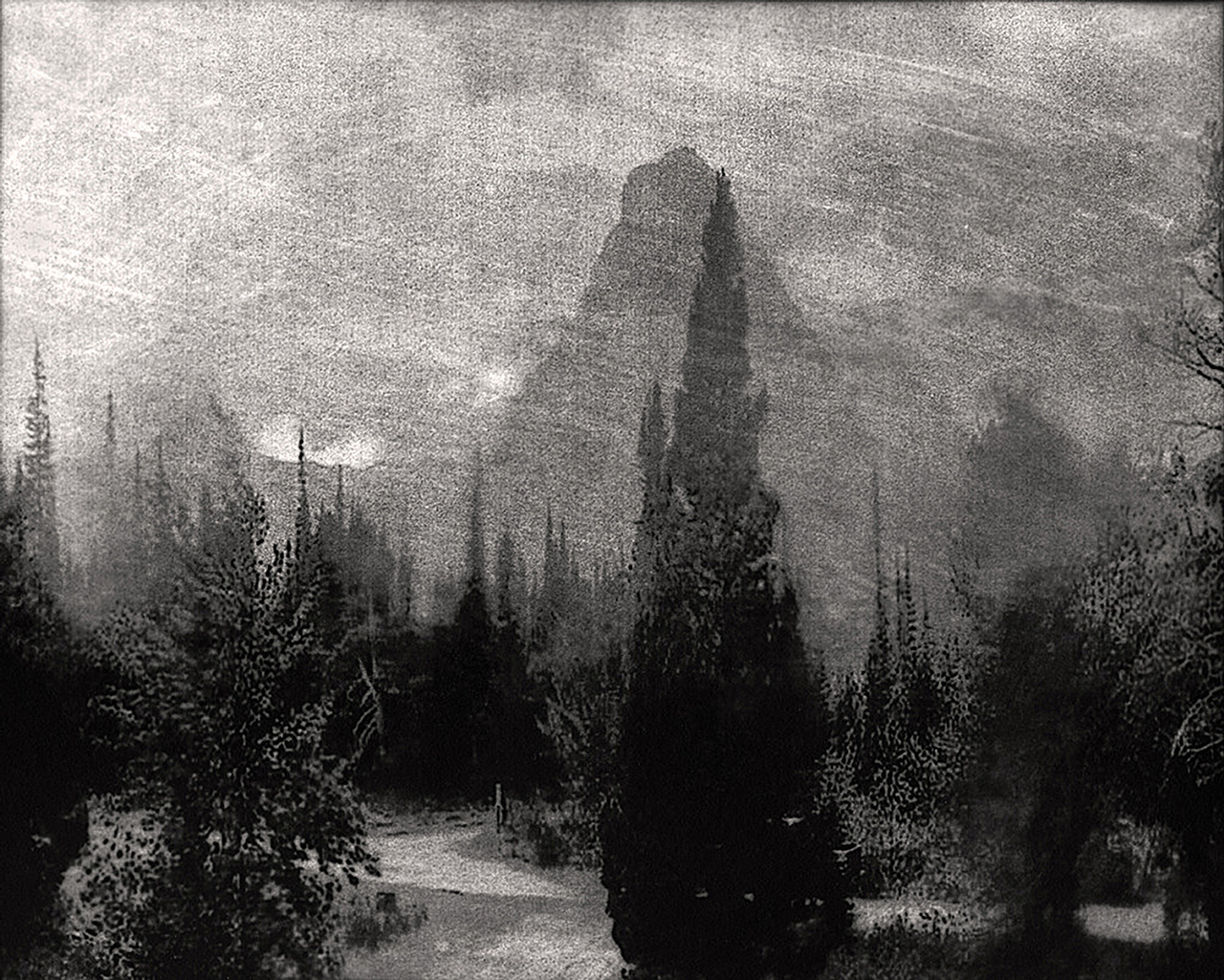
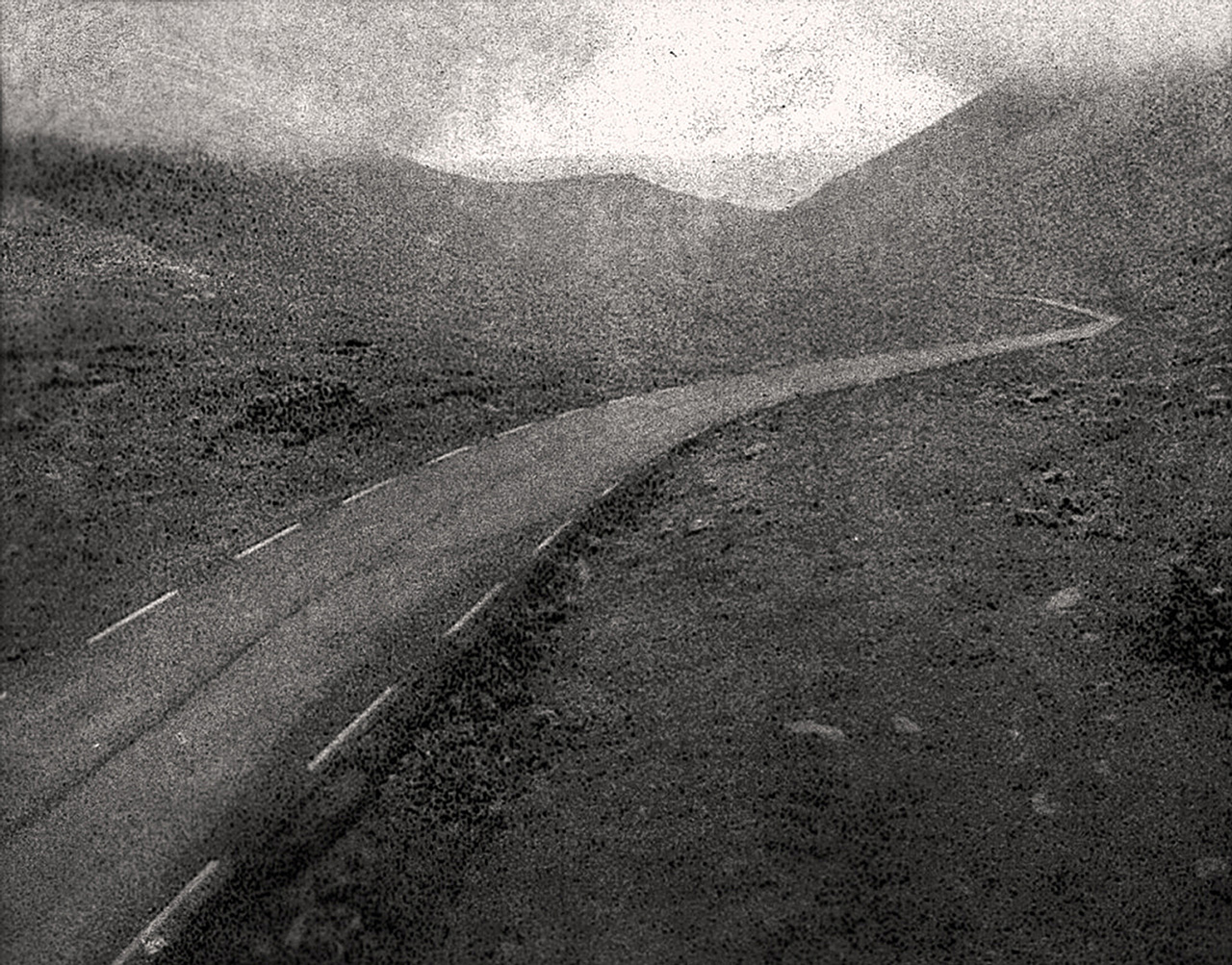
I document World War II reenactments in Texas. This war, which has become part of the foundational myth of the contemporary United States, has remained one of the few unquestioned sources of national identity, justice and masculinity today. Yet even though considered “the good war” that doesn’t need to be embellished in the public consciousness, the past is being constantly reinterpreted and changed through the reenactment movement. Photography plays a significant role in this process as participants recreate historic photographs in their roleplay and then use newly taken pictures of themselves to present their made-up historic persona. This distortion of recreating and personification of history is then reflected in the acid-bath mordancage process through its degradation, toxicity, unpredictability, physicality and surreal final result.
As a process, this project goes against the grain of what photography is. I use it as an ideological reaction to the noncommittal pull of digital culture. Instead of fixing the moment forever, it erases the image and alters the emulsion. Instead of endless multiples, it produces unique, unrepeatable prints. Instead of an objective optic capture, it is a physical object that shows the hand of the artist in its tactile recreation. It is toxic, unpredictable and shifts over time. Just like memory, it reflects the constant battle between preservation and ephemerality.
>
Ellie Ivanova (Bulgaria). She holds an MFA in Photography from the University of North Texas. With a background in literature, her photographic interest is the experience of memory and the self-fashioning of identity, in both traditional and experimental formats. She uses processes and conceptual approaches through which images continue to evolve after they have been captured and printed, blurring the edges between the factual and the fictitious. Her photographs have been exhibited throughout the United States in commercial, non-profit and university galleries and are part of the permanent collections of Human Rights Art at South Texas College and Fort Wayne Museum of Art, among others.
The arrow of time
Written by Diego Goldberg
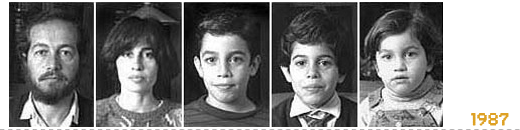
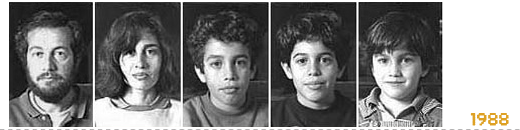
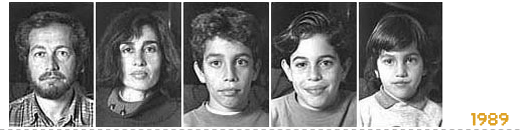
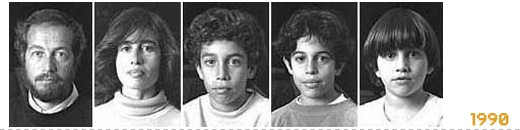
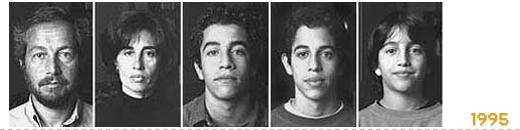
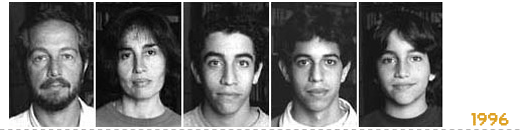
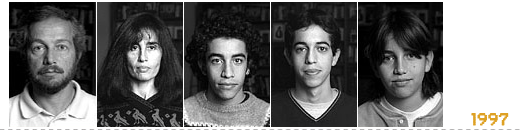
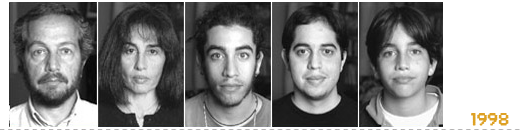
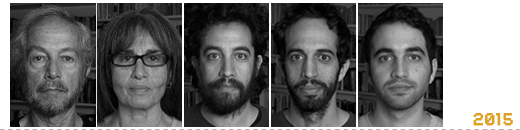
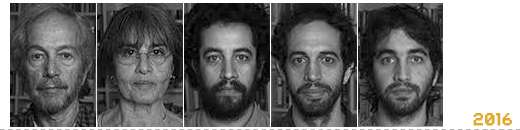
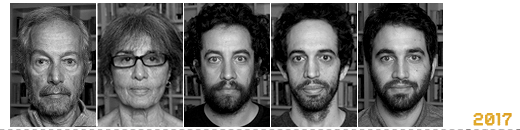
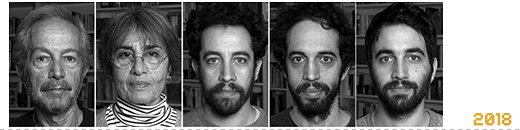
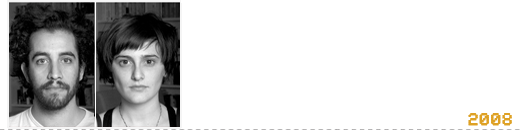
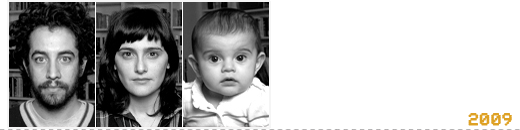
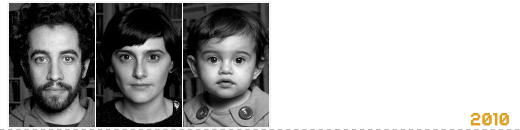
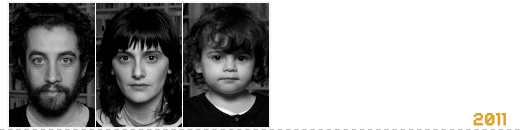
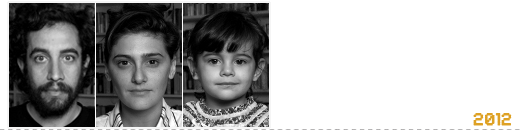
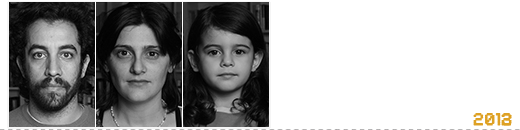
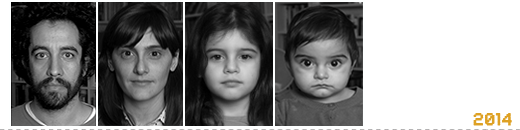
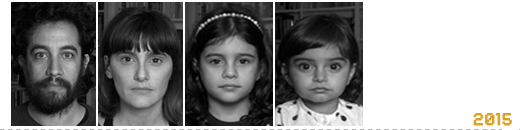
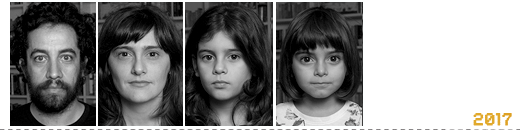
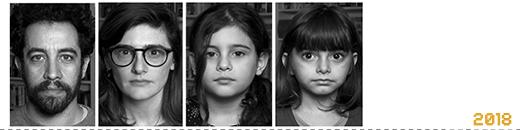
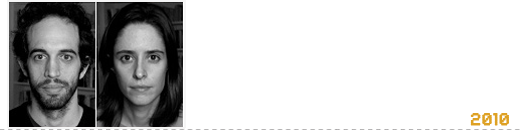
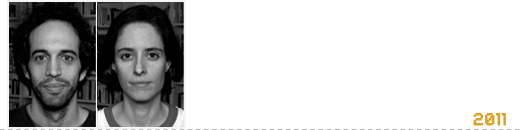
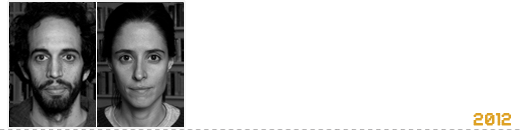
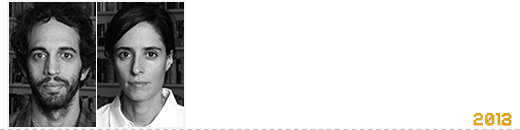
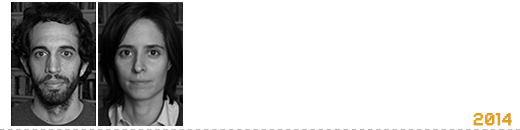
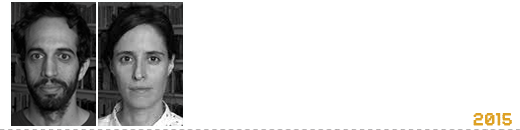
On June 17th, every year, the family goes through a private ritual: we photograph ourselves to stop, for a fleeting moment, the arrow of time passing by.
Diego Goldberg (Argentina, 1946). Lives and works in Argentina. He has taken part in group and solo exhibitions. Among other distinctions, Goldberg has won the Gold Medal 1998 from the Society of Publications Design; the Award of Merit 1998 from the Art Directors Club of New York for The Arrow of Time; second prize at the World Press Photo (Amsterdam, 1983) for Chile Ten Years After the Coup; and First Prize in the New York Press Award 1981 for Alphonse D’Amato, commissioned by the New York Times Magazine. He also won the FNPI (Gabriel García Márquez Foundation) Prize in 2006 for the Pursuing a dream. Diego can be reached at: This email address is being protected from spambots. You need JavaScript enabled to view it. and you can visit his website.
In Search of Lost Innocence | Landscape as metaphor and stage
Written by Alejandro Malo
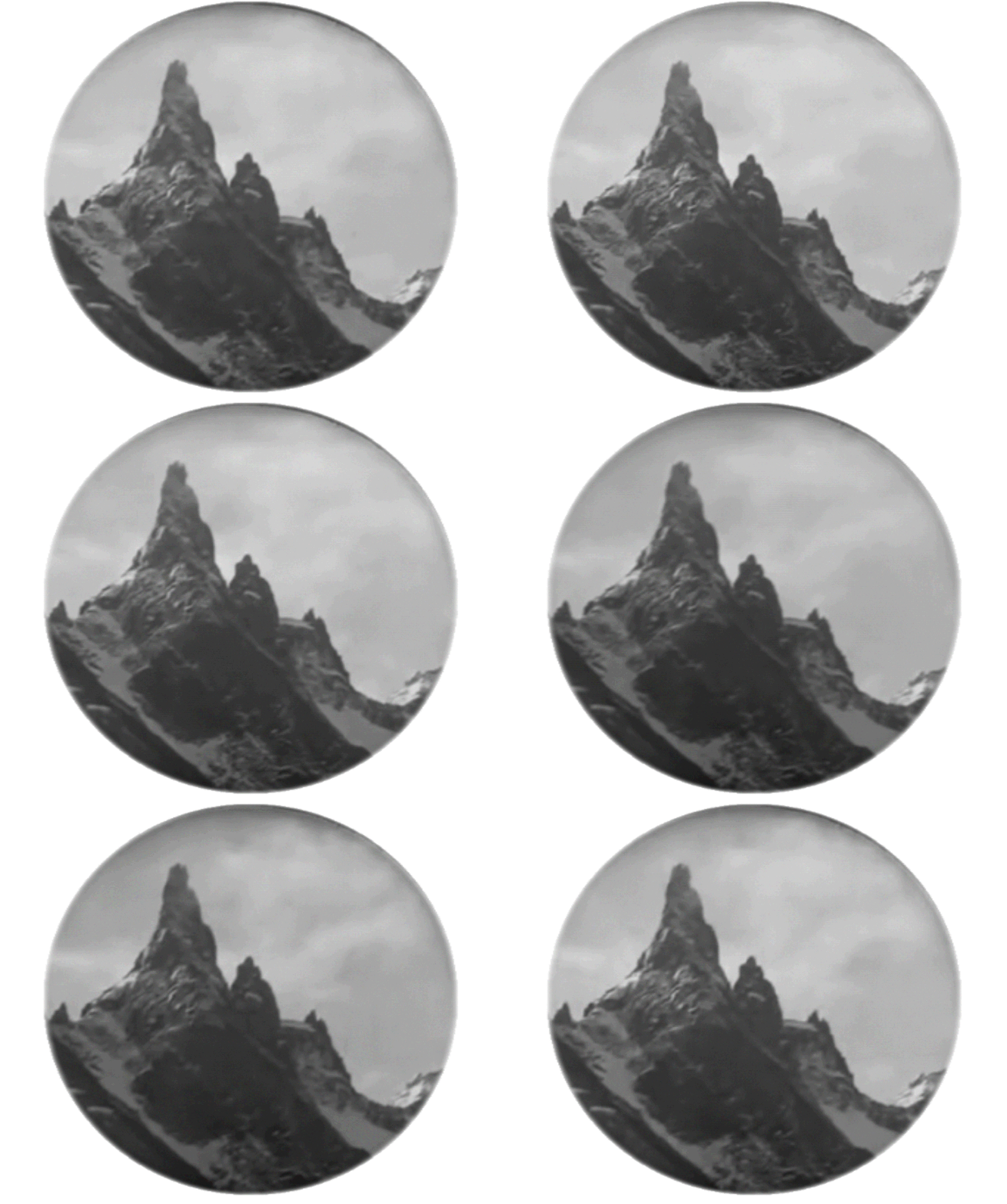
Cloud Phenomena of Maloja. Film by Arnold Fanck, 1924
Landscape, long before being image, was literature and longing. Since ancient times, almost every civilization led an educated class that longed to return to the simple life of the countryside, back to nature with its deeper order and less troubled appearance. In the West, despite its widespread tradition against the city life and akin to recover the rural simplicity, it is only during the Renaissance that the joy of those running away from the maddening crowds turns into the full enjoyment of nature, first in poetry and only afterwards as a growing presence in paintings. In the East, at least since China’s Tang Dynasty, a fertile dialogue is established around the landscape between poetry and painting, and the genre develops very soon and evolves in multiple aspects.
Centuries later, while other visual media were confronted by the emergence of photography to take in and emphasize the subjectivity of their gaze over this topic, photographic landscapes devote their attention to exoticism or the magnificence of natural views and offered a deceptive closeness to a naturalist interpretation. The romantic vision of nature took root strongly across images ranging from the Bisson brothers to Ansel Adams. In them, beauty was something external to be captured in each shot, a reserve where solitude was a regained innocence and open spaces offered an inexhaustible source of peacefulness for the contemplative eye under the changing light’s mantle.
Gradually, as these perspectives became advertising and marketing leitmotifs, this genre had to be reinvented and new possibilities sought elsewhere. Already in 1975, with the exhibition New Topographics: Photographs of a Man-Altered Landscape, it became clear that human intervention was inseparable from our new perception of landscape. The aseptic style of the authors gathered in this exhibition, considered almost forensic and where the emotional charge seemed absent, caused the sensation of being somehow close to a crime scene’s lingering memories, but devoid of its dramatic charge. During the following years, some authors, with a similar methodology but against this trend, looked after landscapes as representation of their own temperament, metaphor of an inner life that finds in the environment an affinity and a strong individual expressive capacity. Finally, photography assumed the same subjectivity of other means. As an example, Hiroshi Sugimoto wrote about his Seascapes: "Every time I view the sea, I feel a calming sense of security, as if visiting my ancestral home". In that phrase, anyone can guess a sort of poetic inclination and a strong artistic weight that facilitates dialogue with paintings, as was done in 2012 by exposing this series with Mark Rothko’s work.
However, Eden’s innocence became impossible in a world where human presence outreach tainted glaciers and forests with the same nonchalance. In the second half of the twentieth century, the landscape was transformed from man facing nature, to be a metaphor for our own humanity and, at the same time, scene of our fears, hopes and tragedies. We read as landscape every place where a scenario simulates an open space, no matter whether an emotional or conceptual projection of ourselves, but also we read it under the titanic action of mining, between the megalopolis’ streets or against the inventiveness of major transformation projects. Hybridization of genres has allowed the unreal calm of sensationalist scenes as in Fernando Brito’s pictures and the catastrophe of Chinese dumping sites of Yao Lu to be shown as images of bucolic appearance. We bit the fruit of our pride and today paradise is a shy promise. We need to build works, with concrete actions to transform the announced catastrophe in a redemptive epiphany. The landscape is, with its potential for imagination and denunciation, the much needed tool.
Alejandro Malo (Mexico, 1972). Lives and works in Mexico and is the director of ZoneZero. Since 1993, he has taken part in various cultural projects and worked as an information technology consultant. He has collaborated in print and electronic publications, and given workshops and conferences on literature, creative writing, storytelling and technology. In 2009, Malo joined the team of the Fundación Pedro Meyer, where he directs the Archives and Technology departments.
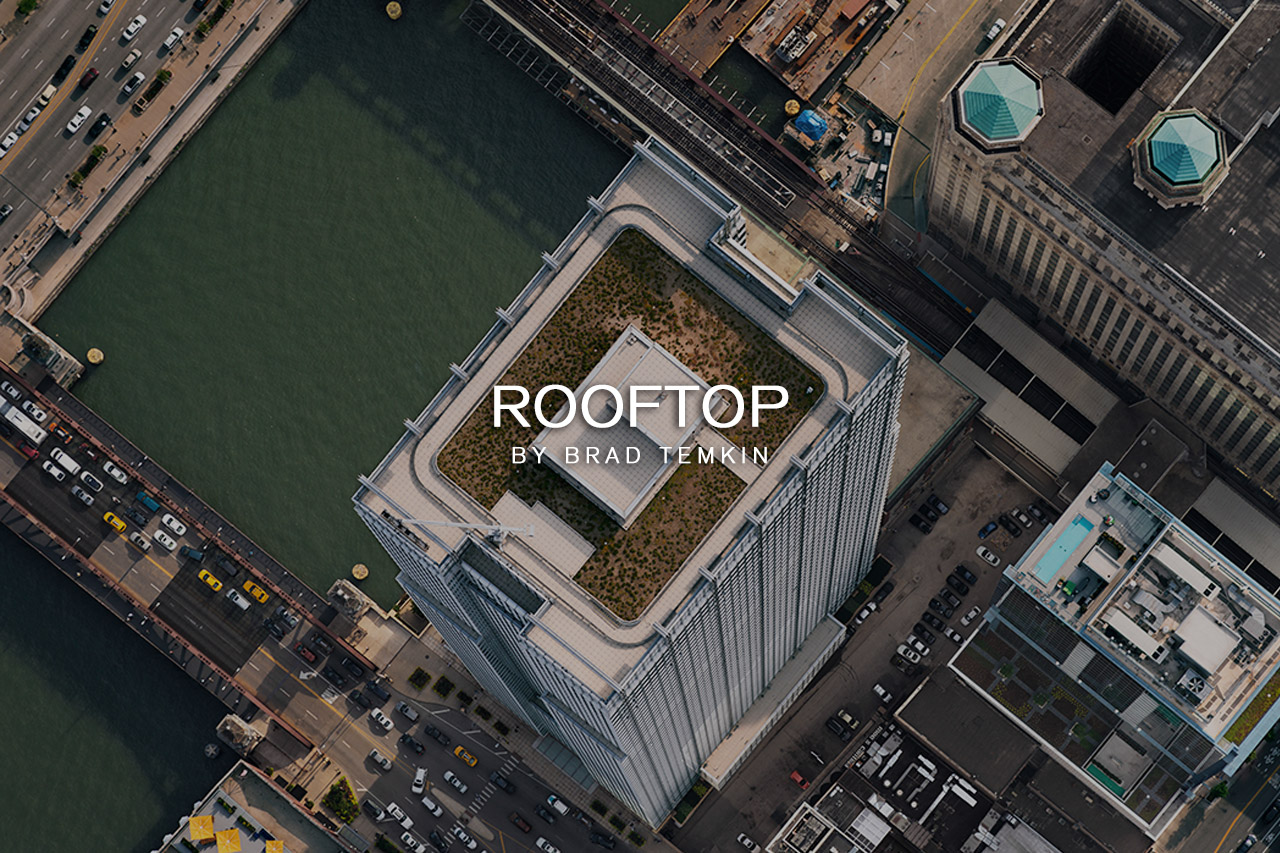
Rooftop
Written by Brad Temkin
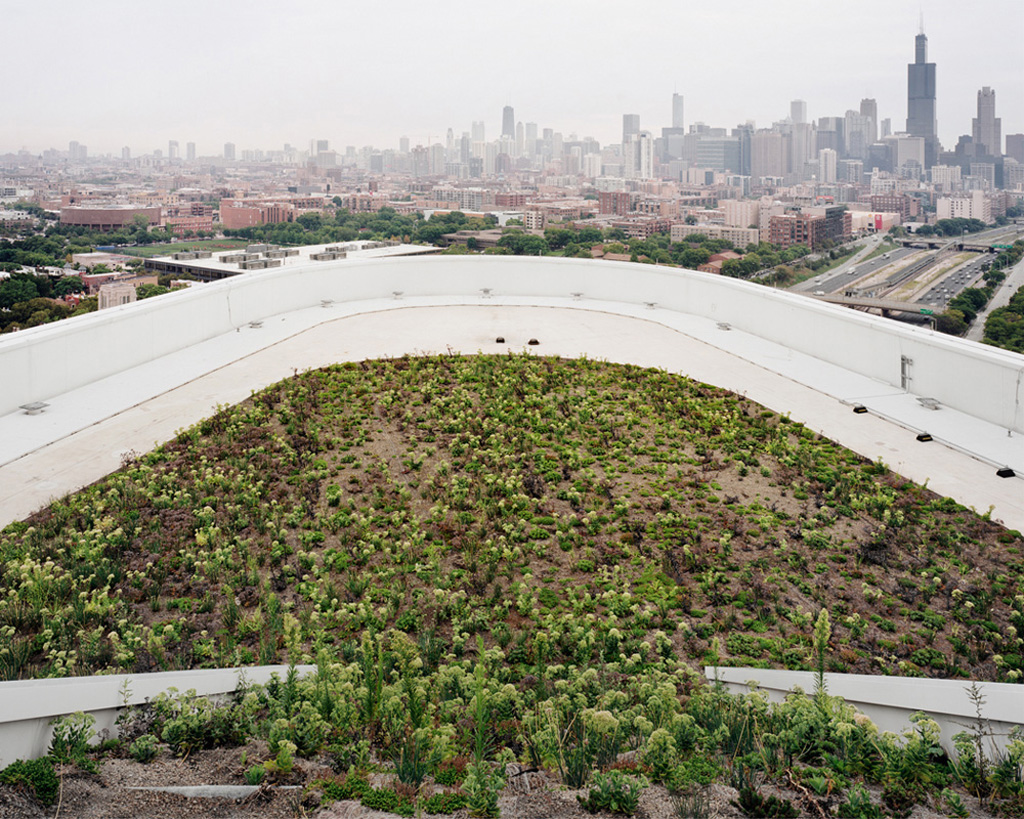
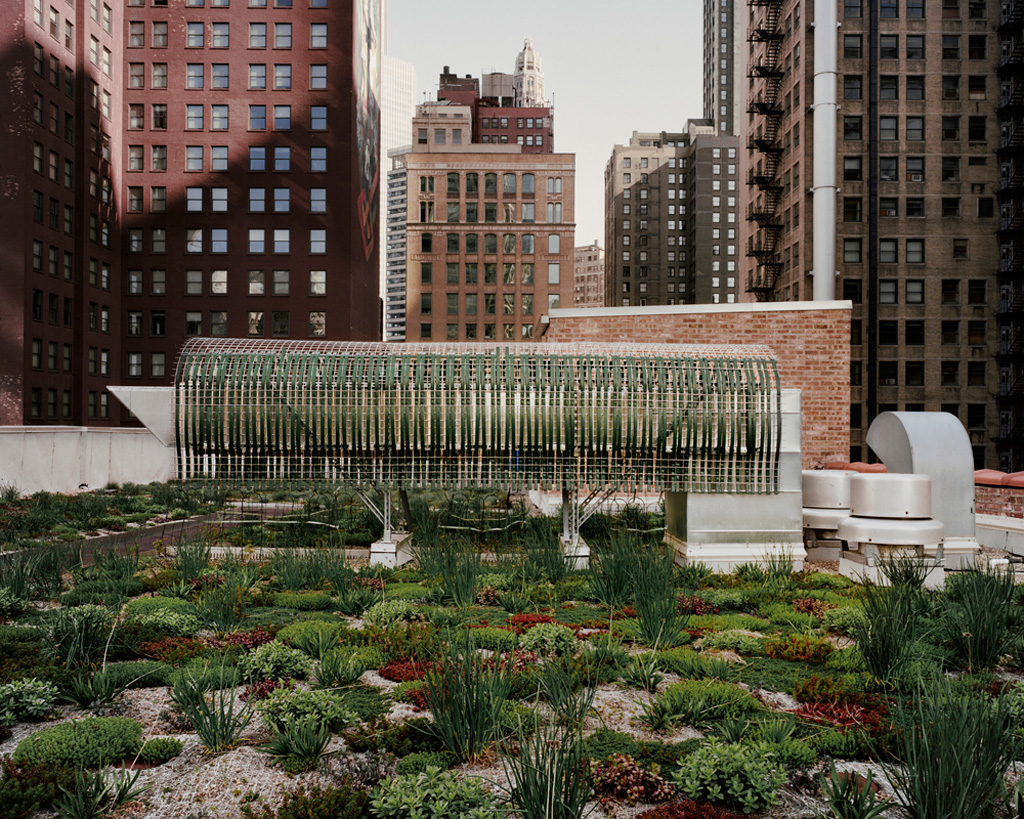
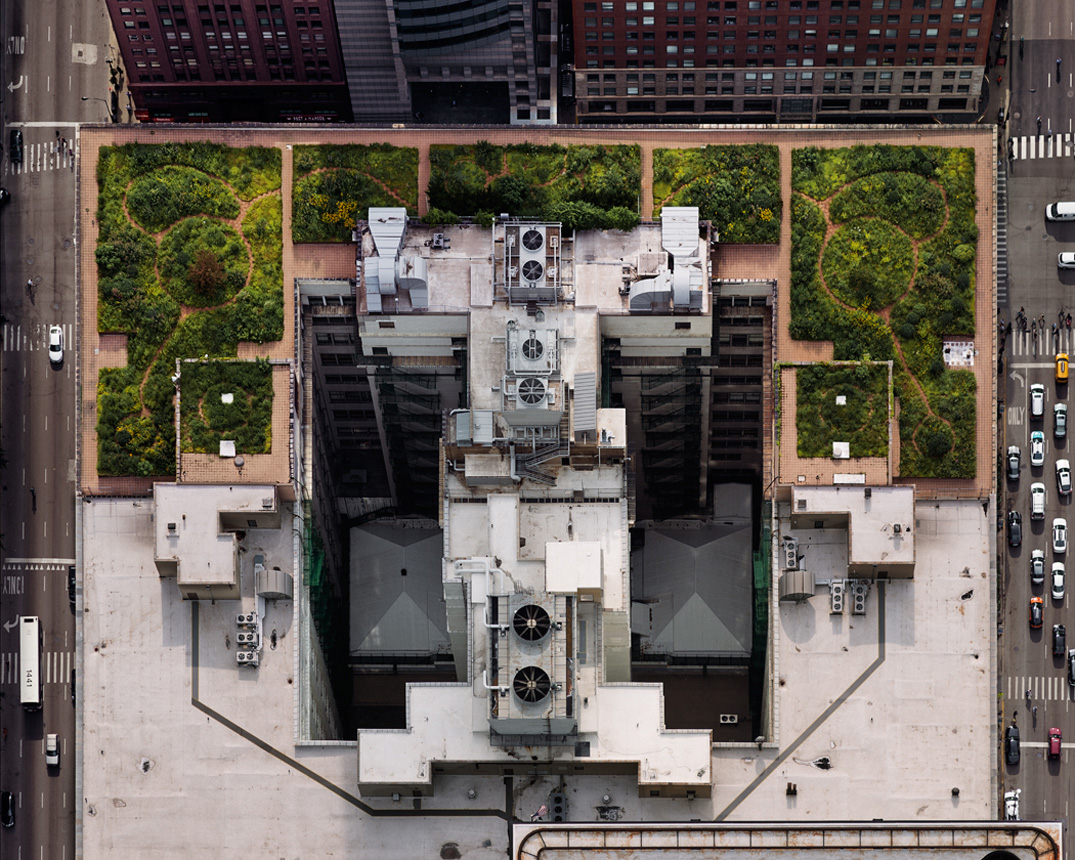
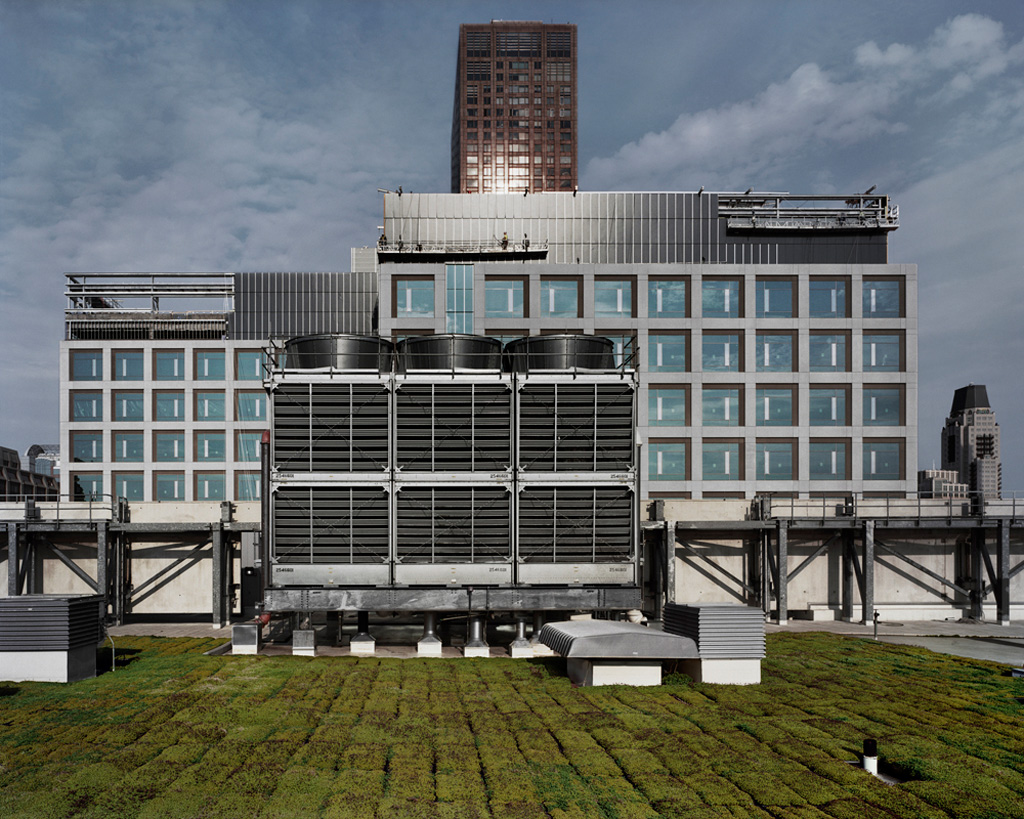
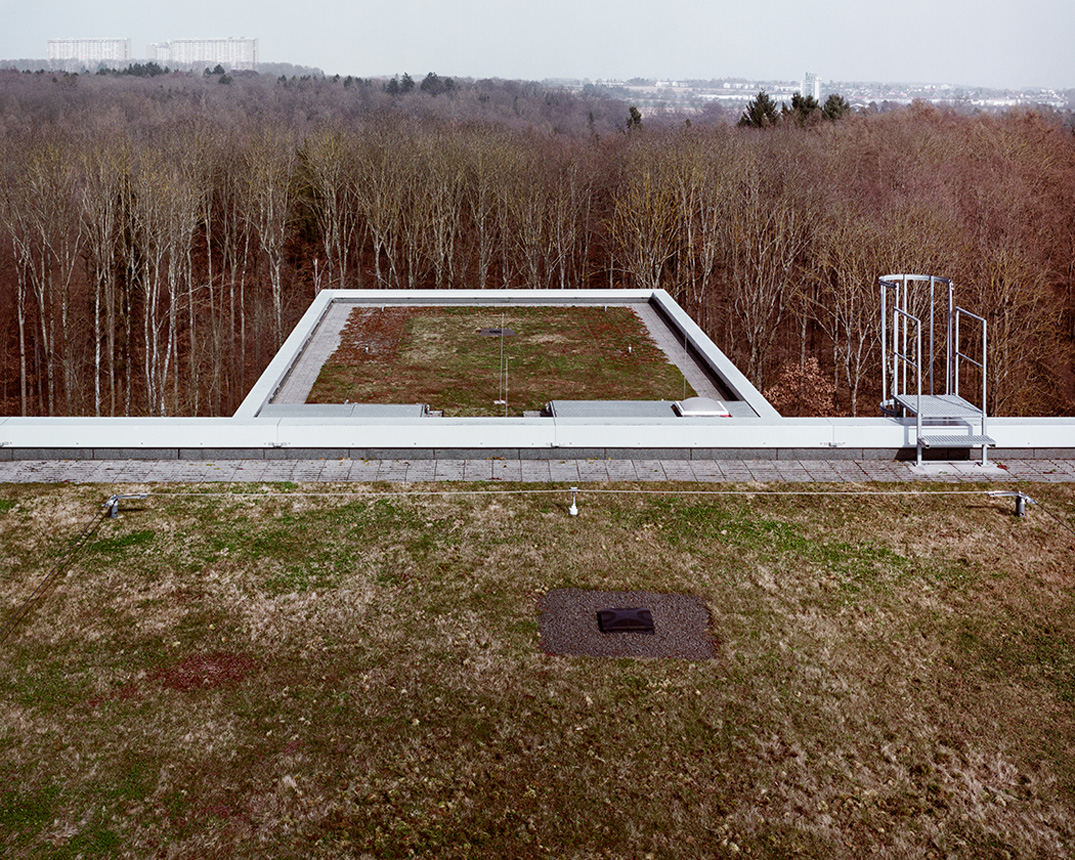
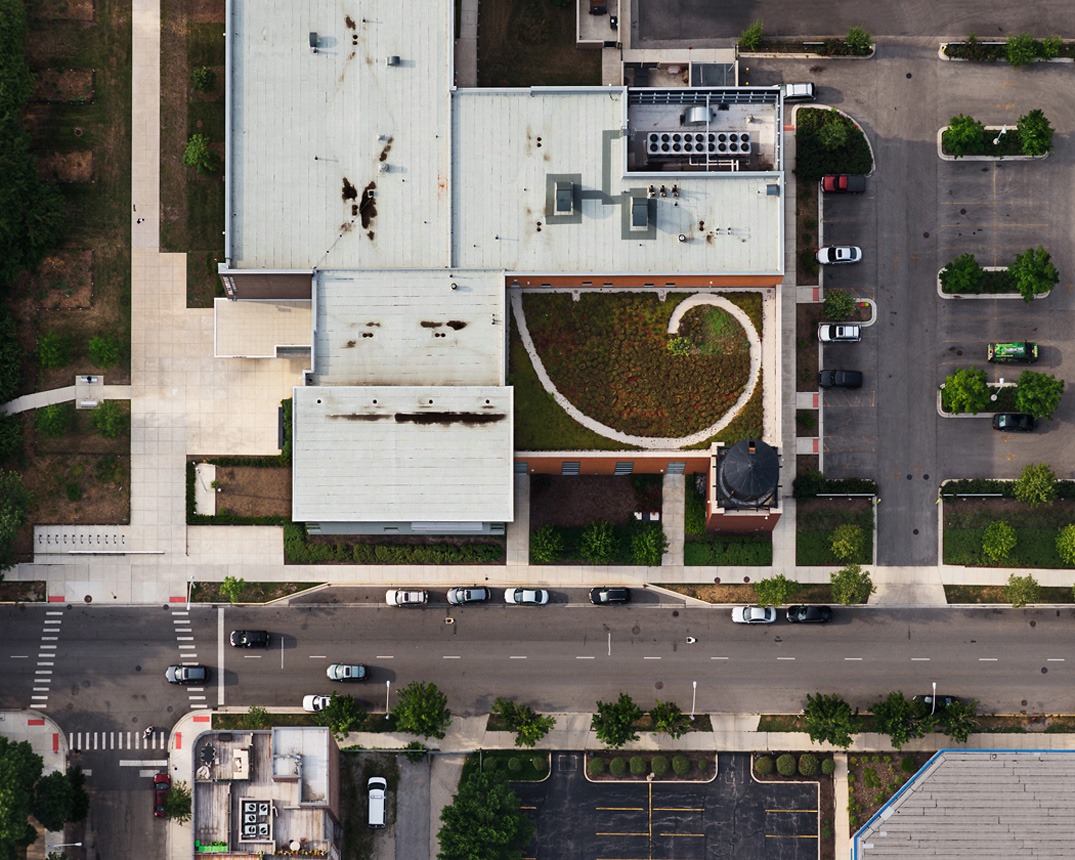
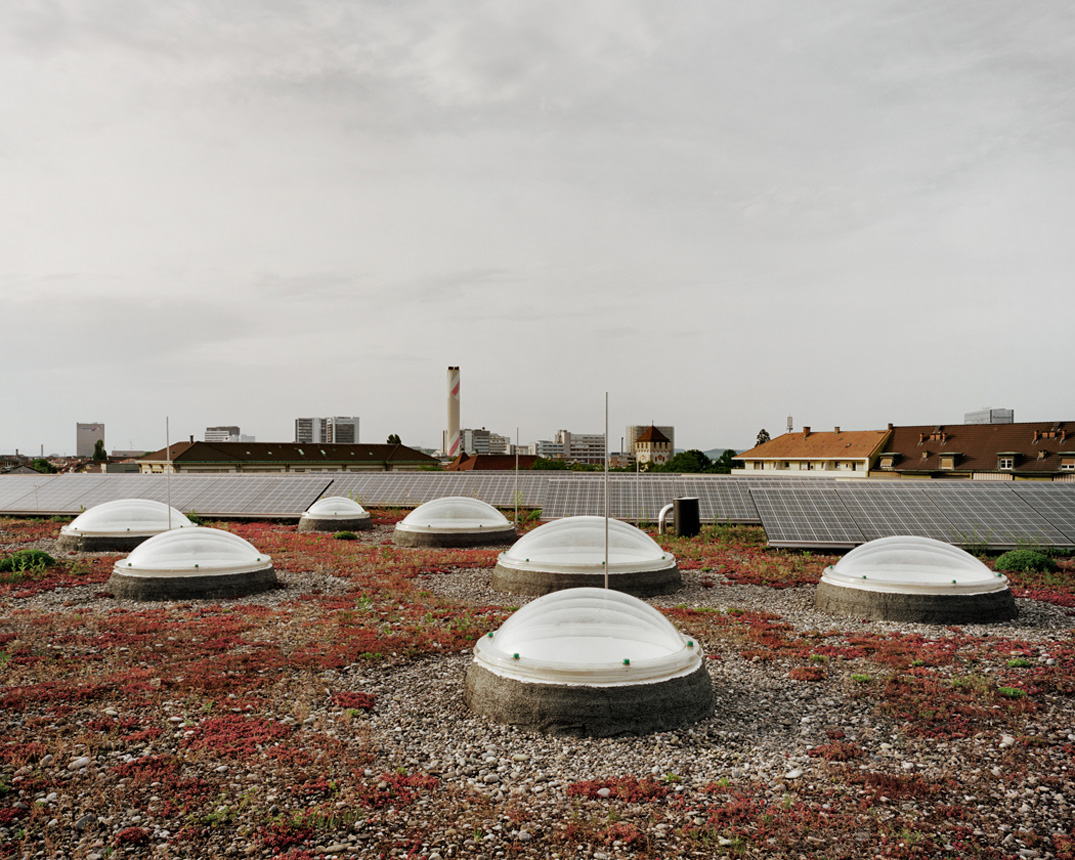
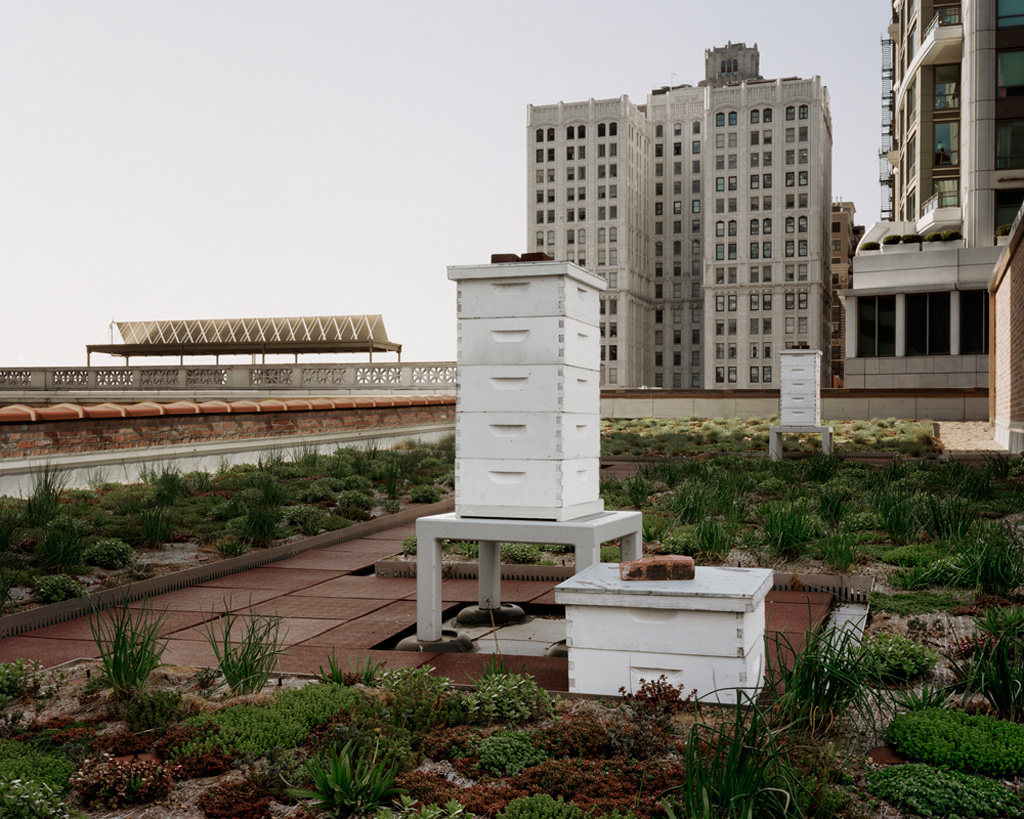
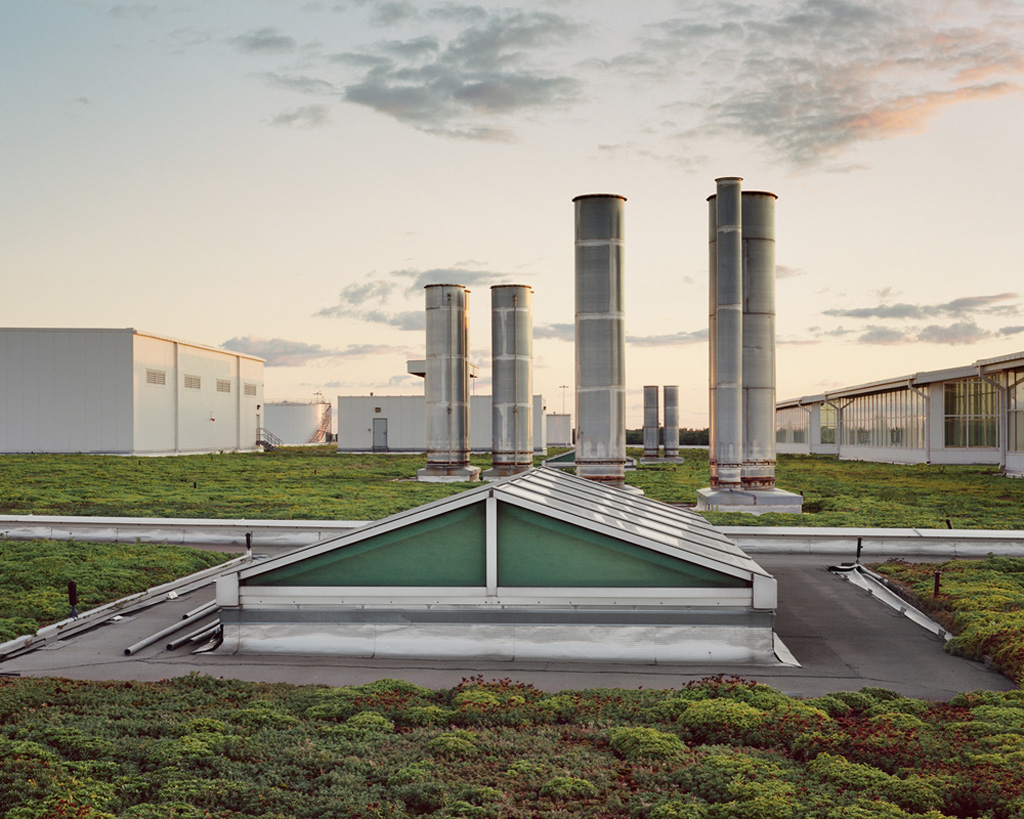
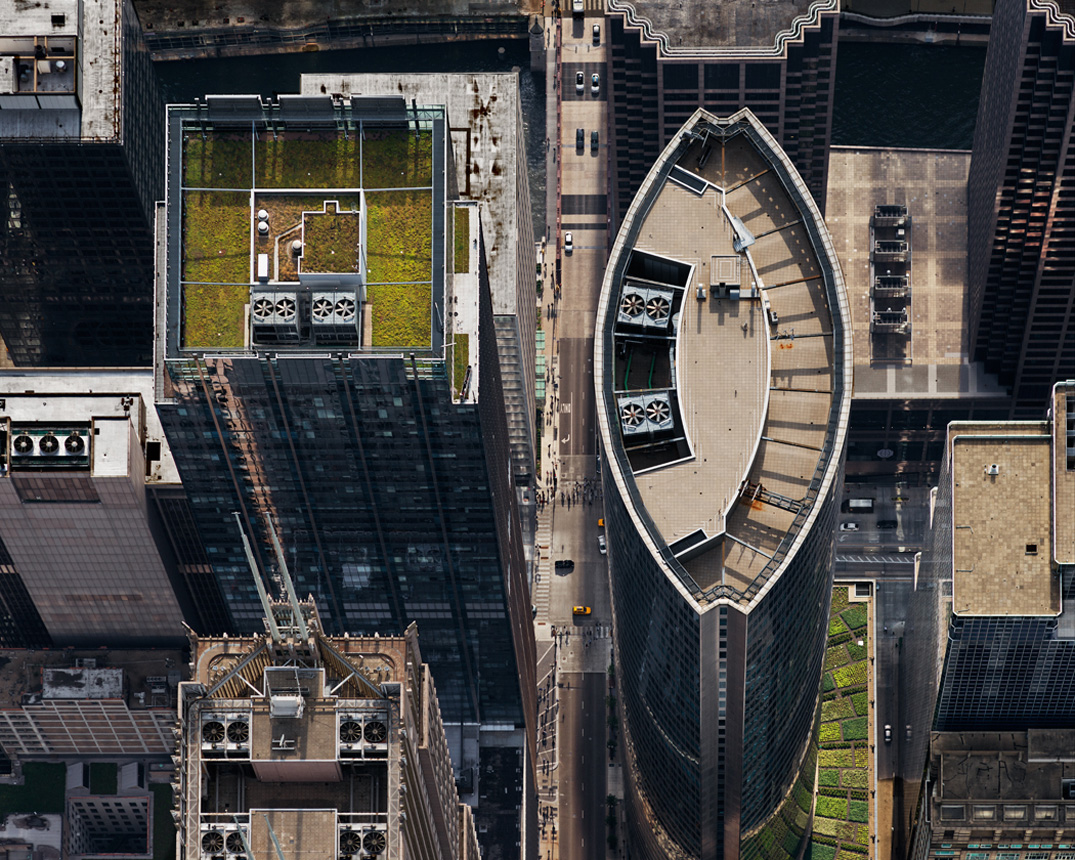
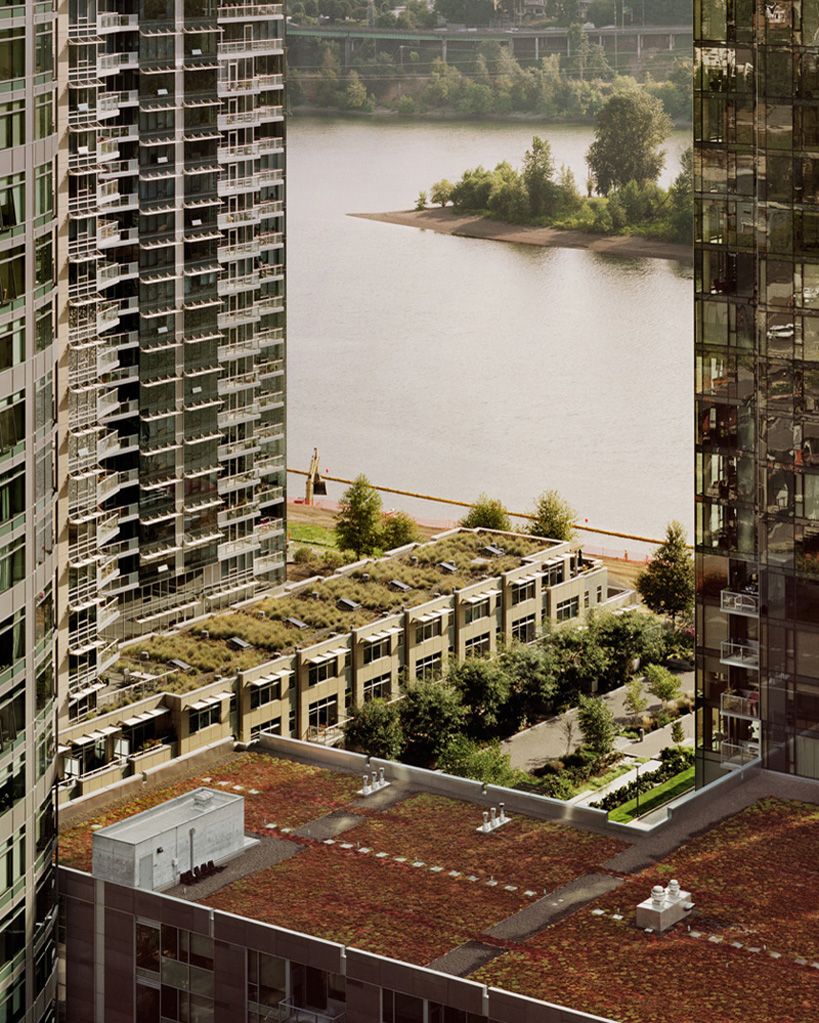
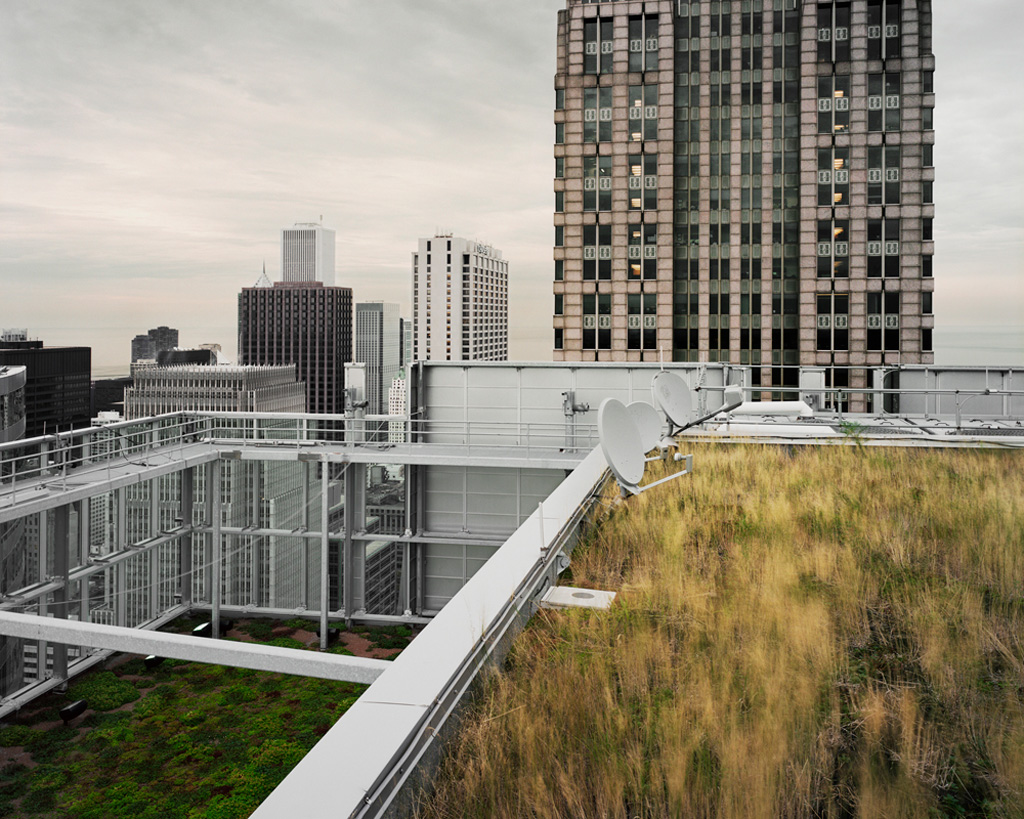
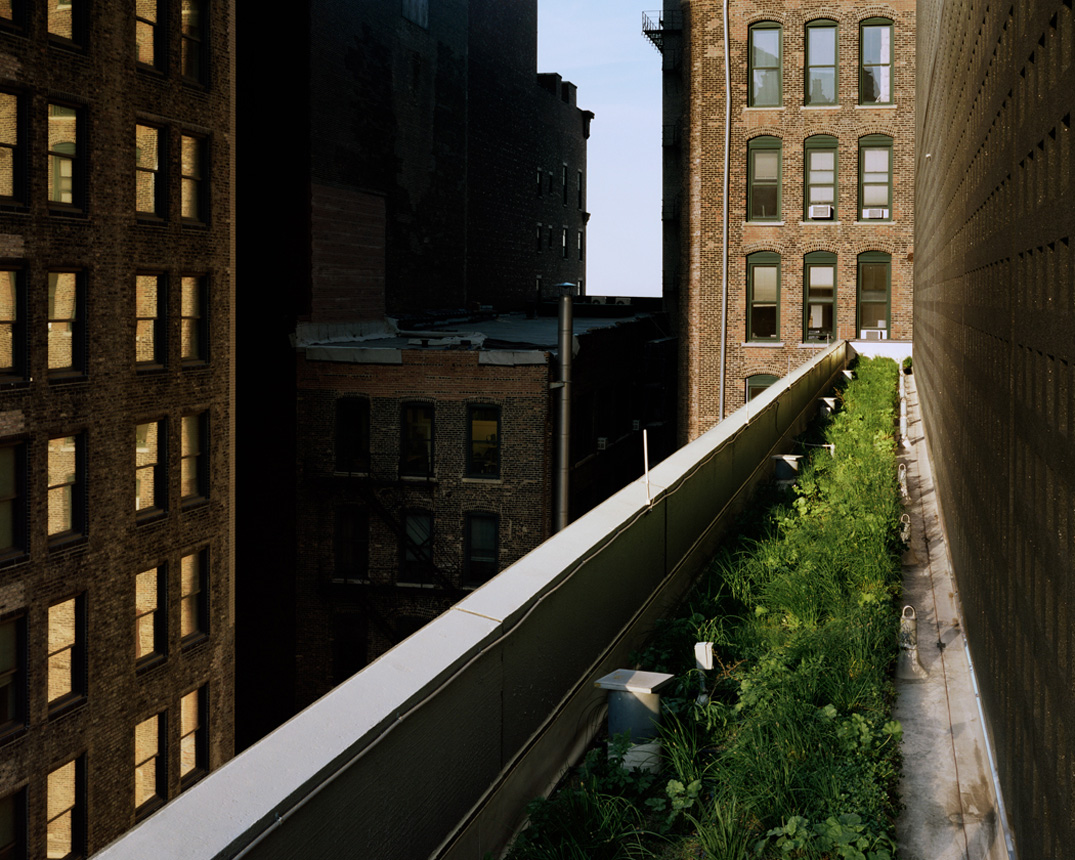
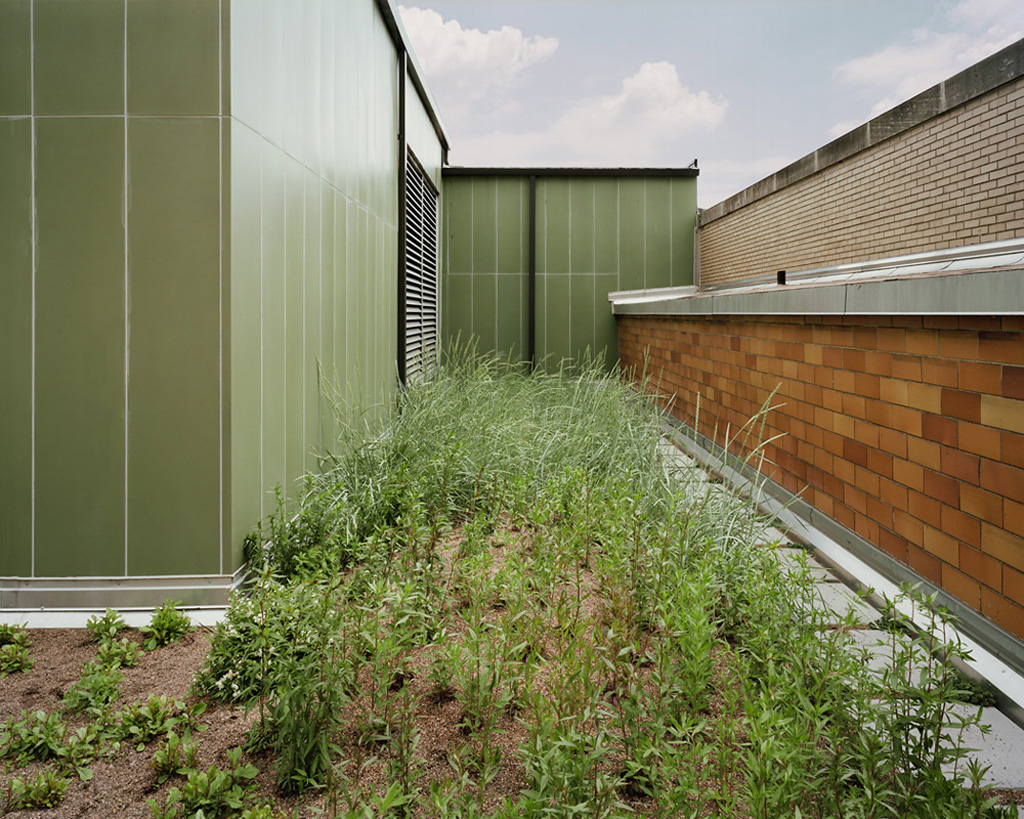
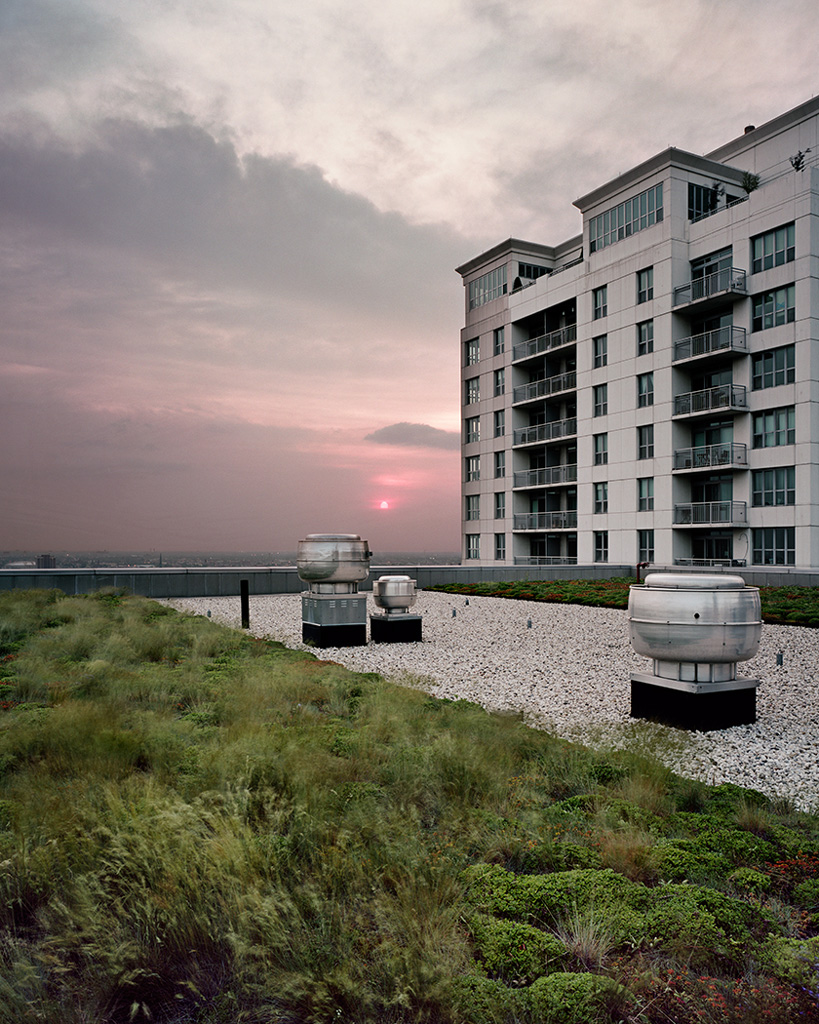
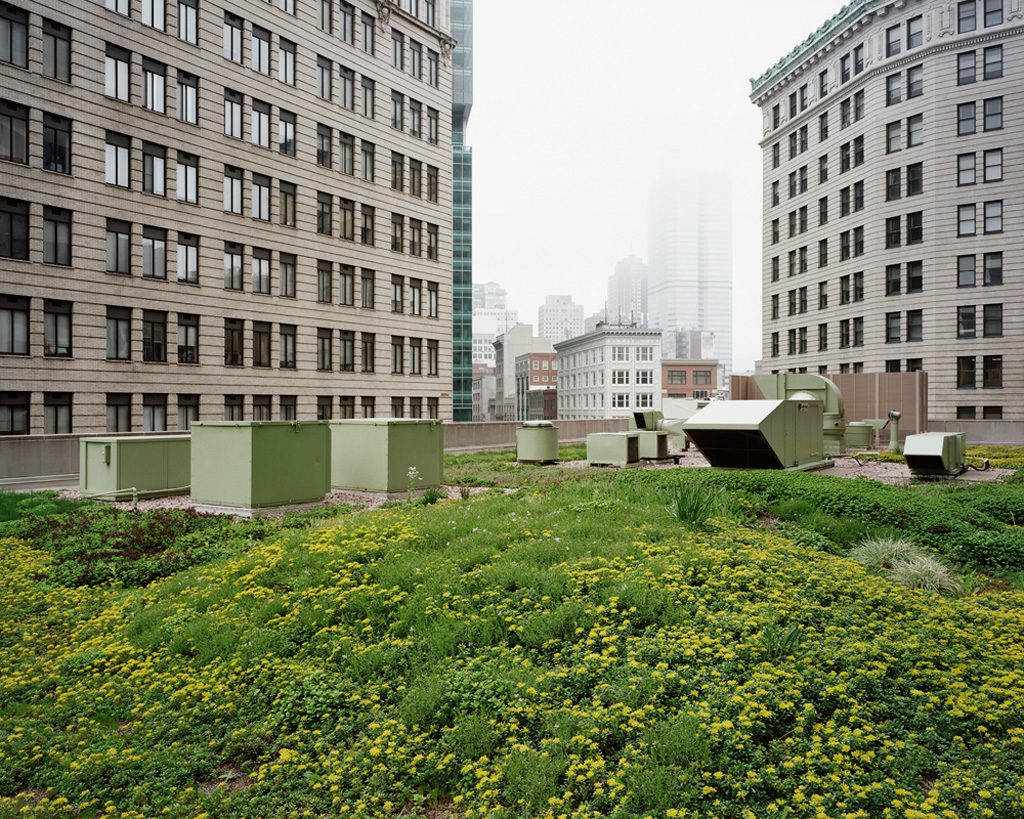
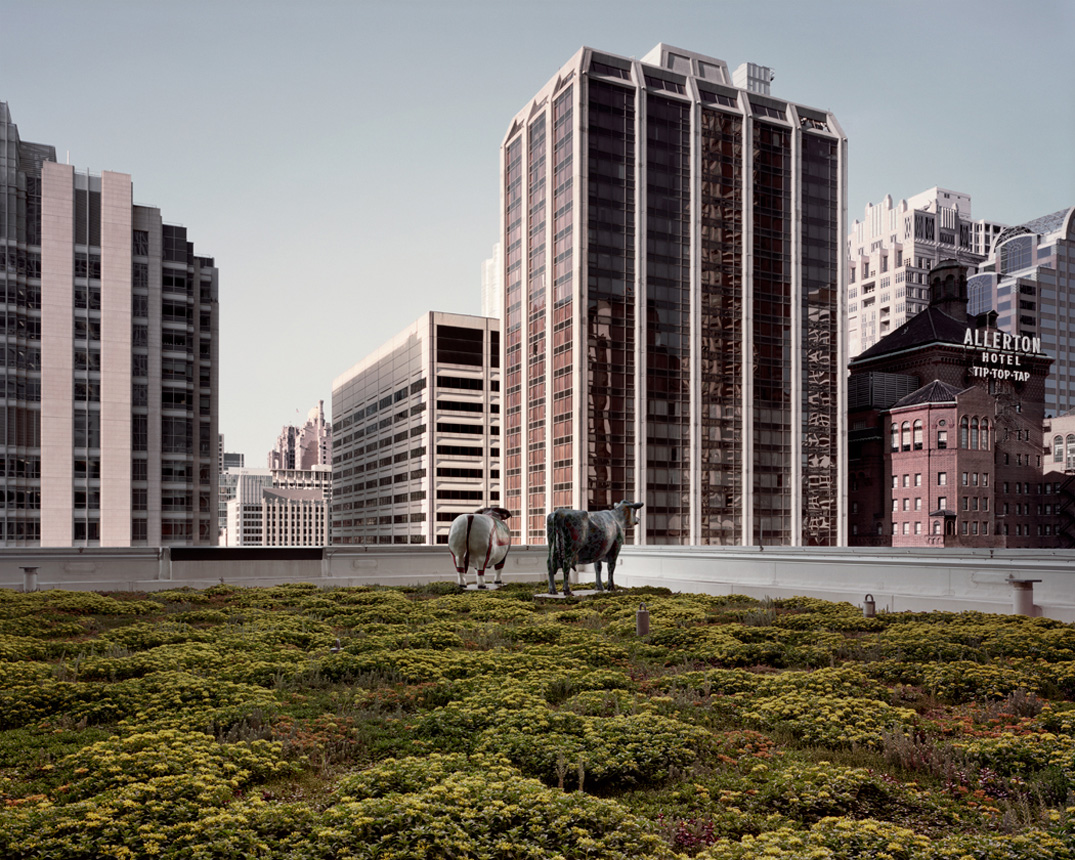
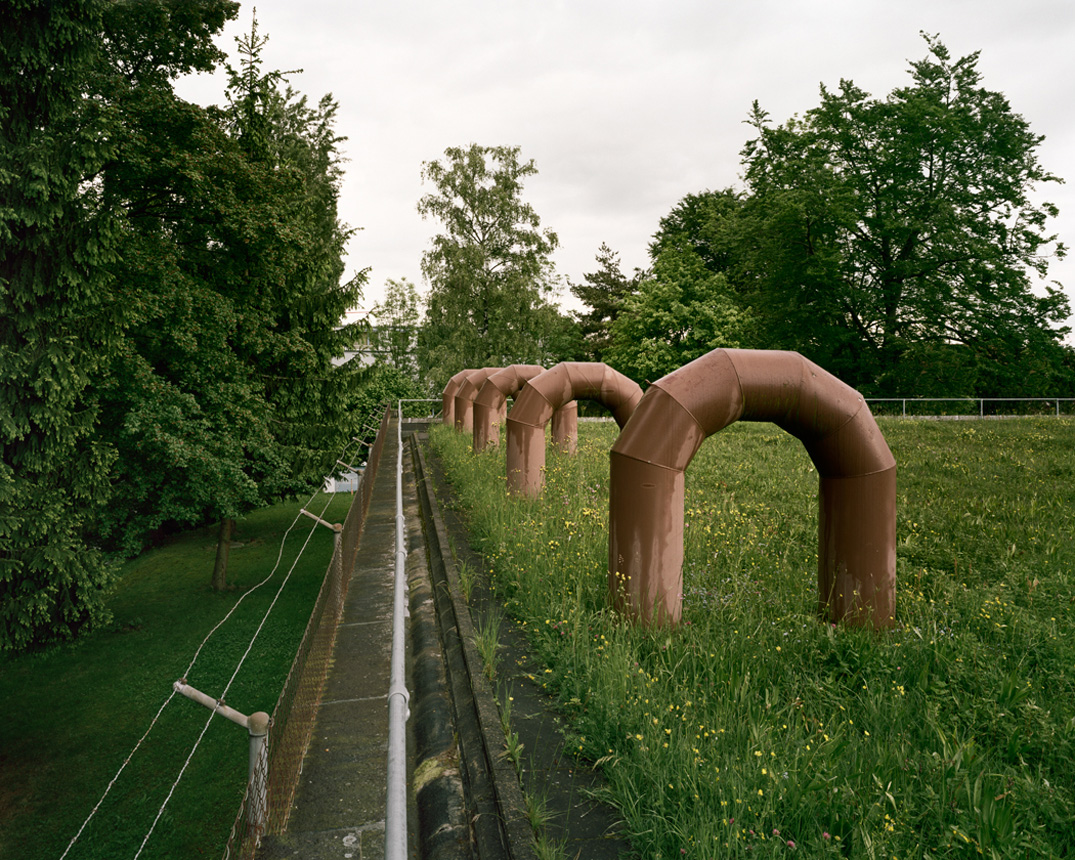
Most of my career has focused on our relationship with nature. I’m interested in how we find ways to accommodate nature, and how it accommodates us. As with most bodies of work, the pictures define my intent. But in the end, I make the pictures I do because of the conversation that occurs between the subject and myself - and this always depends on the light, the weather, how I'm feeling and what I am open to seeing at the moment. It's the moment all things come together for me.
Rooftop draws poetic attention to celebrate and proliferate new ideas in design showing the inventiveness in architecture and accommodating our need for nature. Green roofs reduce our carbon footprint by countering heat island effect and improve storm water control, but they do far more. These pictures symbolize the allure of nature in the face of our continuing urban sprawl. By securely situating the gardens within the steel, stone, and glass rectangularity of urban and industrial buildings, I ask viewers to revel in the far more open patterns, colors, and connection to the sky; and how they become part of a new landscape as well as a framework for positive change. Our ingenuity and grace continues to impress me. It makes me more optimistic about humanity.
Brad Temkin (USA, 1956). Has been documenting the human impact on the landscape. He has exhibited his photographs in museums and galleries throughout the United States and abroad. Temkin’s works are included in numerous permanent collections, including those of The Art Institute of Chicago; Milwaukee Art Museum; Corcoran Gallery of Art, Washington, D.C.; Museum of Fine Arts, Houston; Akron Art Museum, Ohio; and Museum of Contemporary Photography, Chicago, among others. His images have appeared in such publications as Aperture, Black & White Magazine, TIME Magazine and European Photography.
Artificial Wonderland
Written by Yang Yongliang
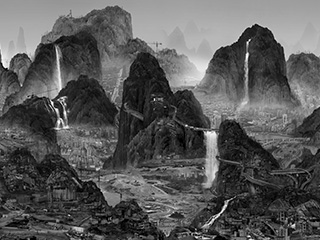
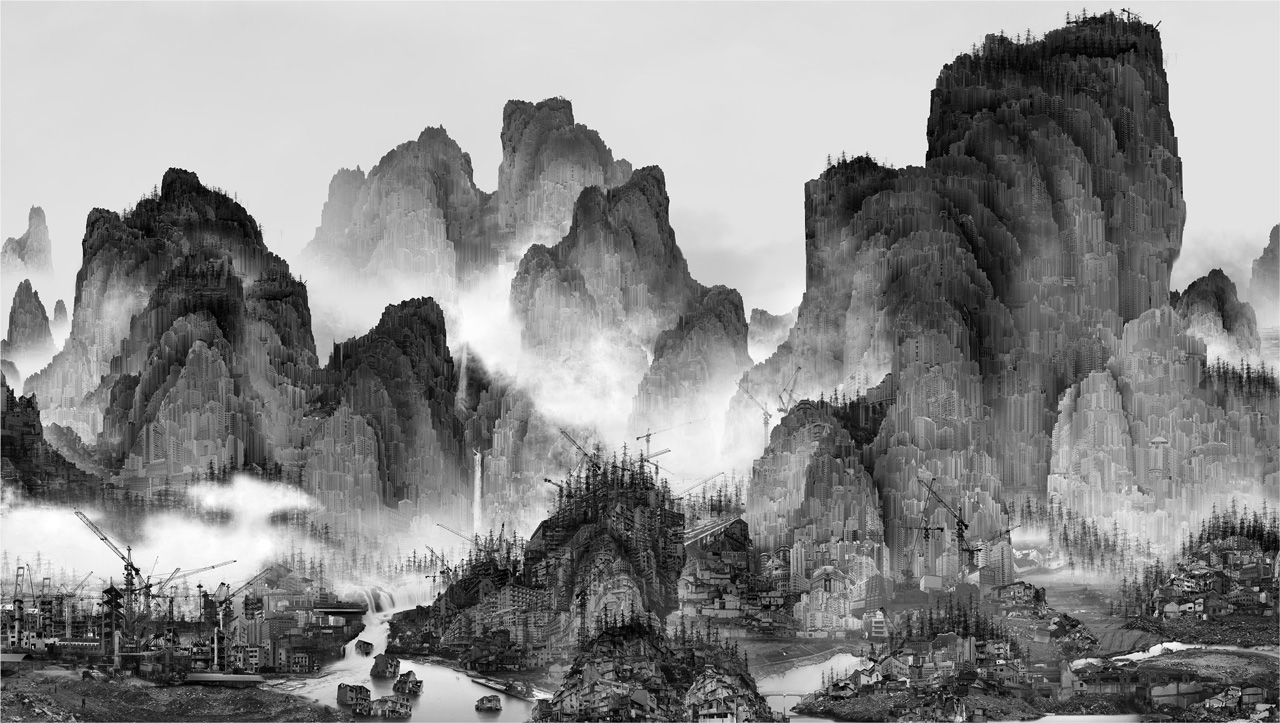
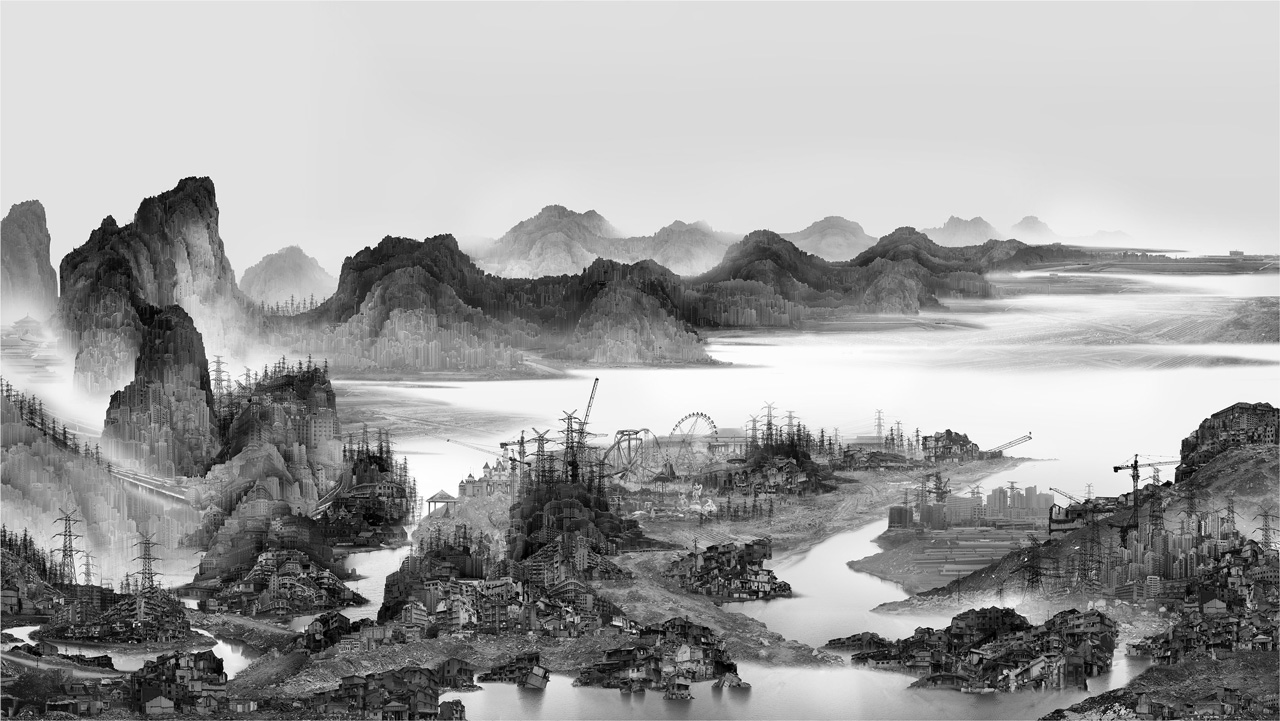
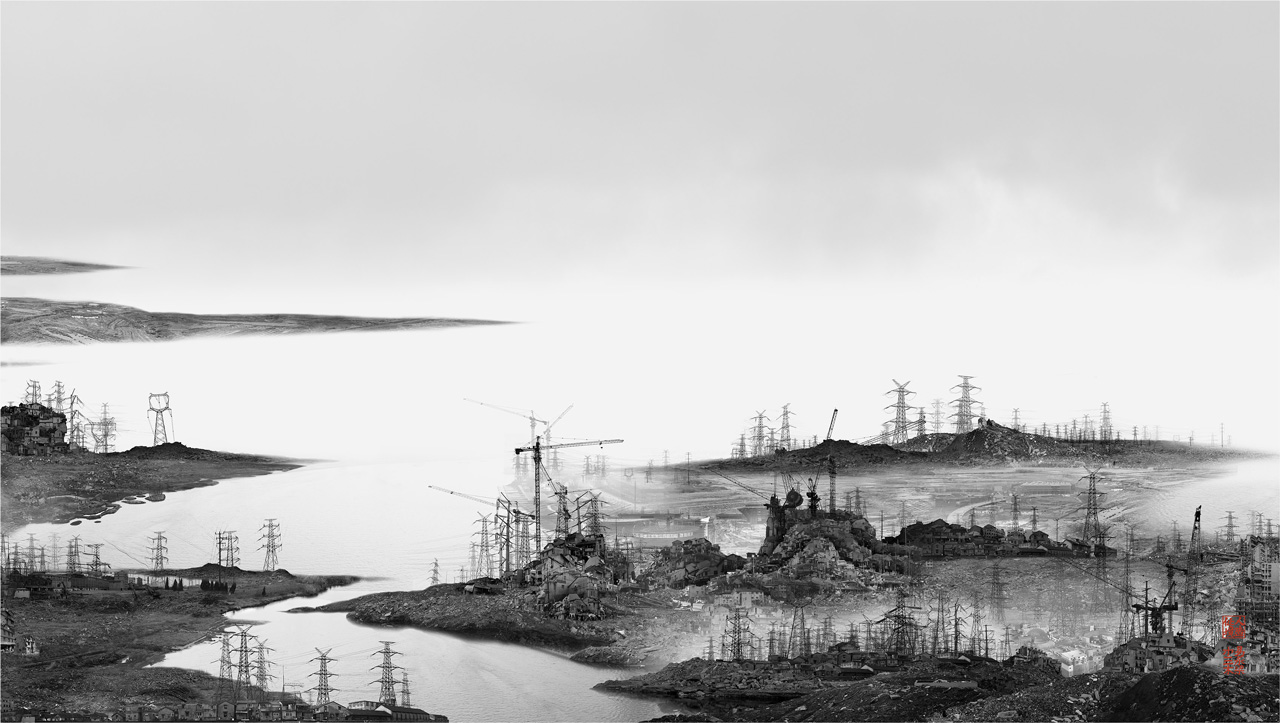
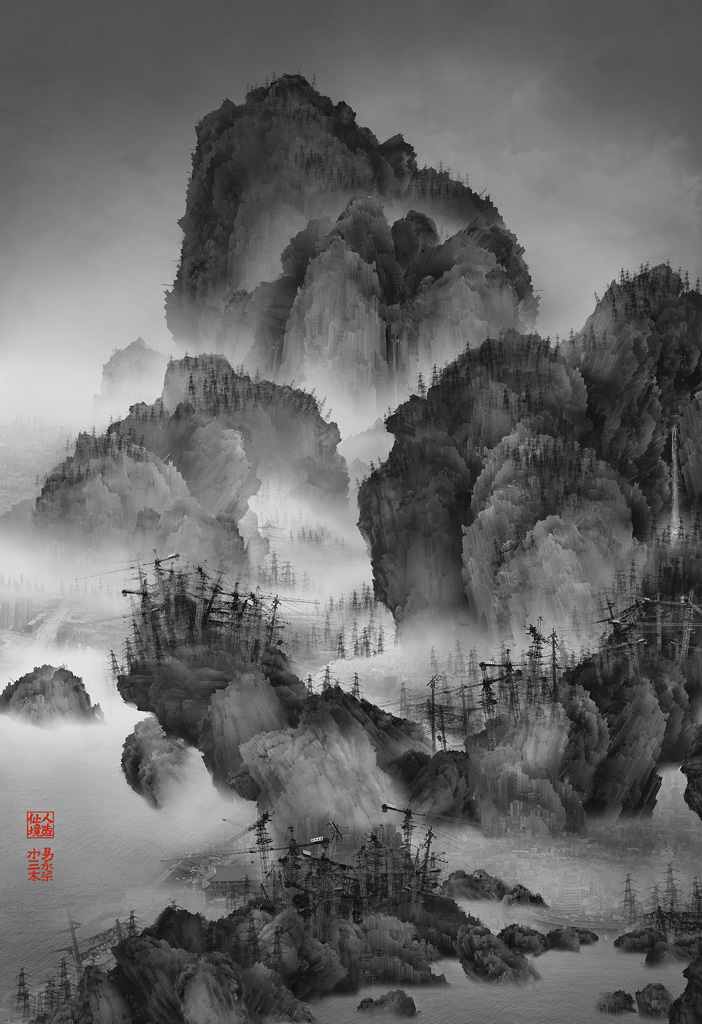
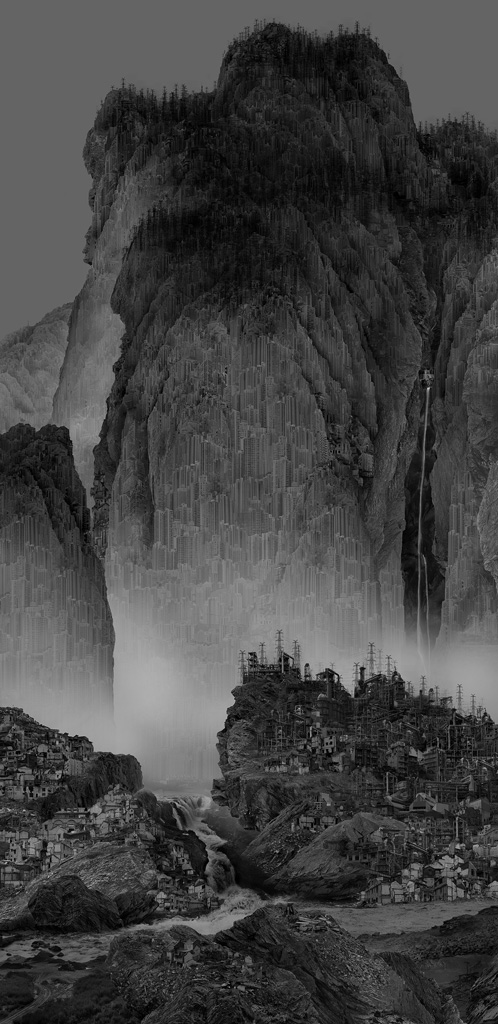
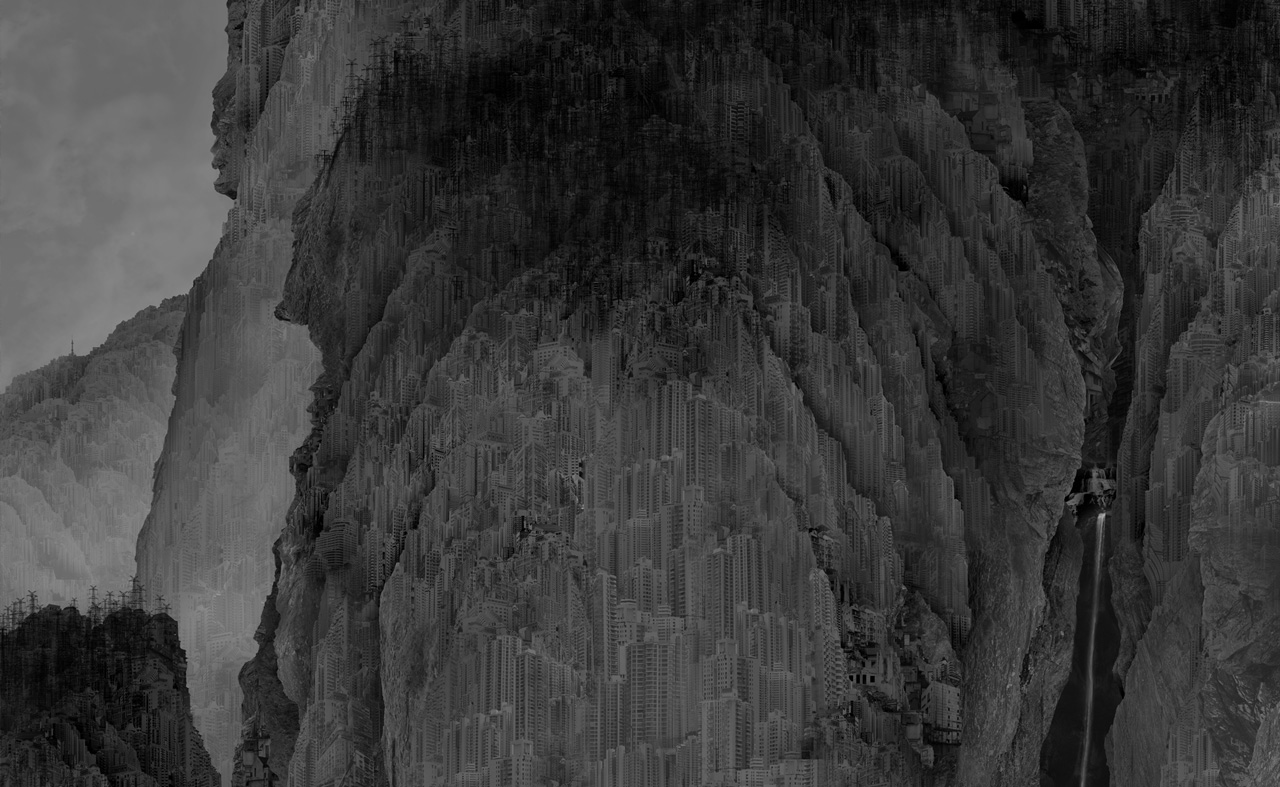
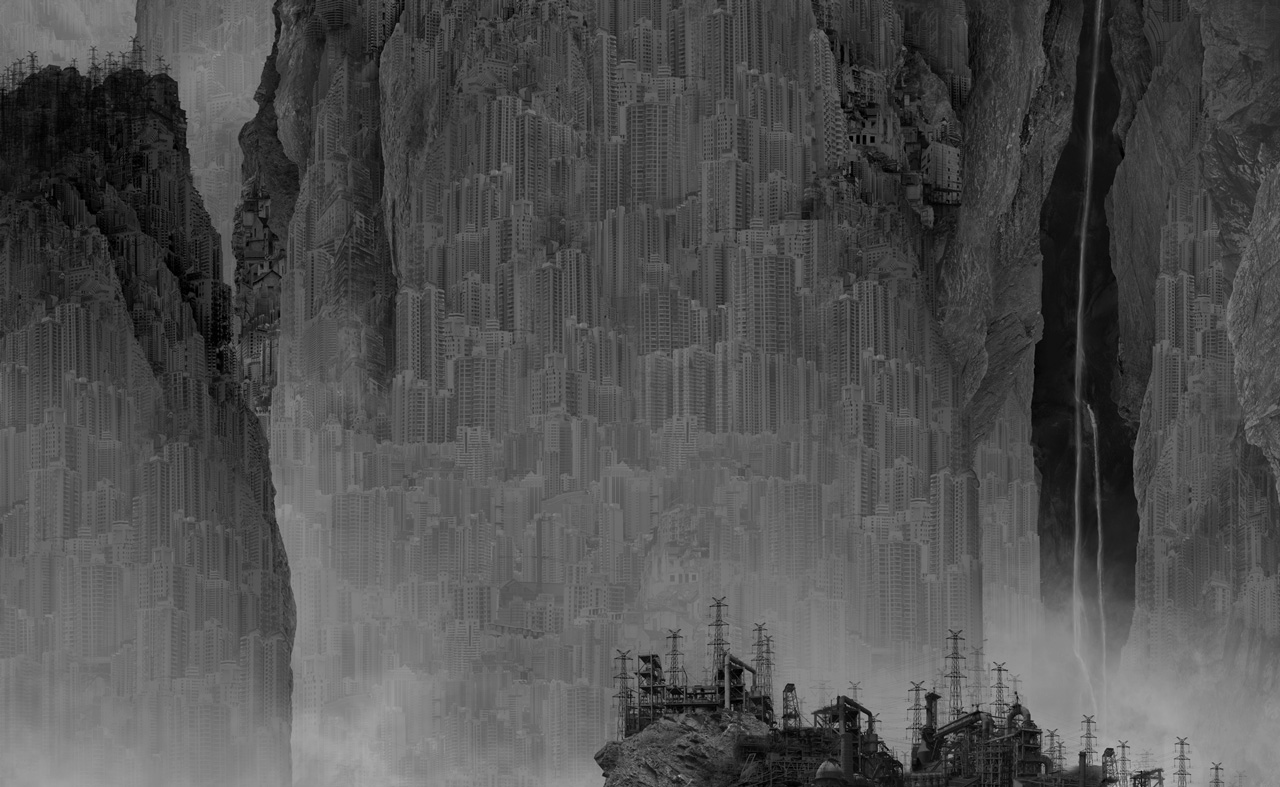
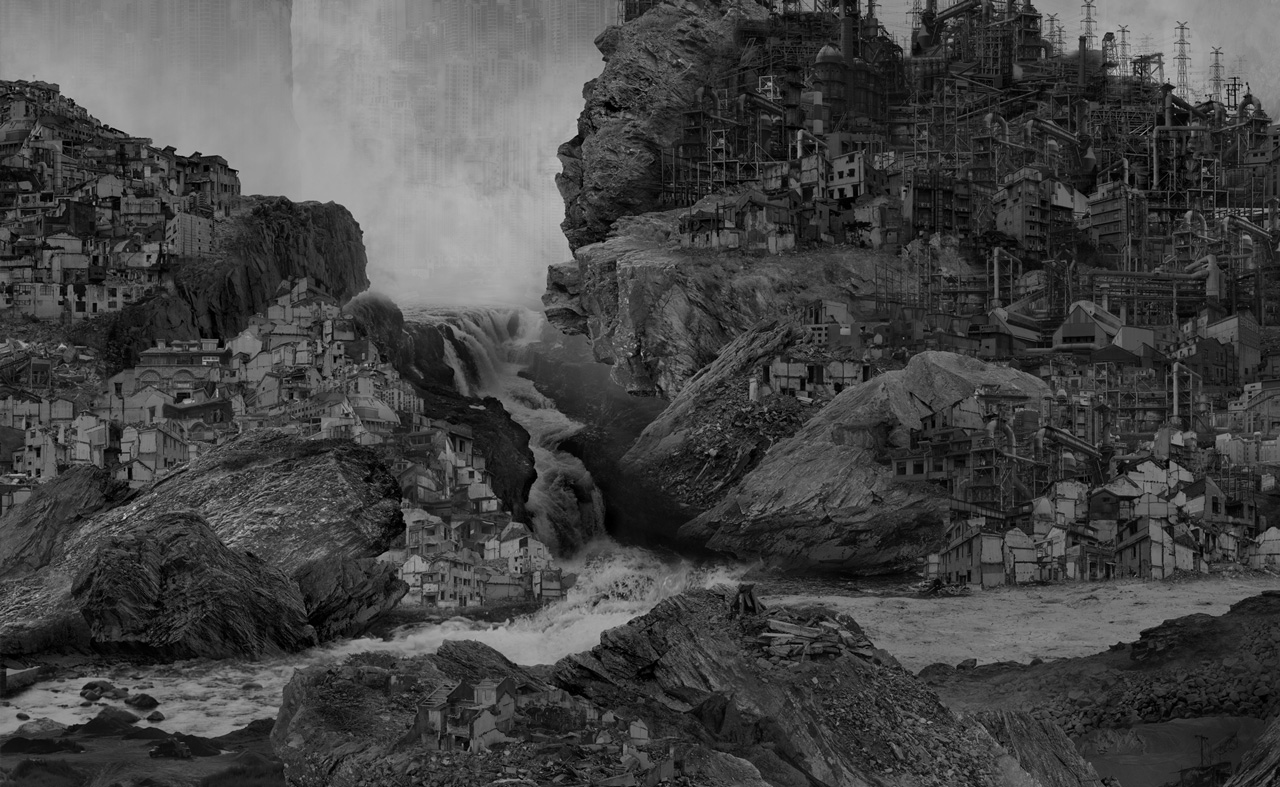
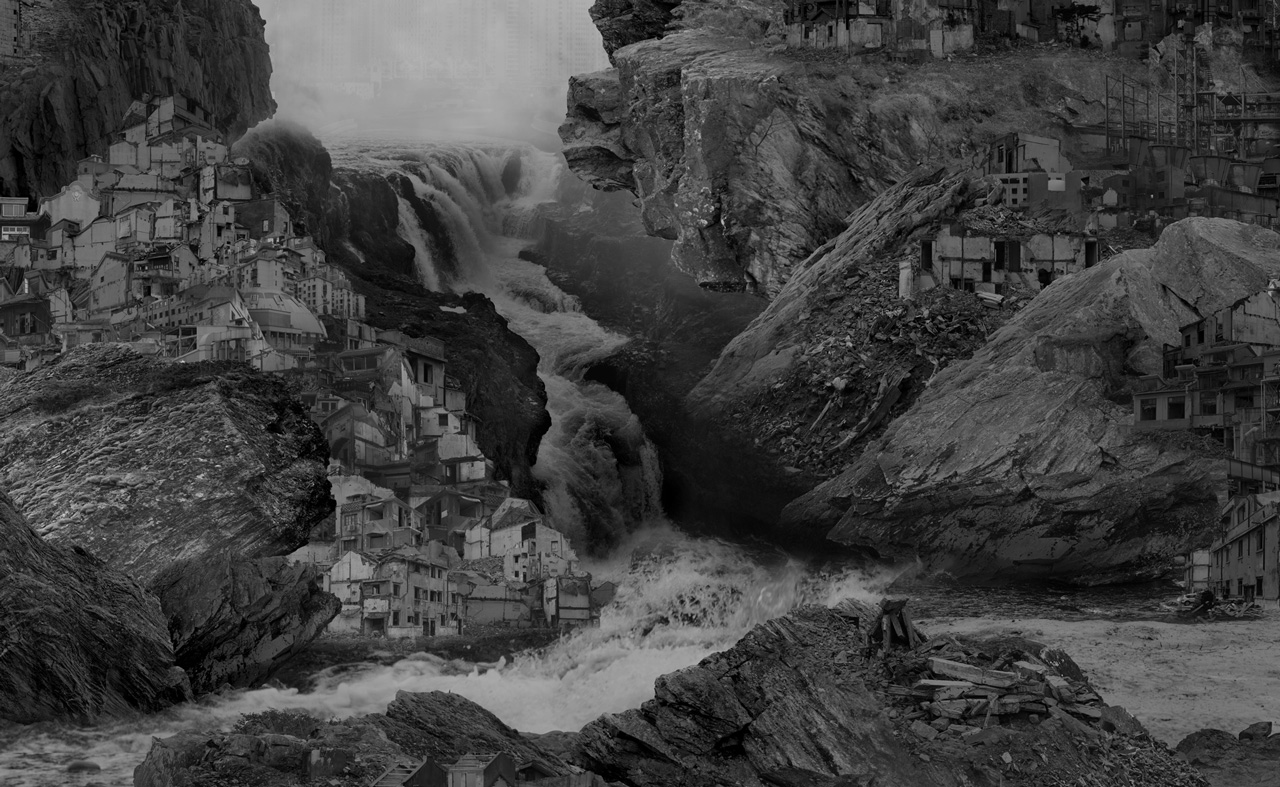
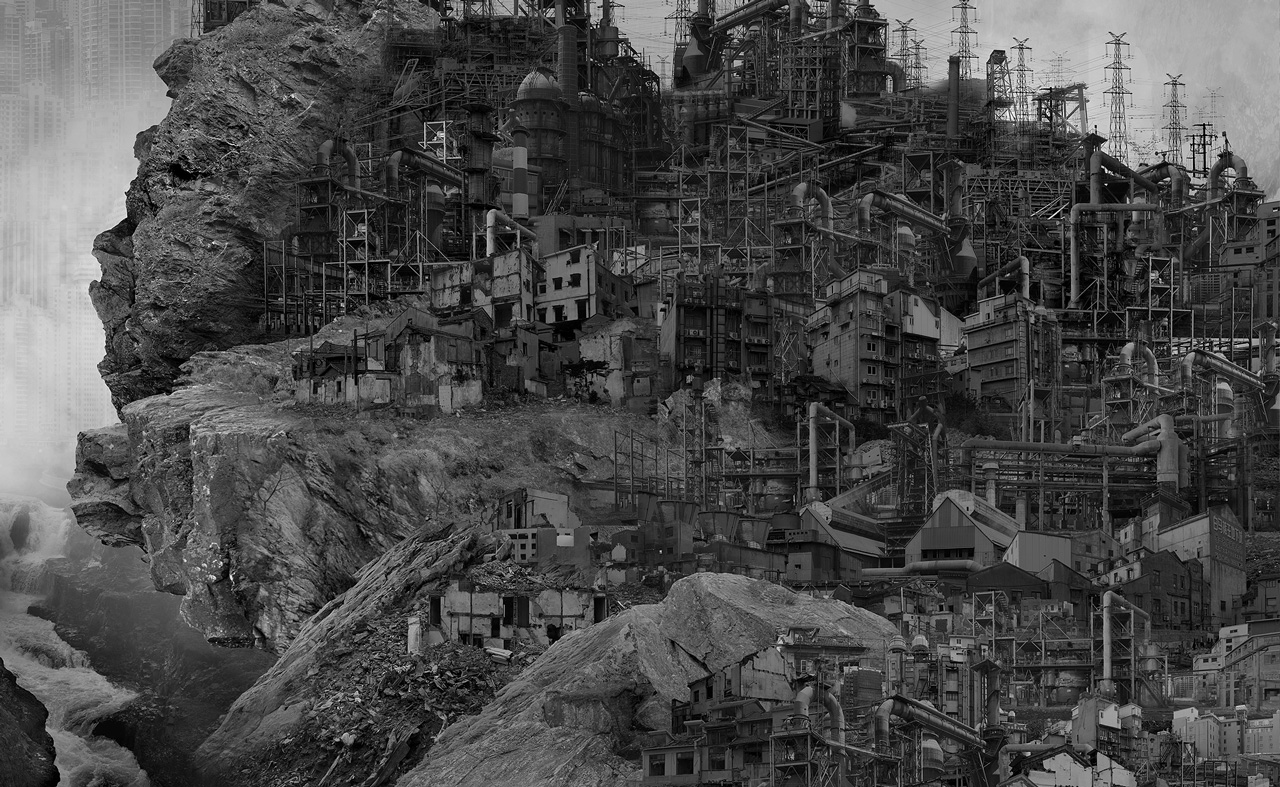
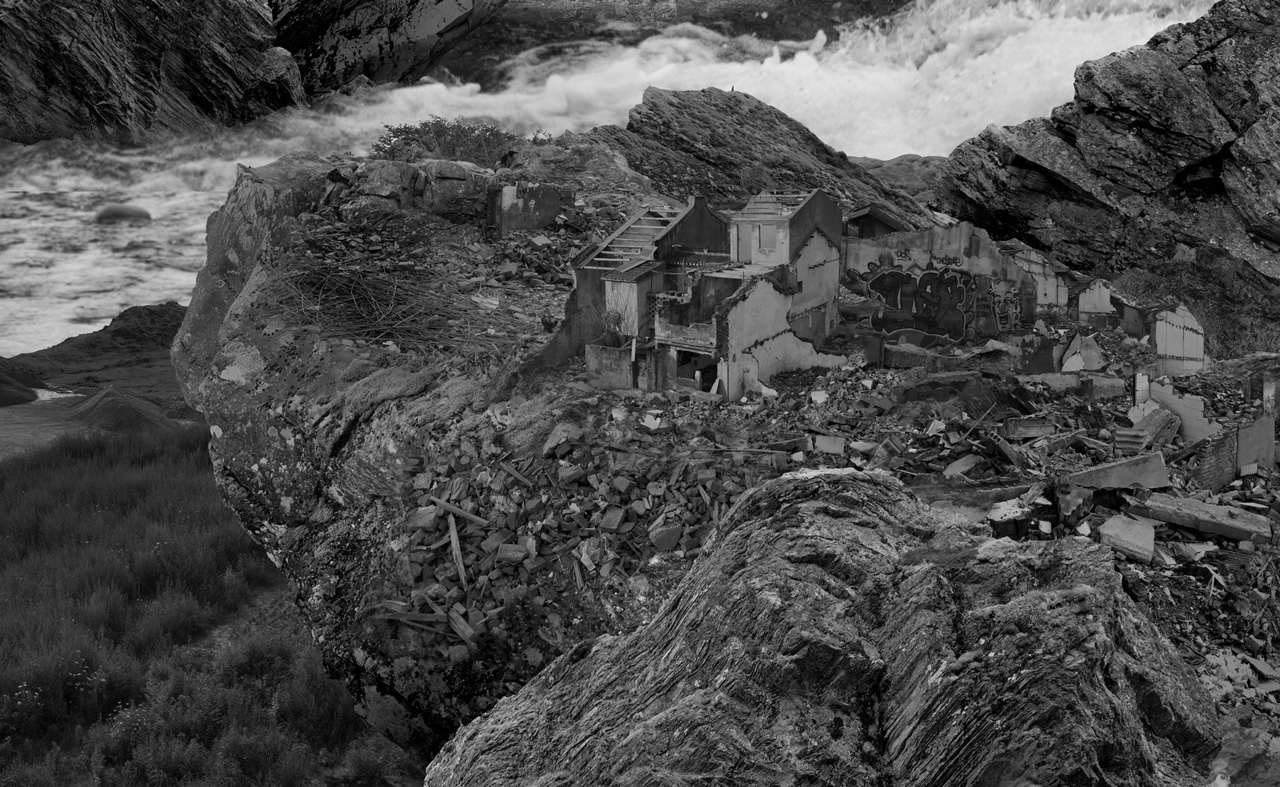
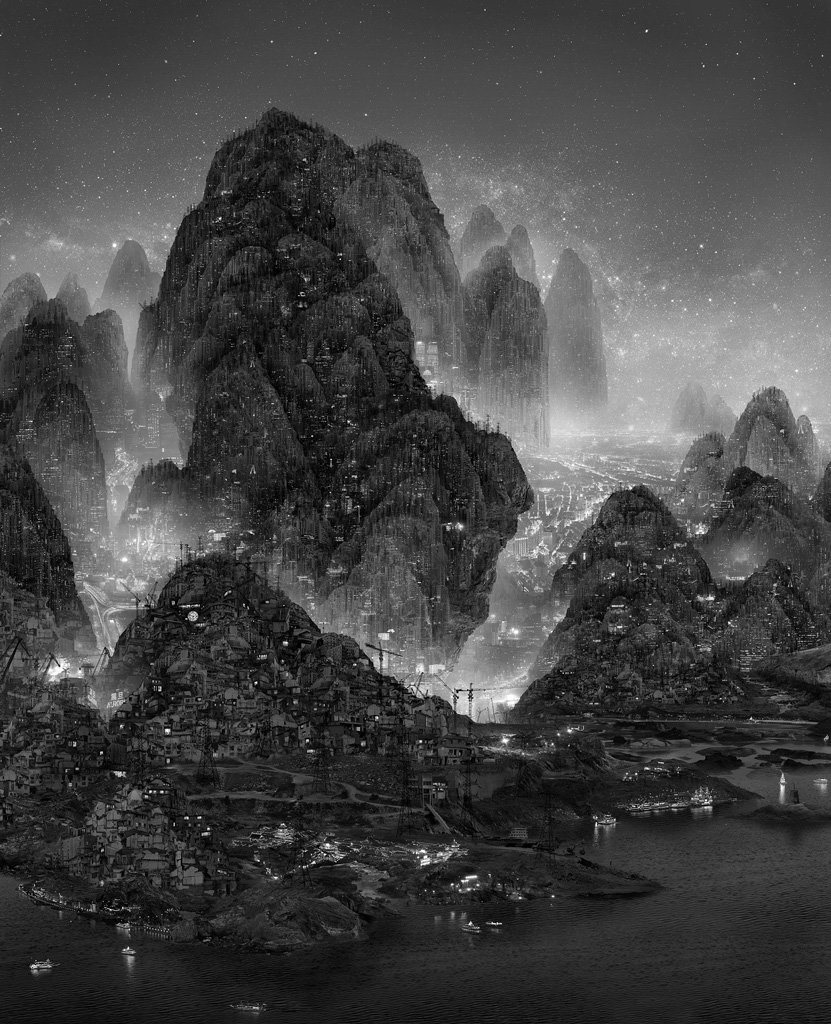
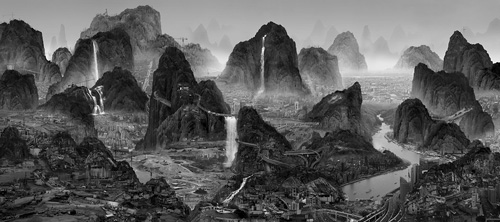
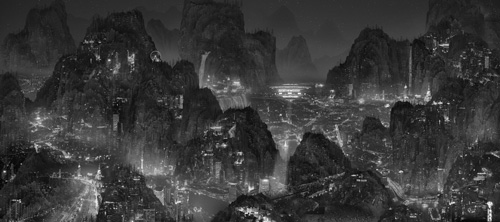
Artificial Wonderland is a series started in 2010. Yang Yongliang uses images of architecture as brushstrokes; heavy mountain rocks with enriched details draw a faithful reference to Song Dynasty landscape painting. Urban development makes life in the city flourish, but it also imprisons these lives; centuries-old cultural tradition in China is profound, but it has also remained stagnant. Ancient Chinese people painted landscapes to praise the greatness of nature; Yang's works, on the other hand, lead towards a critical re-thinking of contemporary reality.
In Artificial Wonderland II (2014), there are digital replicas of two Song Dynasty master paintings, namely Travelers Among Mountains and Steams (Fan Kuan) and Wintery Forest in the Snow (anonymous). Whereas ancient landscapes are often seen as being without time, Yang's interpretation of the latter work is a nocturnal image, titled Wintery Forest in the Night. The 2014 series marks a step forward in terms of digital technique--the piece is larger than ever and enriched with tremendous detail images. Also, Yang conjucted natural mountain rocks into the signature artificial landscape for the first time. Images of the mountain rocks are mostly taken in Iceland and Norway. In 2015, Artificial Wonderland II was shortlisted in the Prix Pictet – the global award in photography and sustainability.
The Day of Perpetual Night and The Night of Perpetual Day, are two pieces that exemplify a line of recent video work by Yang Yongliang. In them, the traditional landscape extends a narrative between a subtle temporality and diffuse timelessness. With the same rigorous technique that characterizes his still images, in these videos he uses time as a tool to emphasize the paradox of our time: the crossroads between necessary nostalgia, our daily chaos and imagination.
Yang Yongliang (Shanghai, 1980). He graduated from China Academy of Art in 2003, majored in visual communication. He started his experiments with contemporary art in 2005, and his practice involved varied media including photography, painting, video and installation. Yang exploits a connection between traditional art and the contemporary, implementing ancient oriental aesthetics and literati beliefs with modern language and digital techniques. His work as an expanding meta-narrative that draws from history, myth and social culture, and plays out in the context of the city and its ever-changing landscapes.
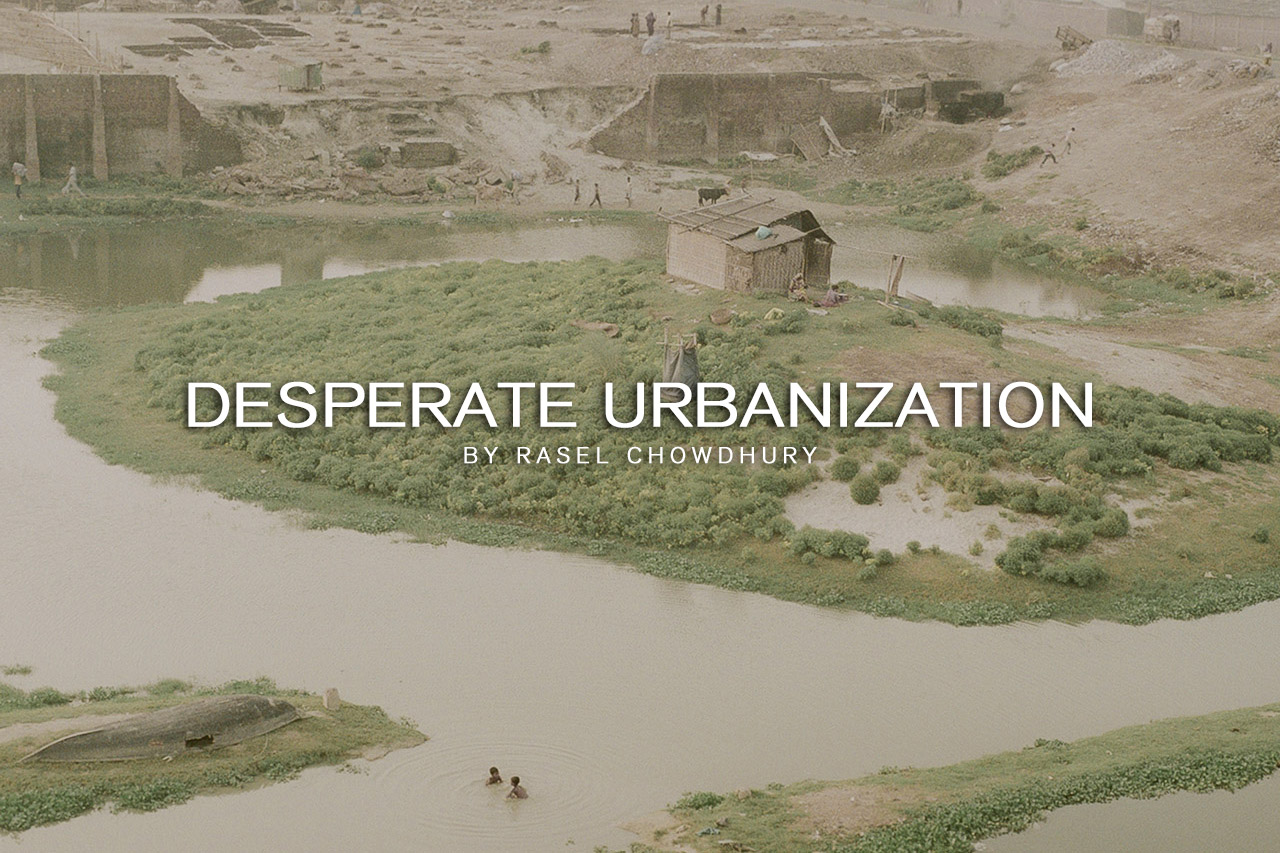
Desperate Urbanization
Written by Rasel Chowdhury
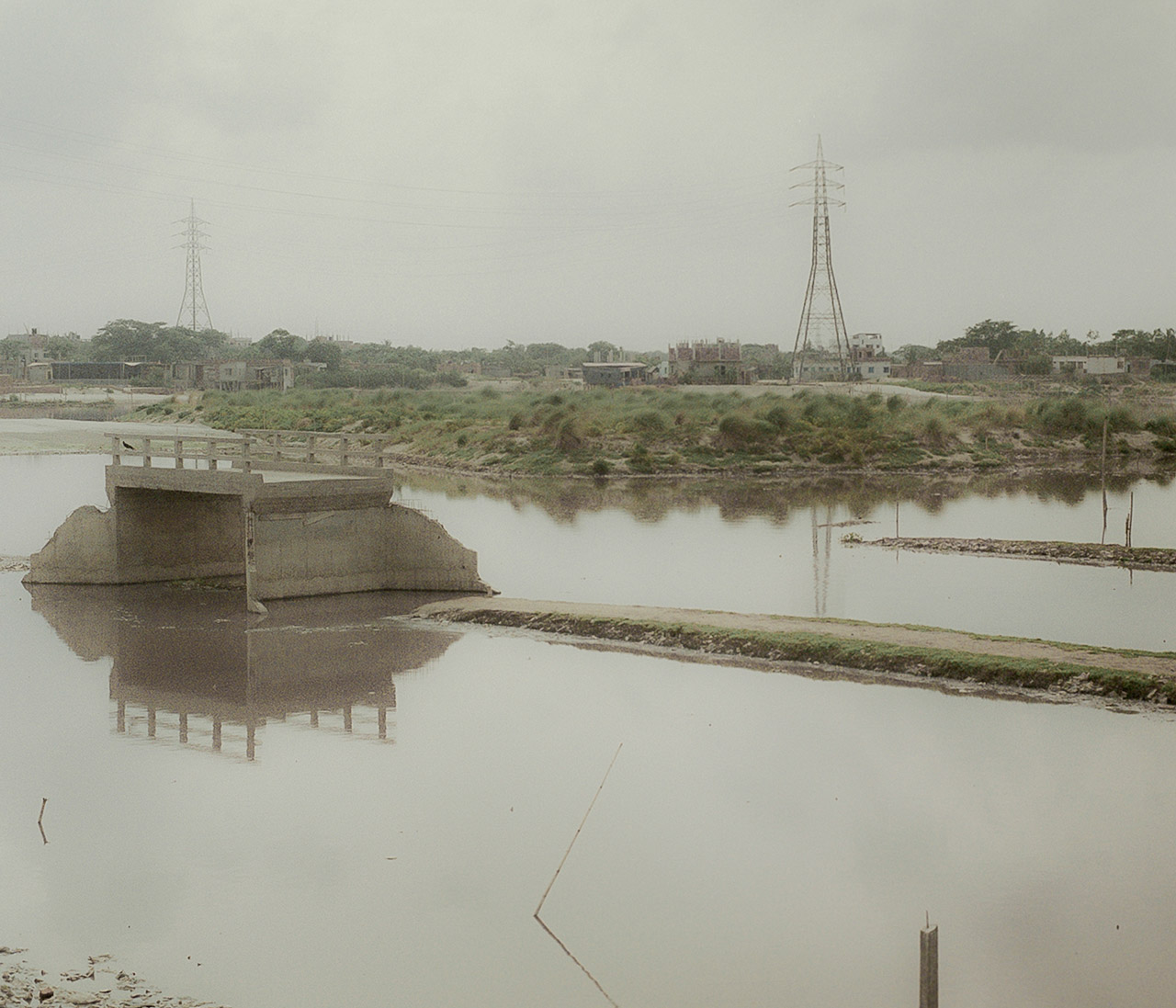
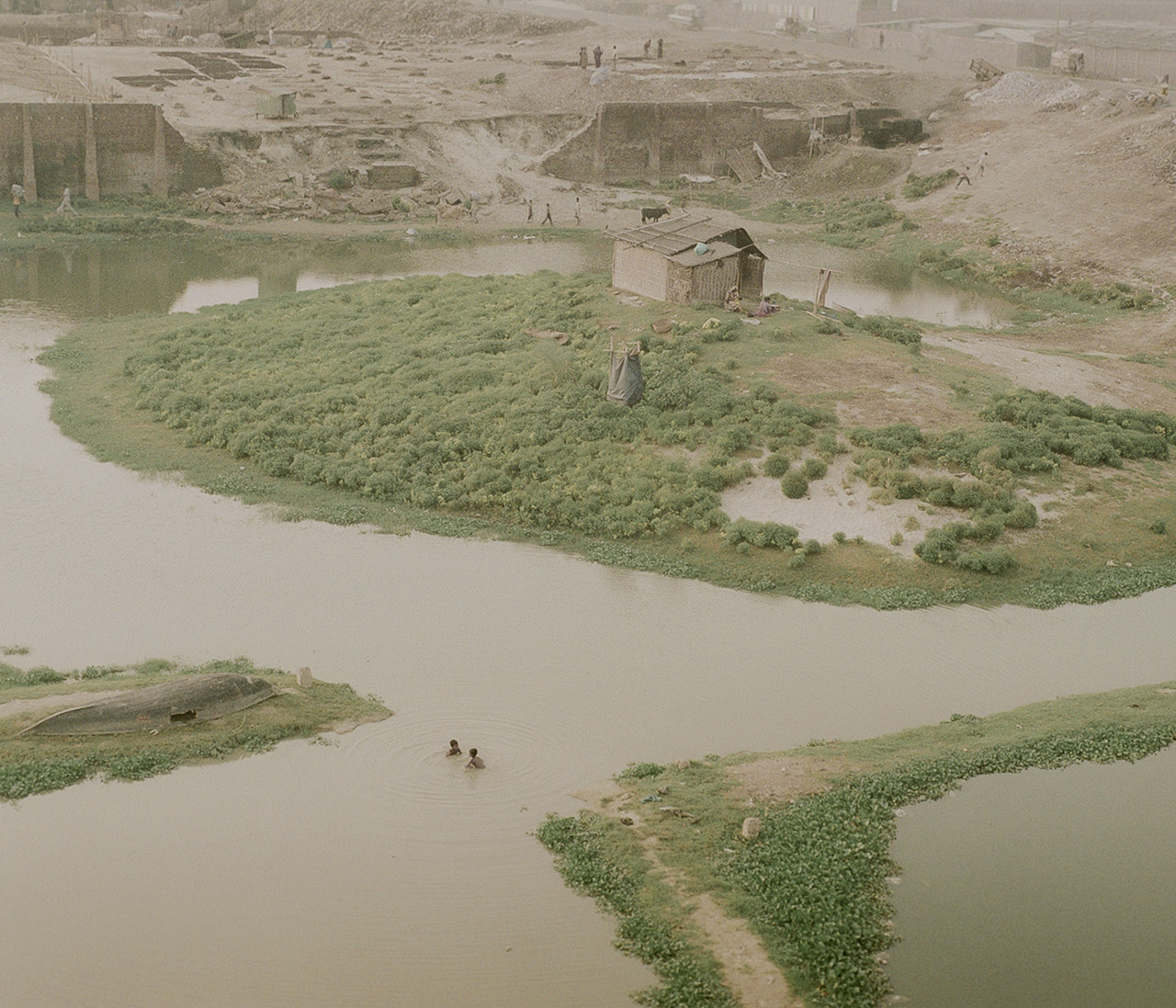
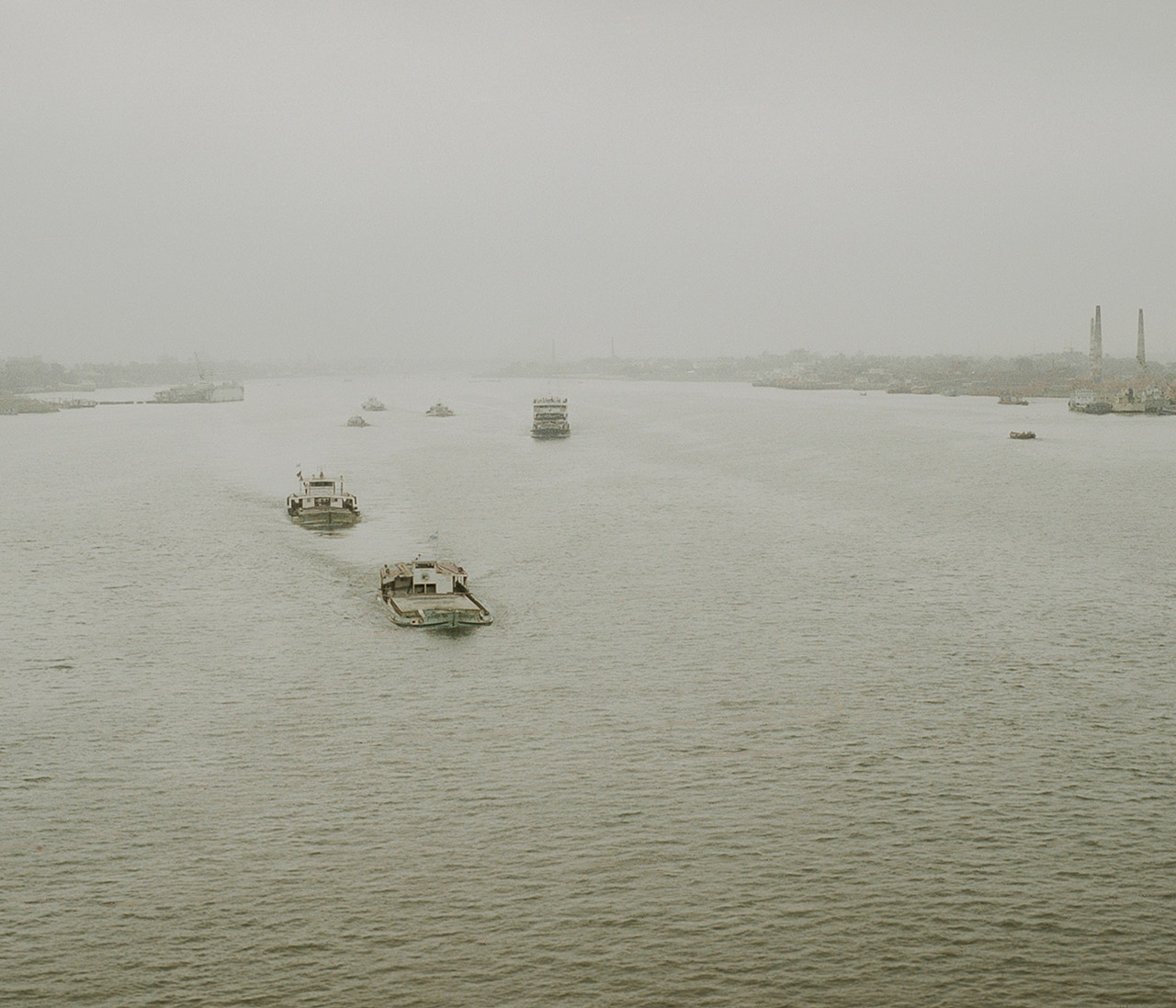
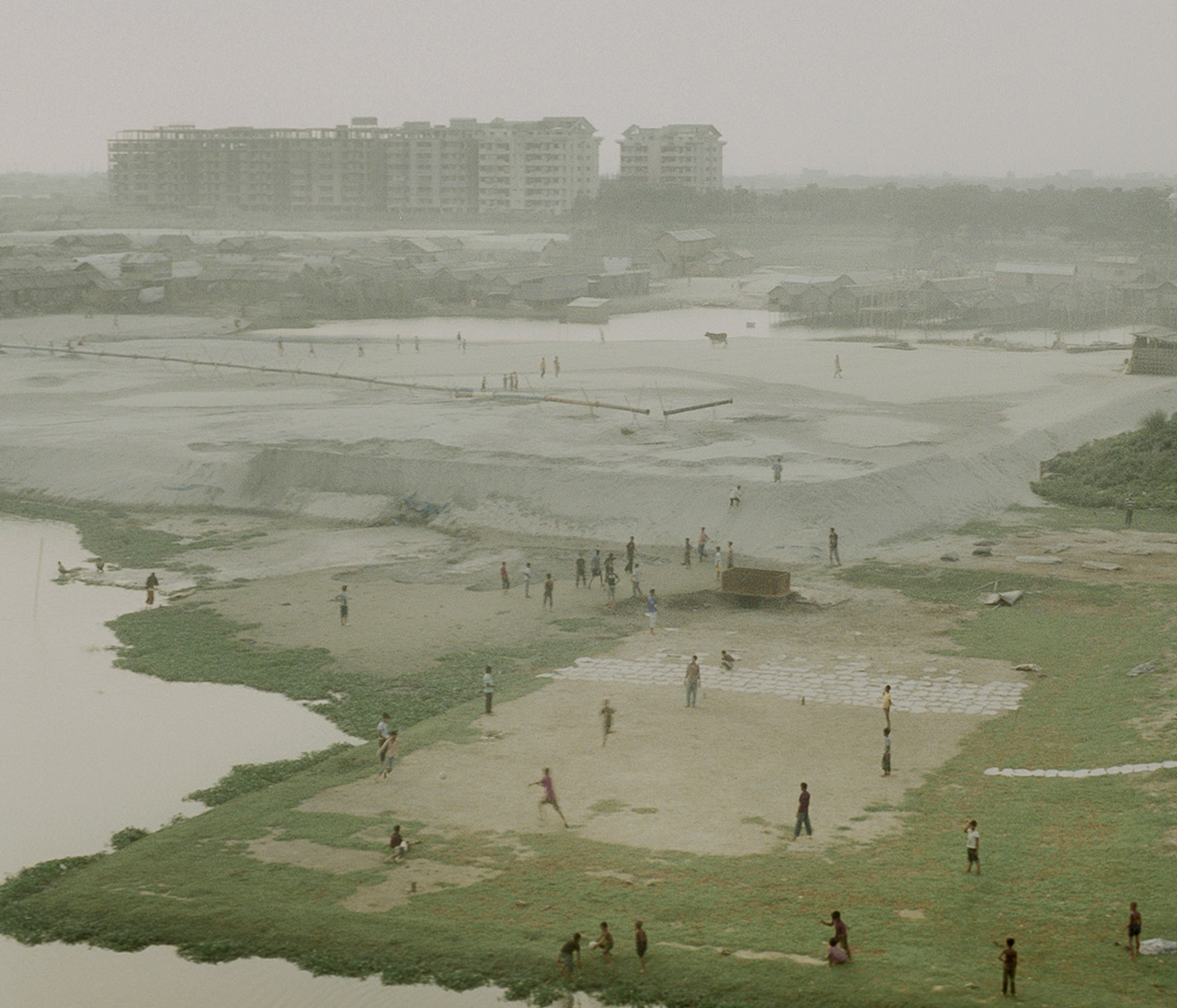
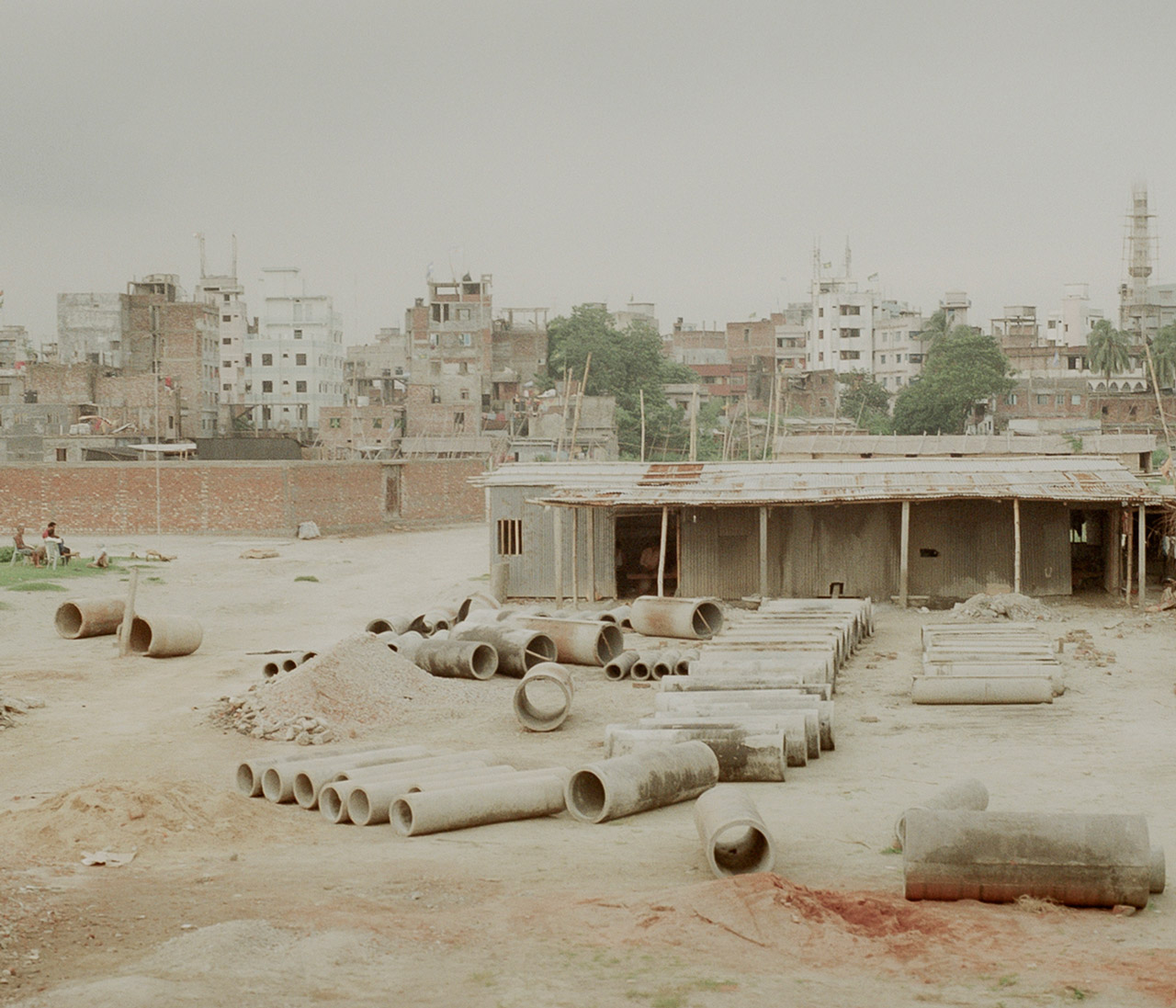
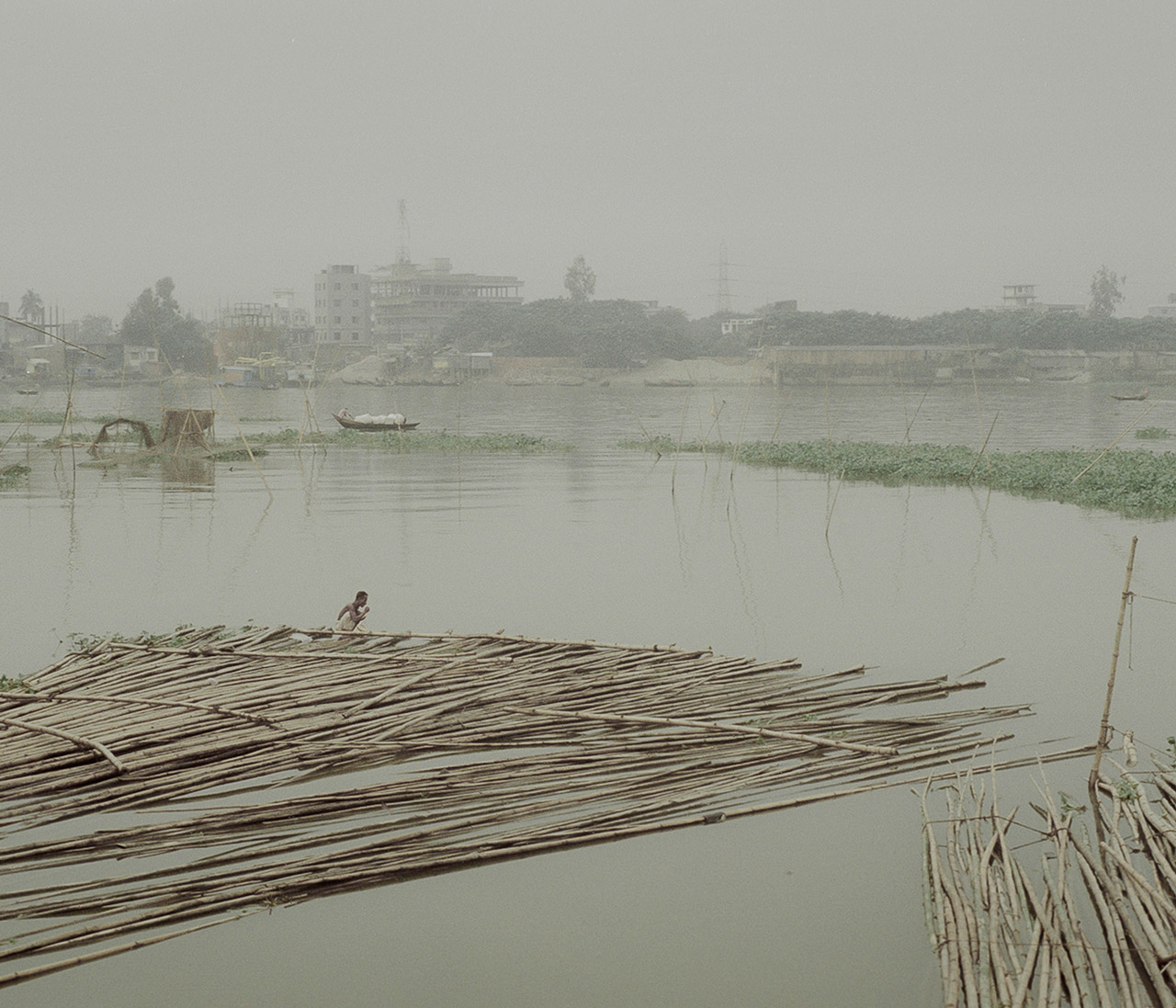
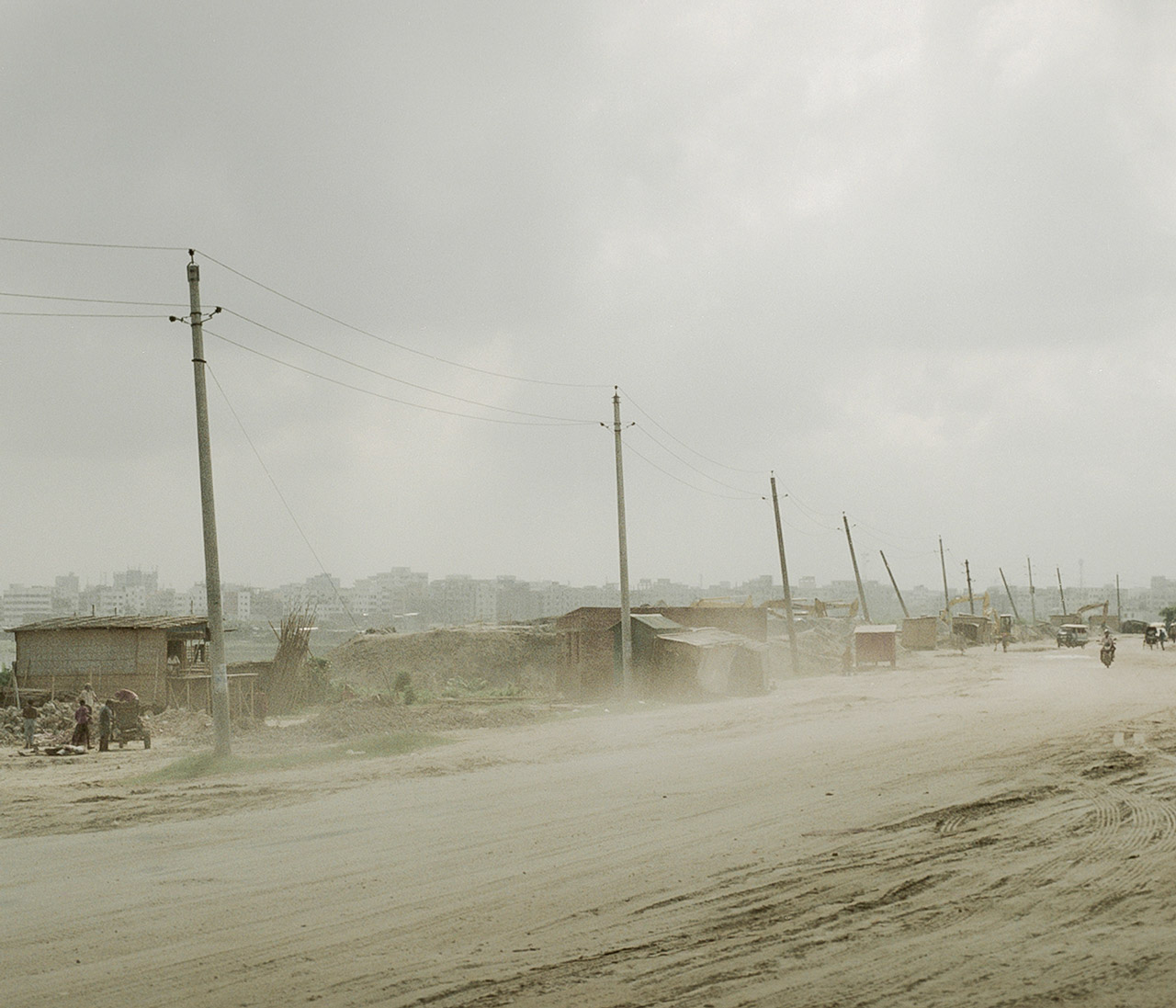
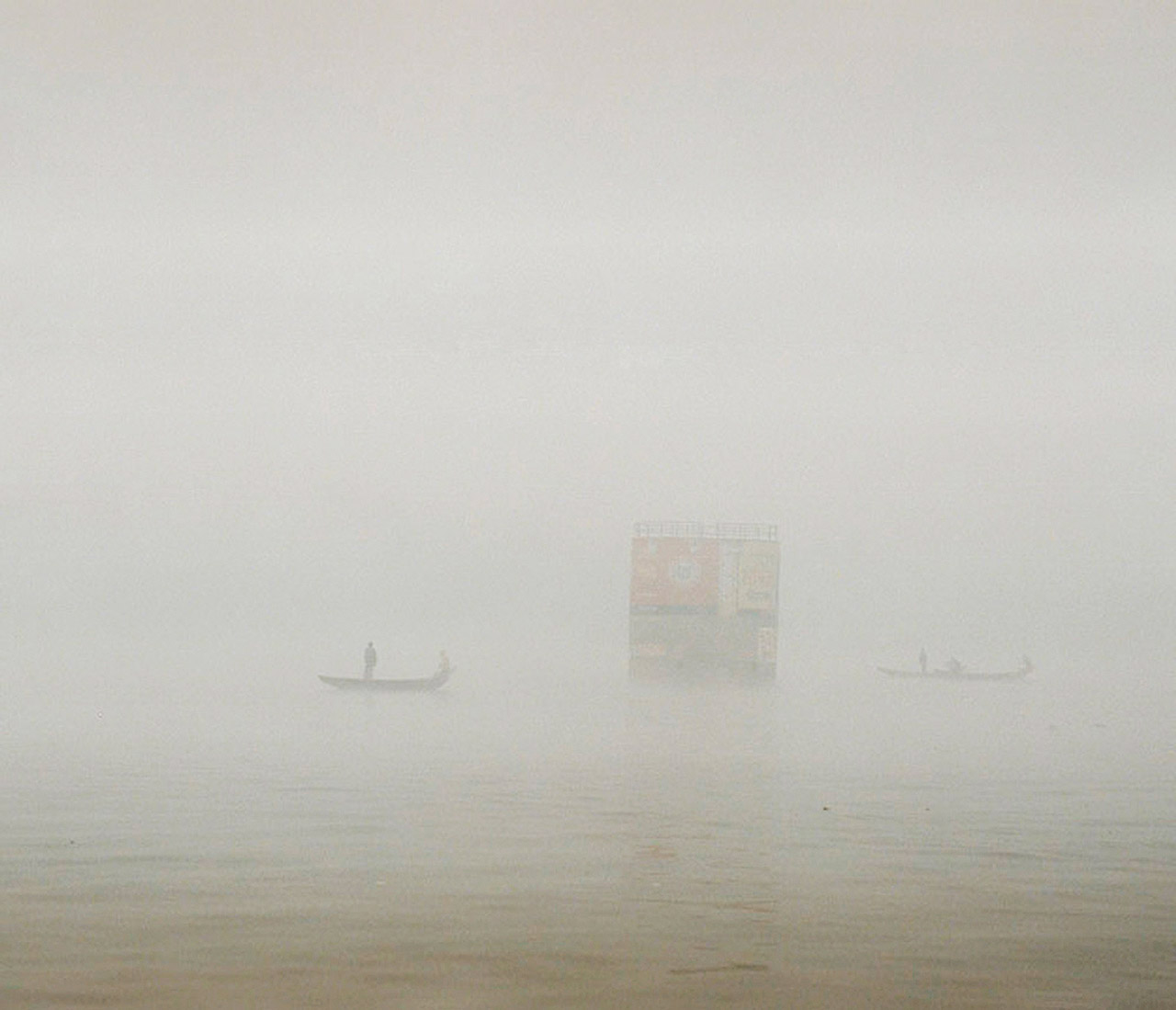
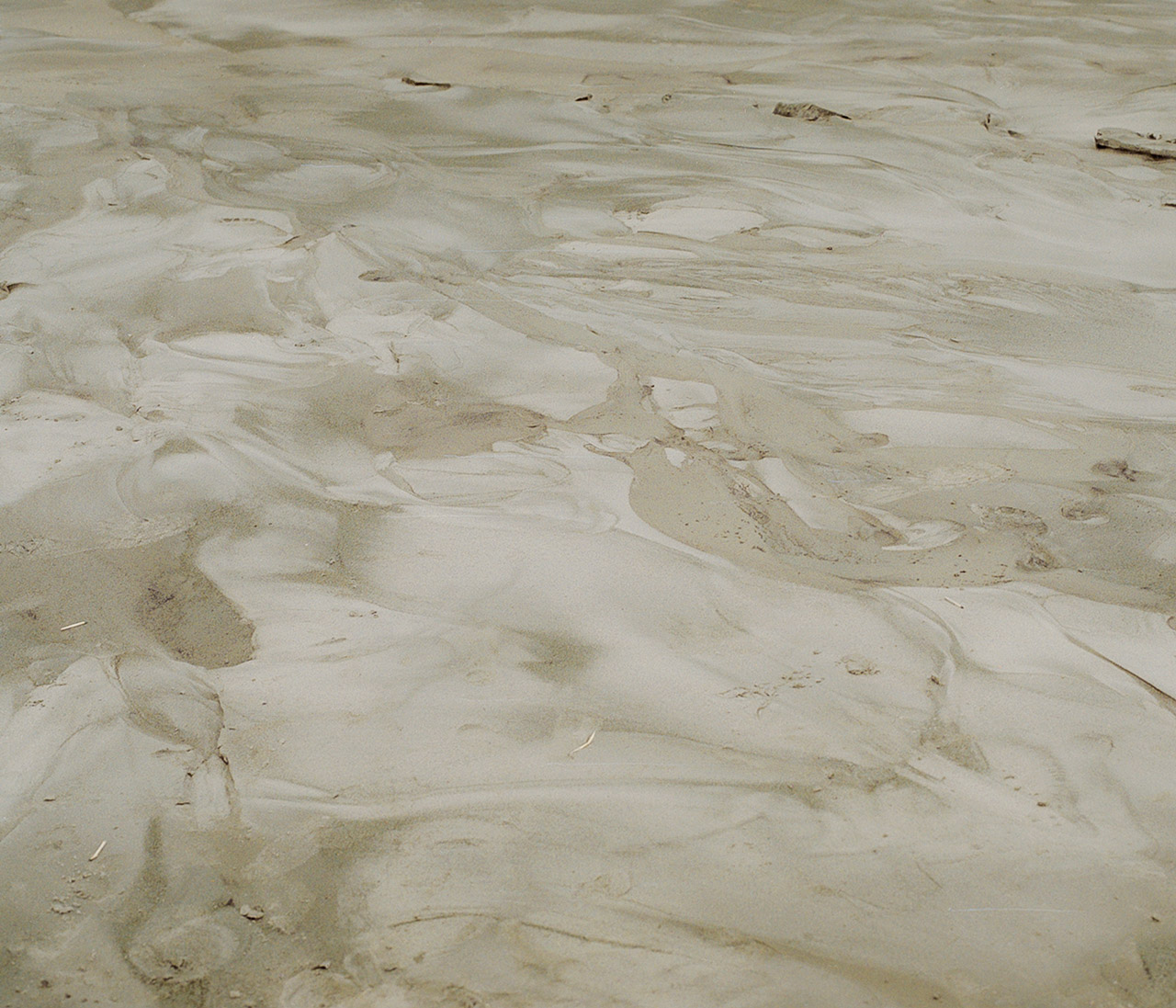
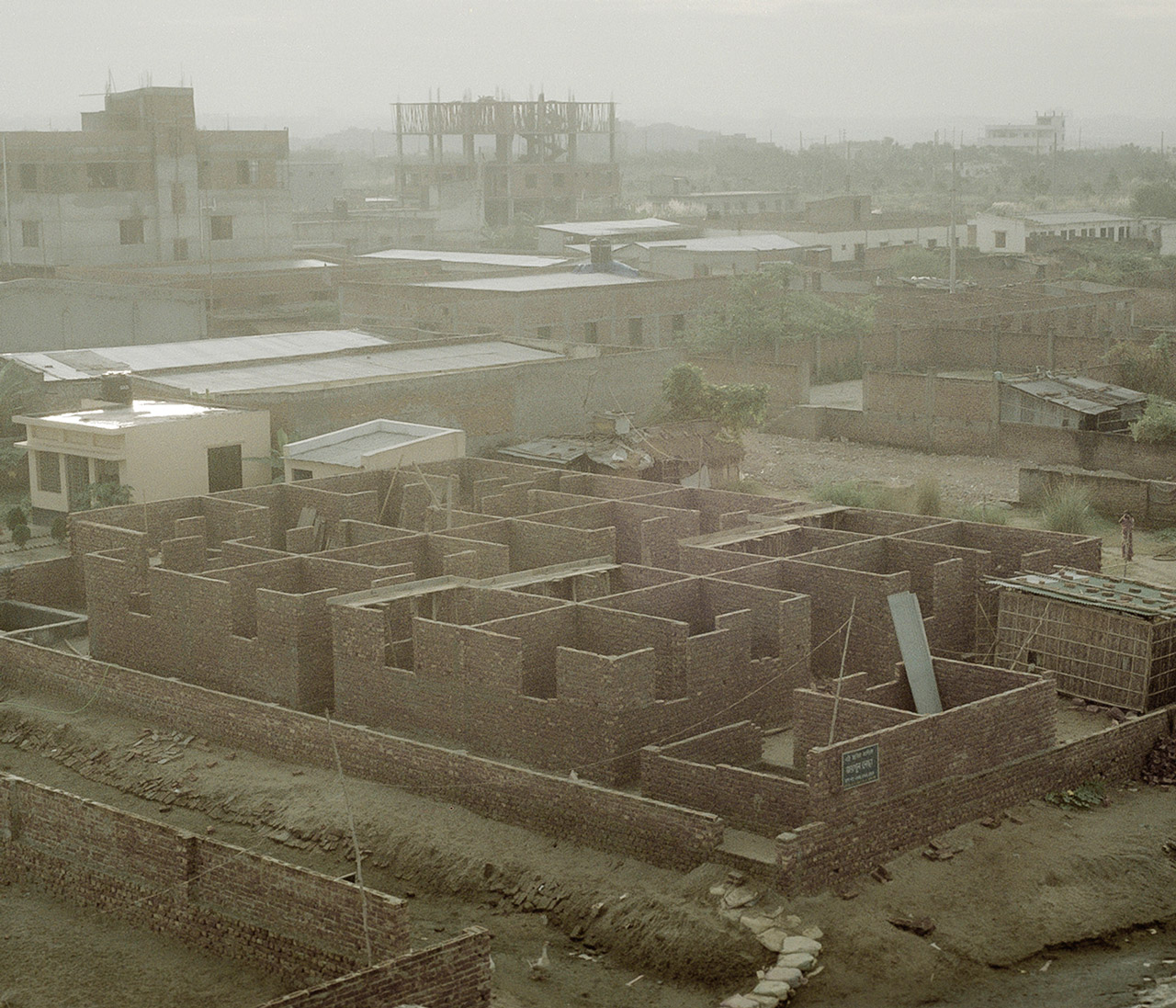
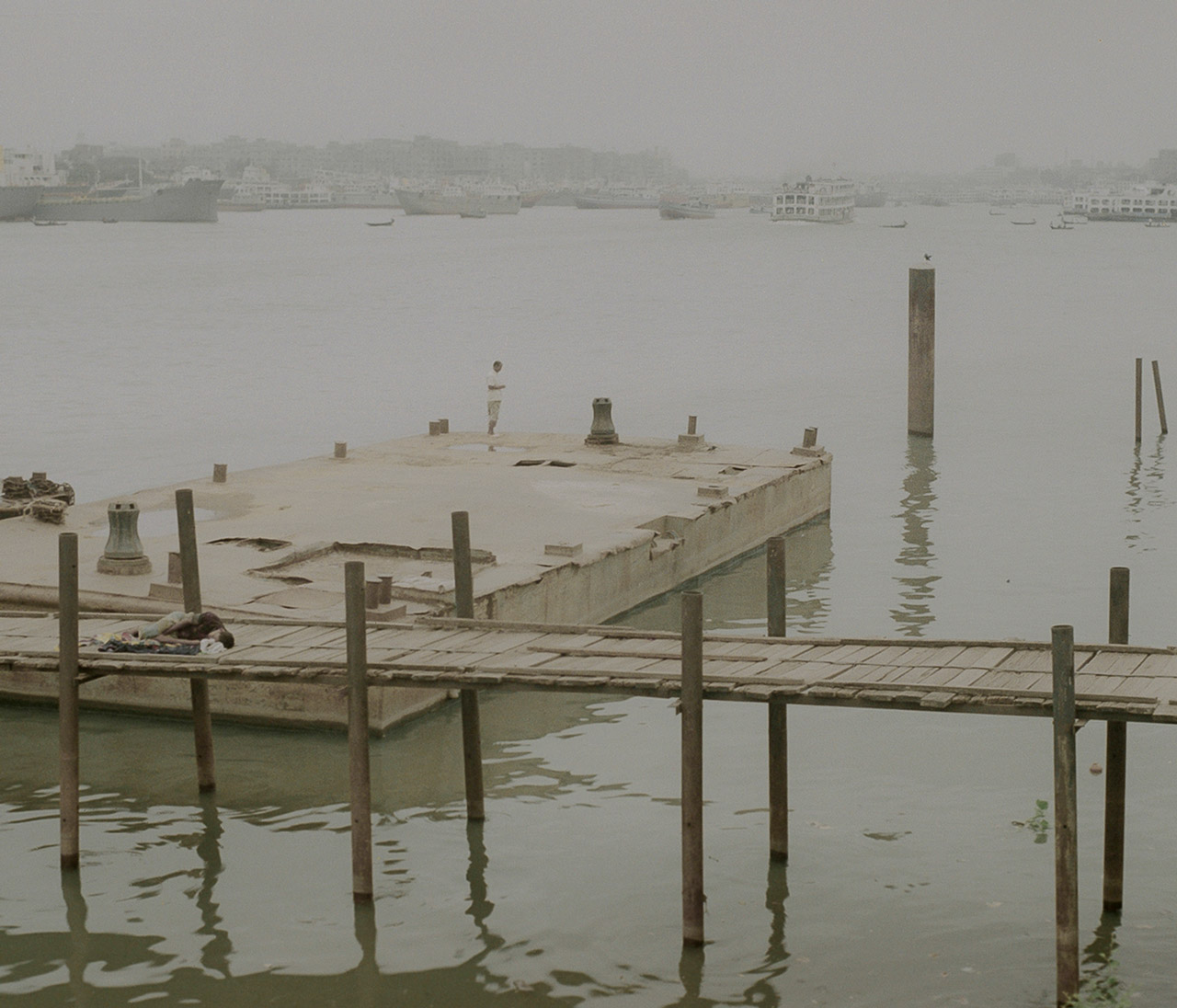
When we are celebrating 400 years of Dhaka City, River Buriganga is fighting to survive. Today, it is nearly dead, can’t run on its natural way. It seems that people of Dhaka are killing the river for their insensitivity.
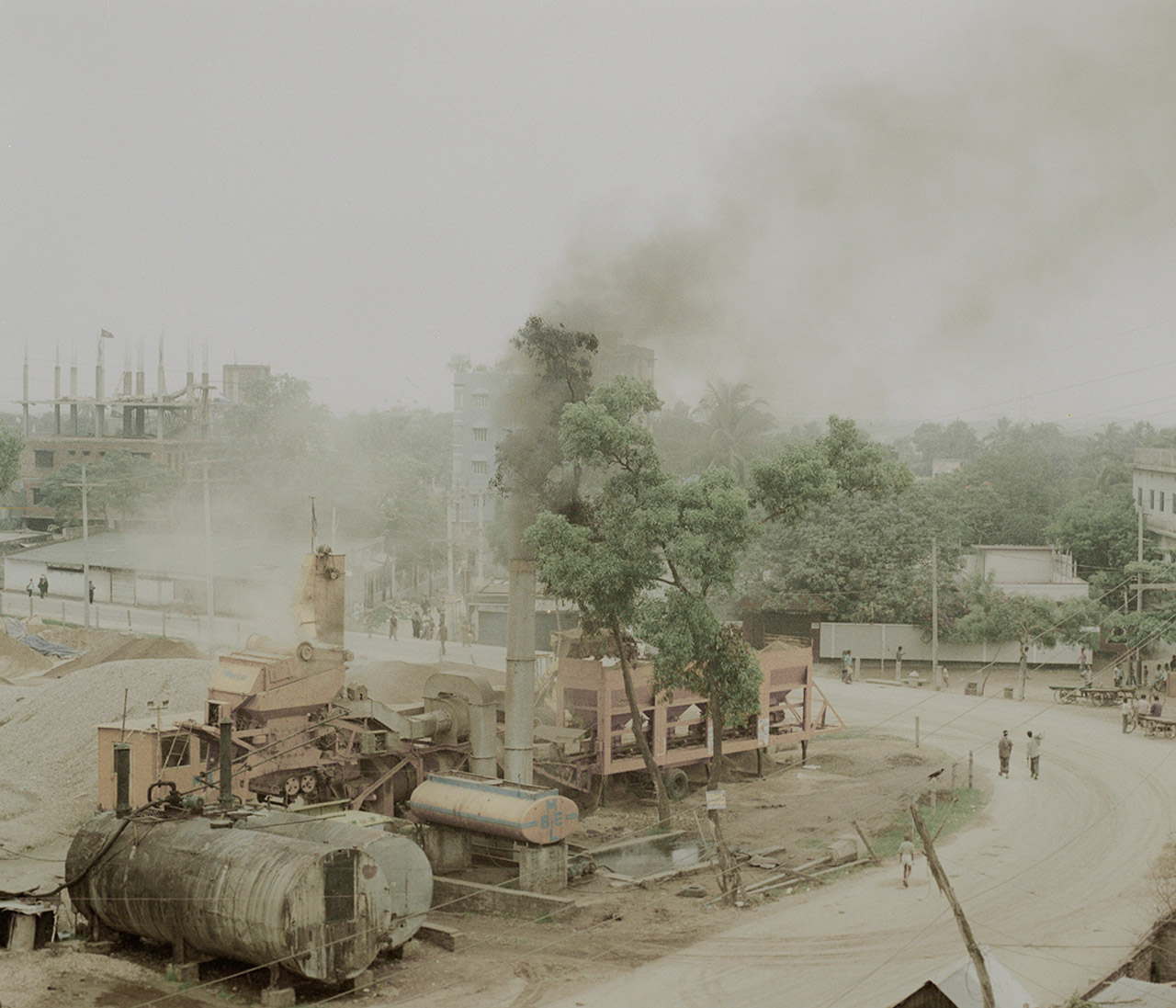
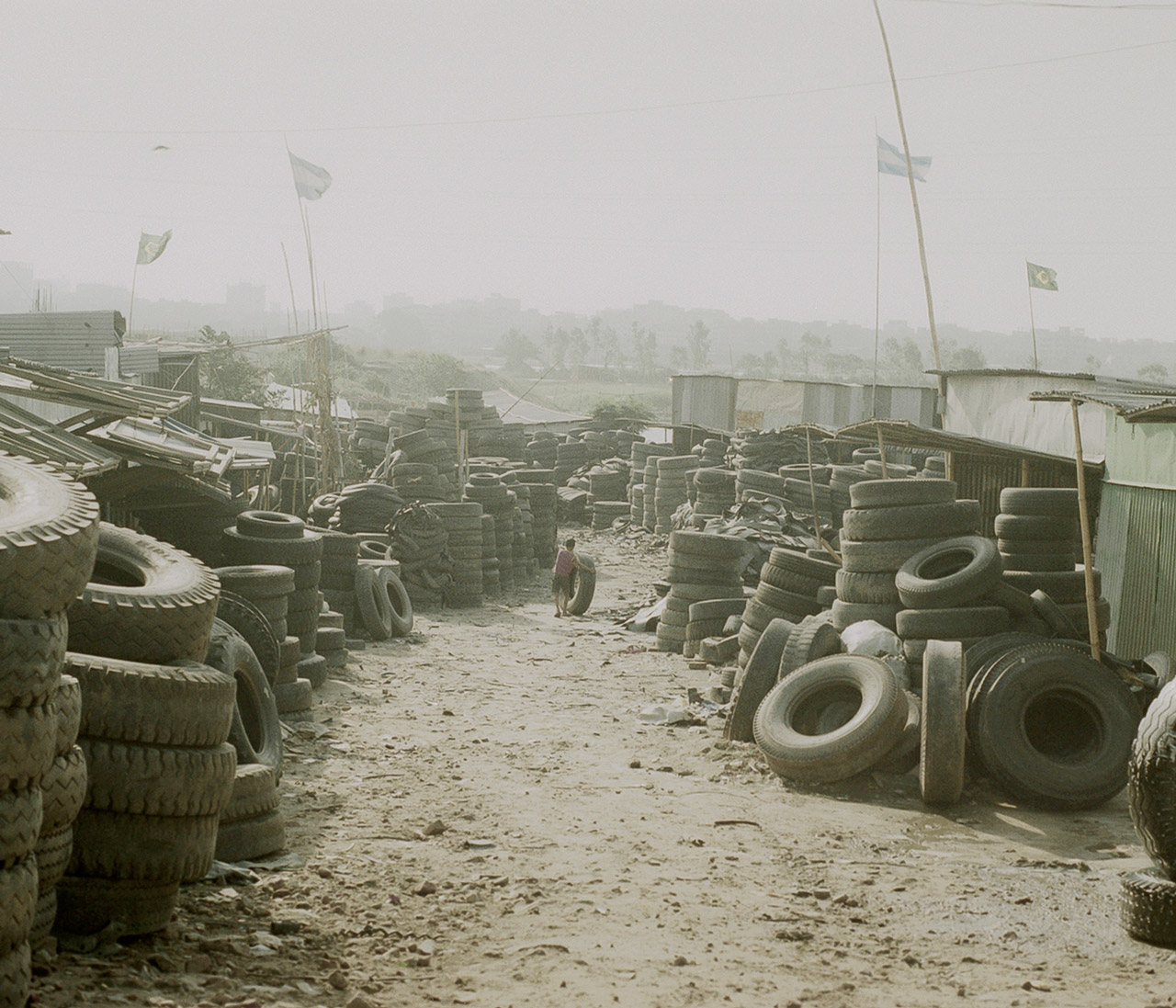
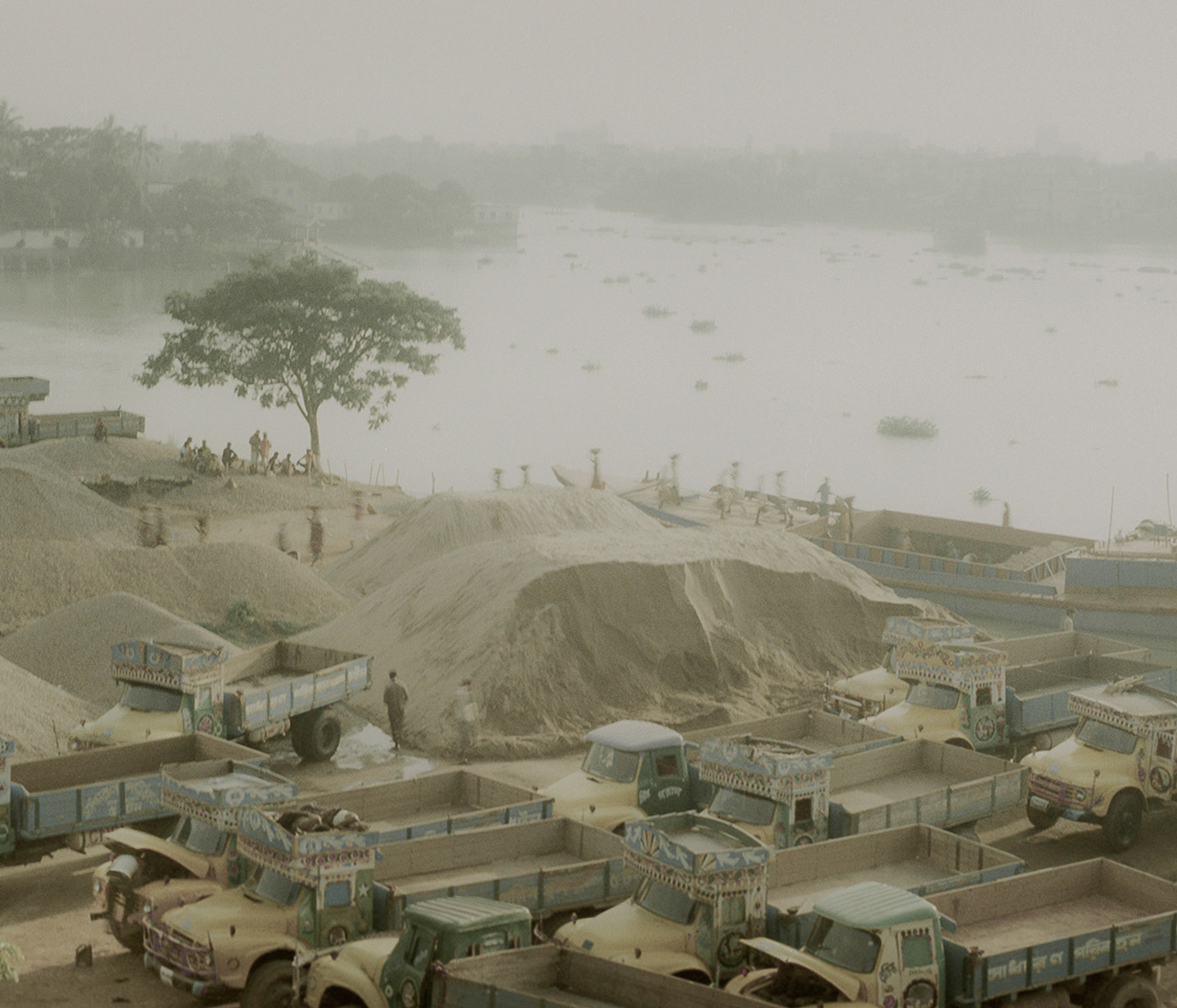
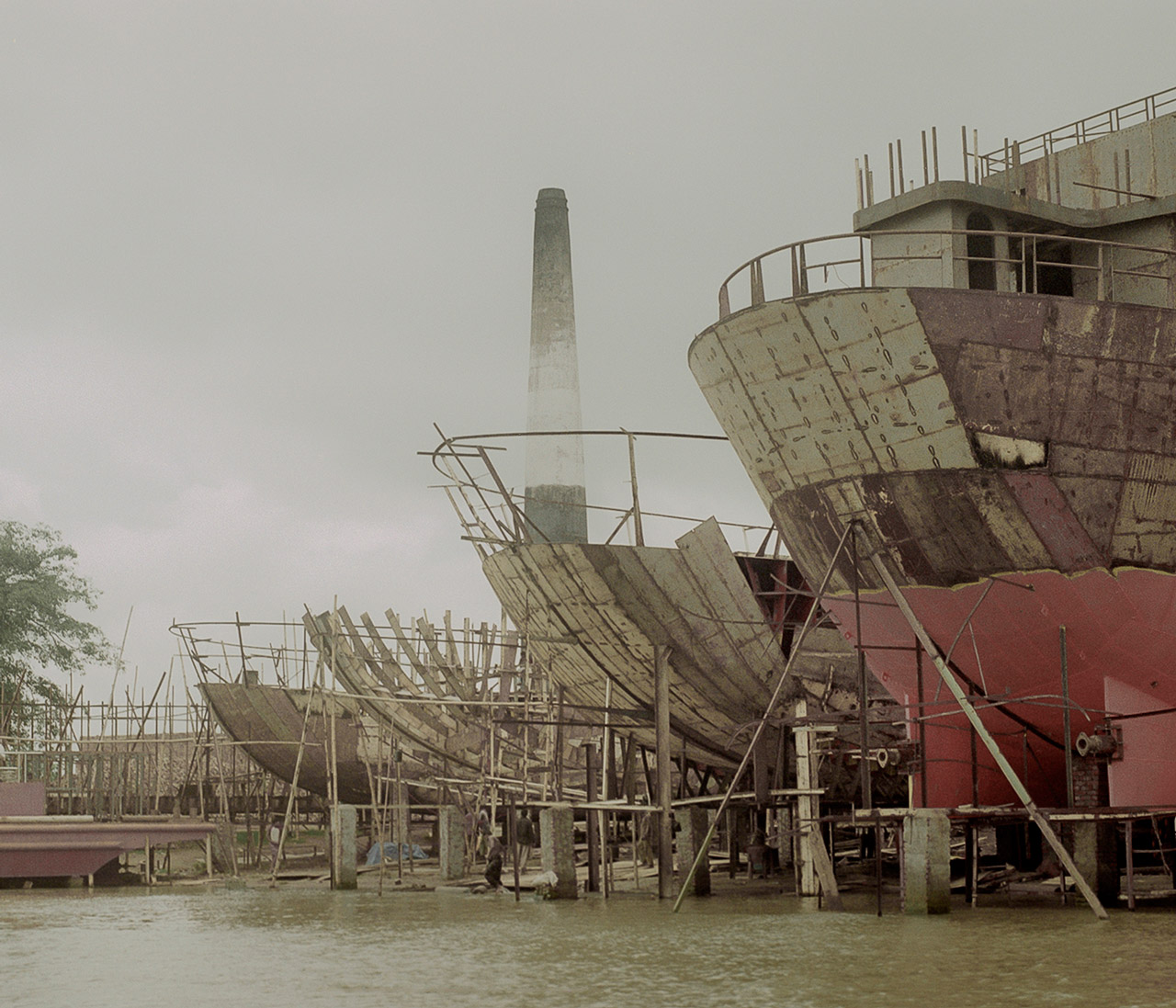
In Dhaka, people are growing day by day. Working places and various factories are booming constantly. Buriganga River is the one of the most popular way to communicate with another part of the country. Millions of people use the river everyday for bearing their various goods.
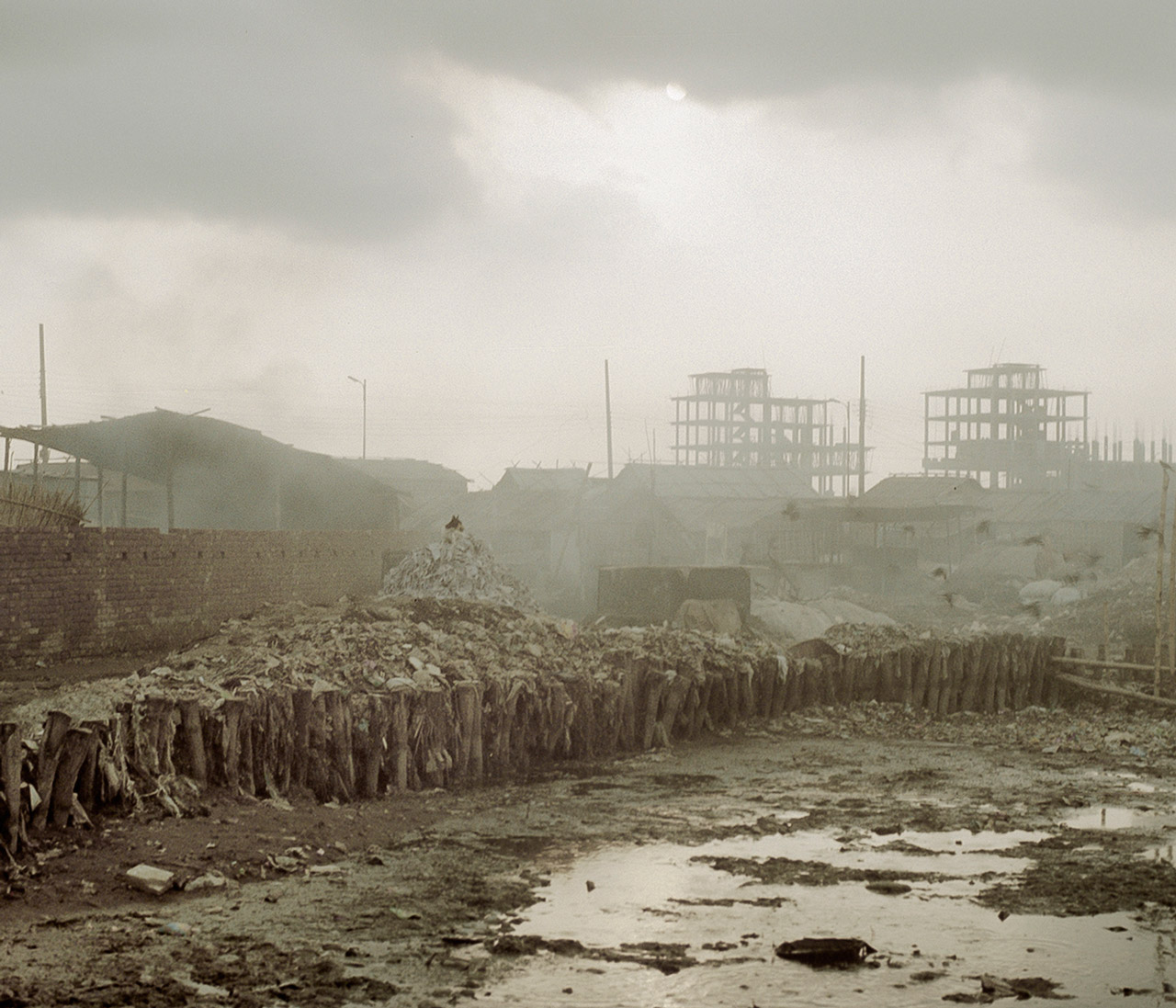
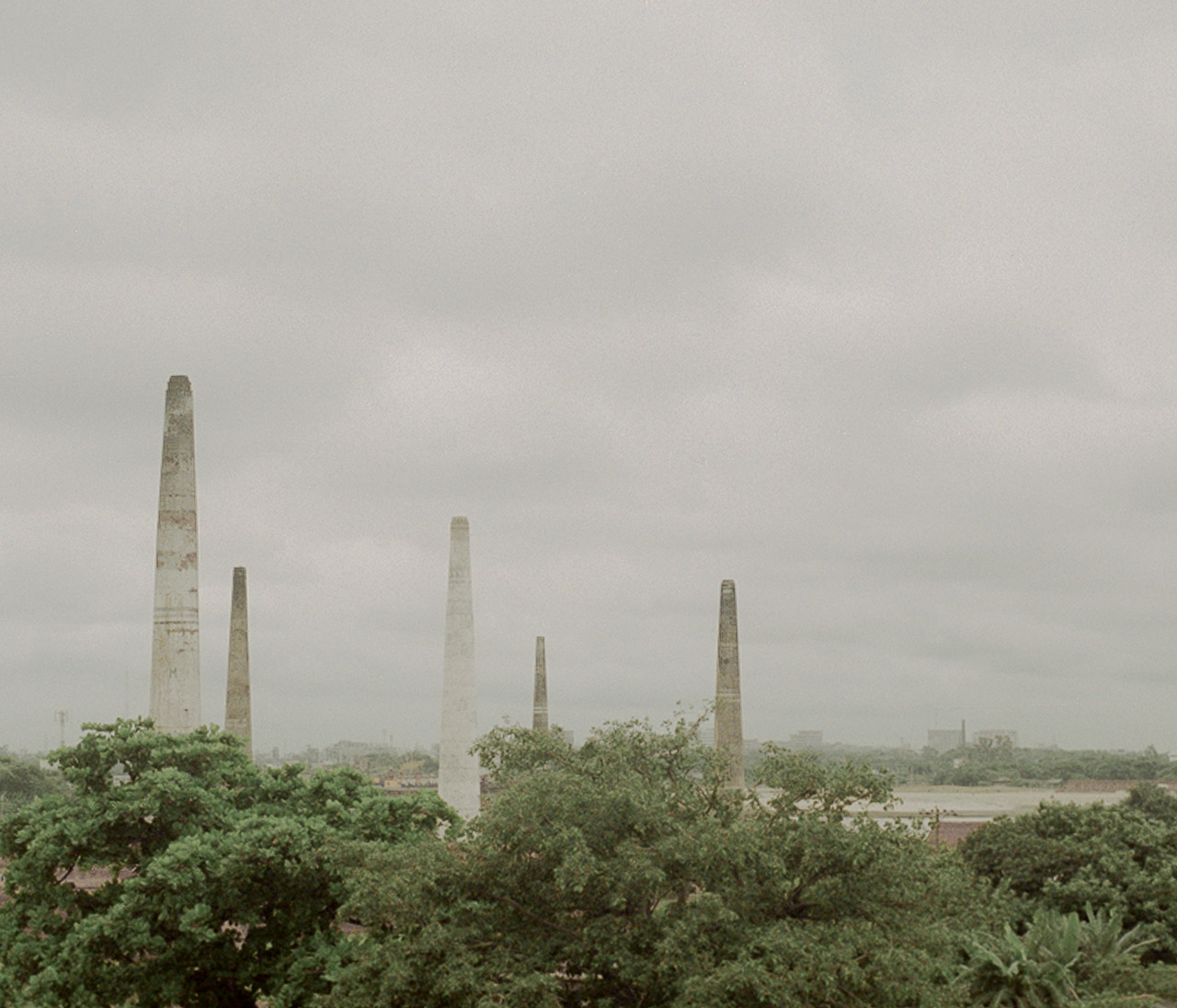
Tannery chemical, Mans wastage of whole Dhaka City and Industrial Wastage chemicals directly go down in Buriganga River. Nearly 700 brickfields on the riverside, dockyards and Barn oil from the boats and steamers are the causes of pollution.
This 41 km long river once blessed us with hope and dream to build a new city. But today, the city itself is a cause for the death of Buriganga. We, the Citizens of Dhaka are going to destroy our own river!
As a photographer, I see my role in my engagement with own city. I have an intrinsic relationship with this city and river as I spent most of my life in and around them. As a documentary photographer, my approach was to show the river and its rapidly changing landscape in every possible angle. I explored several corners of the river to have a big picture on people’s destructive involvement. At the same time, divine water of the river, stands alone with its new wave of hope. I just tried to capture all the aspects for a greater concern.
Rasel Chowdhury (Bangladesh, 1988). A documentary photographer. Rasel started photography without a conscious plan, eventually became addicted and decided to document spaces in and around his birthplace, Bangladesh. He obtained his graduation in photography from Pathshala, South Asian Media Institute, and in due course, he found the changing landscapes and environmental issues as few extremely important subjects to document in his generation. Rasel started documenting a dyeing river Buriganga, a dying city Sonargaon, Old People Home, Flood in Bangladesh, Mega City Dhaka and newly transformed spaces around Bangladesh railway to explore the change of the environment, unplanned urban structures and the new form of landscapes.
Echoing | Multiple Gazes on Changing Circumstances
Written by Vanessa Alcaíno & Alejandro Malo
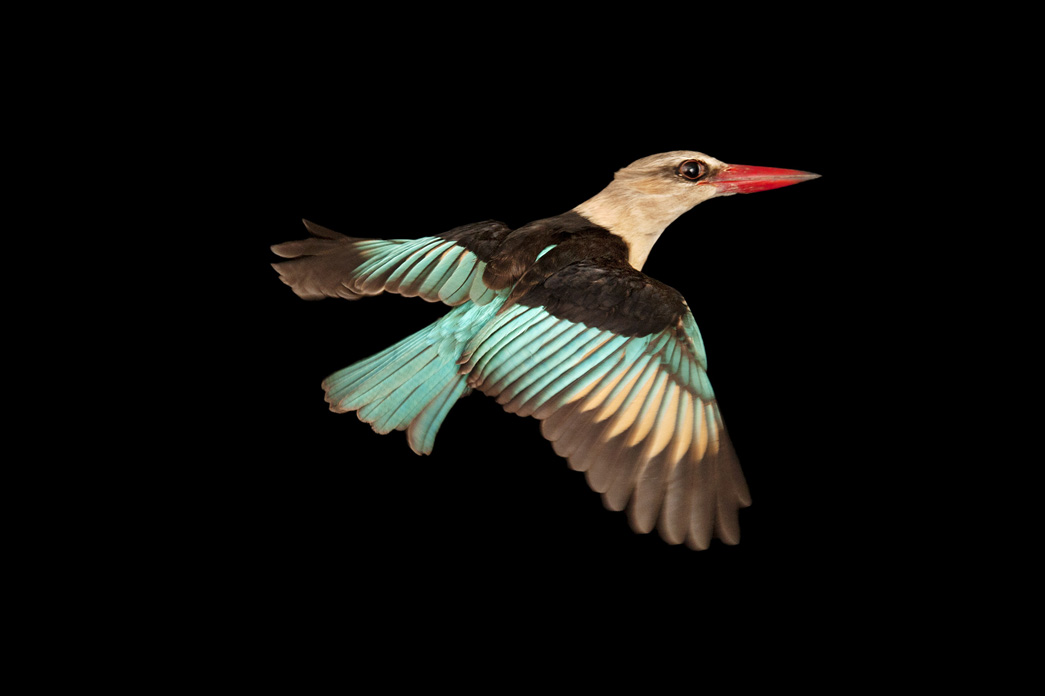
Brown Hooded Kingfisher, (Halcyon albiventris), Chitengo Camp, Gorongosa National Park, Mozambique, 2011. By Joel Sartore
When we choose to address a landscape issue and, soon after, we realized its relationship with the theme of the FotoFest 2016 Biennial:Changing Circumstances: Looking at the Future of the Planet, we thought it appropriate to echo the concerns expressed during the festival. A few contents presented in this issue offer a digital version of the same exhibitions for our audience. However, this observation would be insufficient without emphasizing some of the ideas included in the book of the same name that drives us to insist on the invitation to peer into its pages.
Conceived as a collaboration between Frederick Baldwin and Wendy Watriss, founders of FotoFest, with Steven Evans, Executive Director of the festival, it integrates a diverse and broad mosaic of artists. In his introductory text, Steven Evans highlights the need to promote the exchange of ideas between artists who use different strategies to address the issue. It also contrast the divergence of gazes with the unifying leitmotif of Thomas E. Lovejoy and Geof Rayner essays that show an intrinsic connection between all artist’s concerns. Both essays provide strong arguments on the urgent need for action on climate change; the first, from the perspective of the Earth as a living organism, and the second by demonstrating the decisive role of human beings in their environment.
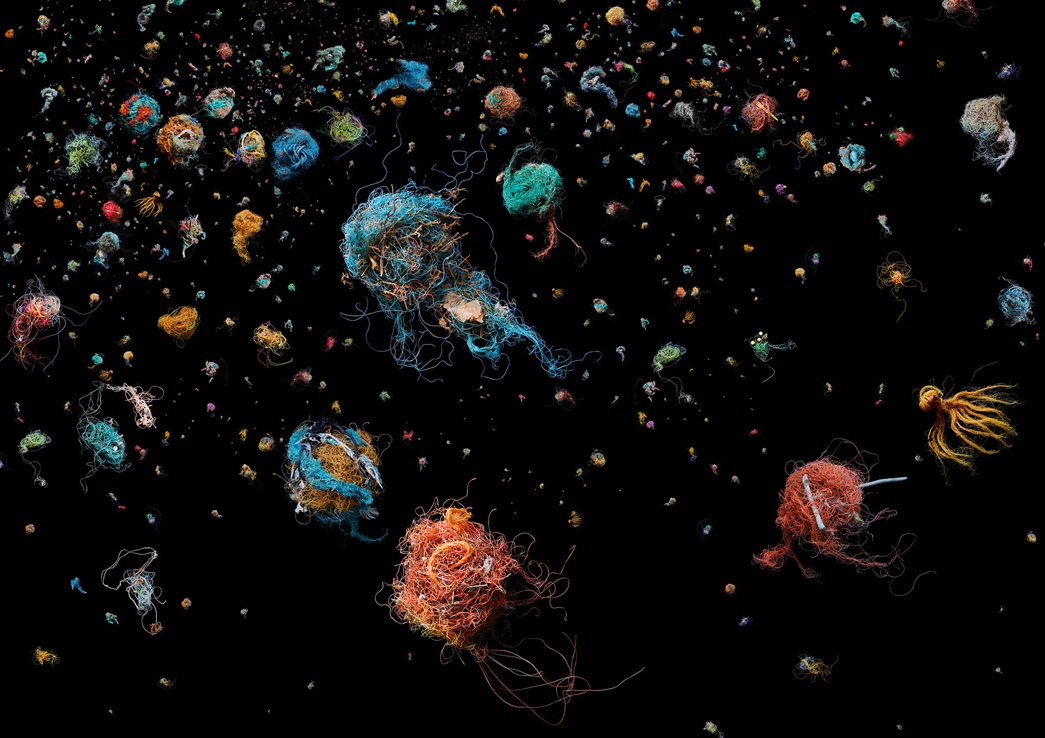
Bird’s Nest, 2011. Por Mandy Barker
Finally, Wendy Watriss gives voice to some questions that resonate with concerns we encountered during our research on the theme of landscape: "We have responsibility not only for our own well-being but that of the rest of the natural world? Can art stimulate new perspectives and new ways of seeing?” Photography has in its hands the potential to share with us realities that otherwise would be inaccessible. The images are not neutral, they feed imagination and foster reflections, being a very effective means to make any problem palpable, visible and close, to the point of being able to bring them into the political sphere and encourage agreements. We agree with Wendy’s view that art can itself stimulate and expand our world view and present innovative ways to address the issue of climate change. We should not allow ourselves to have skewed visions that only address and speak from a knowledge area or a region of the world. We must open to different cultures, include divergent views, draw new and different boundaries, create unique maps, put the world upside down, stir and divide it in various ways. That is the only way to visualize a future where rather than dominate nature, we can collaborate for its survival and ours. And this way of ‘seeing’ the world, and the new paths to our future, is what art may best express.
Vanessa Alcaíno Pizani (Venezuela, 1980). Lives and works in Mexico. Visual artist. She graduated in Philosophy at the Central University of Venezuela and has a Master’s degree in Spanish and Latin American Thought at the Autonomous University of Madrid (UAM). Since 1994, she has worked in the field of photography at various institutions and organisations in Venezuela, Argentina and Mexico. At the moment, she is part of the editorial team of zonezero.com.
Alejandro Malo (Mexico, 1972). Lives and works in Mexico and is the director of ZoneZero. Since 1993, he has taken part in various cultural projects and worked as an information technology consultant. He has collaborated in print and electronic publications, and given workshops and conferences on literature, creative writing, storytelling and technology. In 2009, Malo joined the team of the Fundación Pedro Meyer, where he directs the Archives and Technology departments.
Hardwood
Written by Pedro David
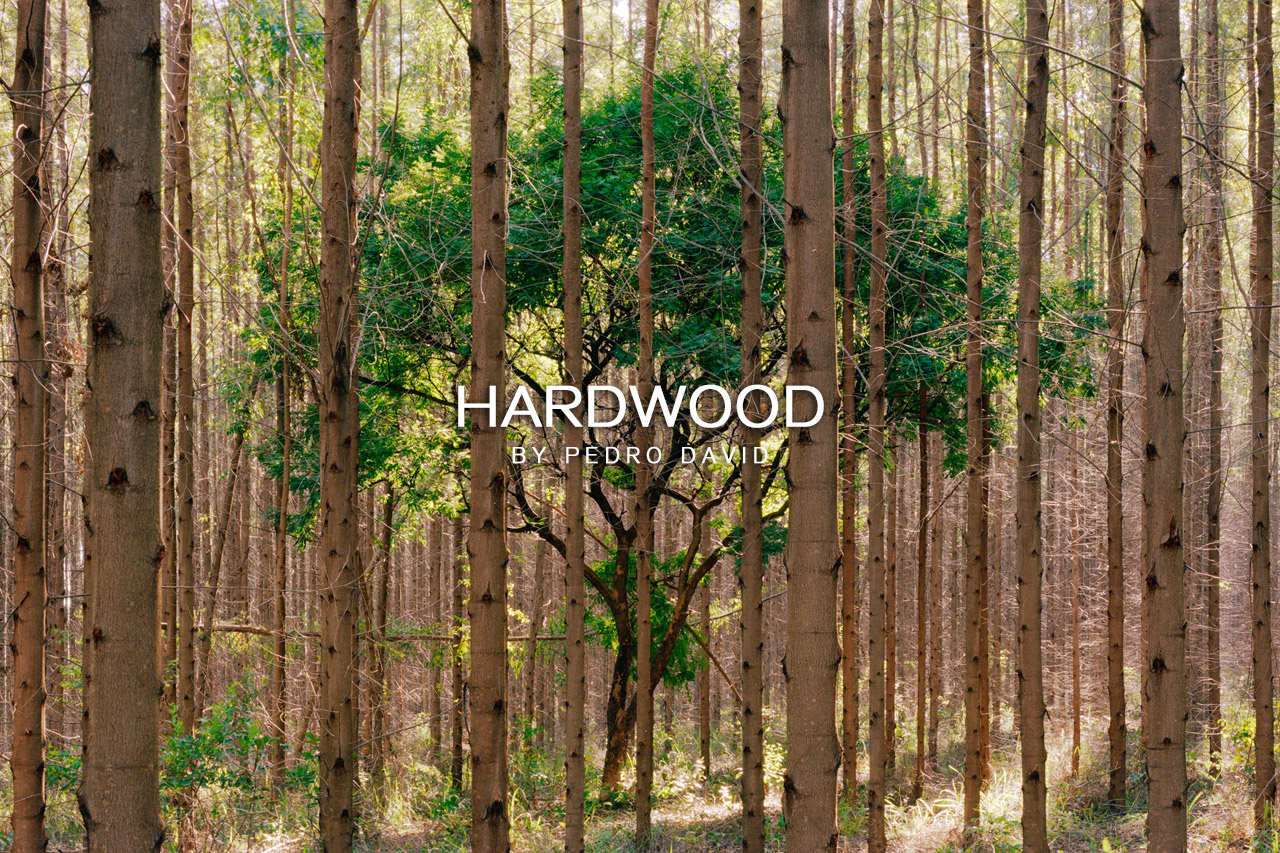
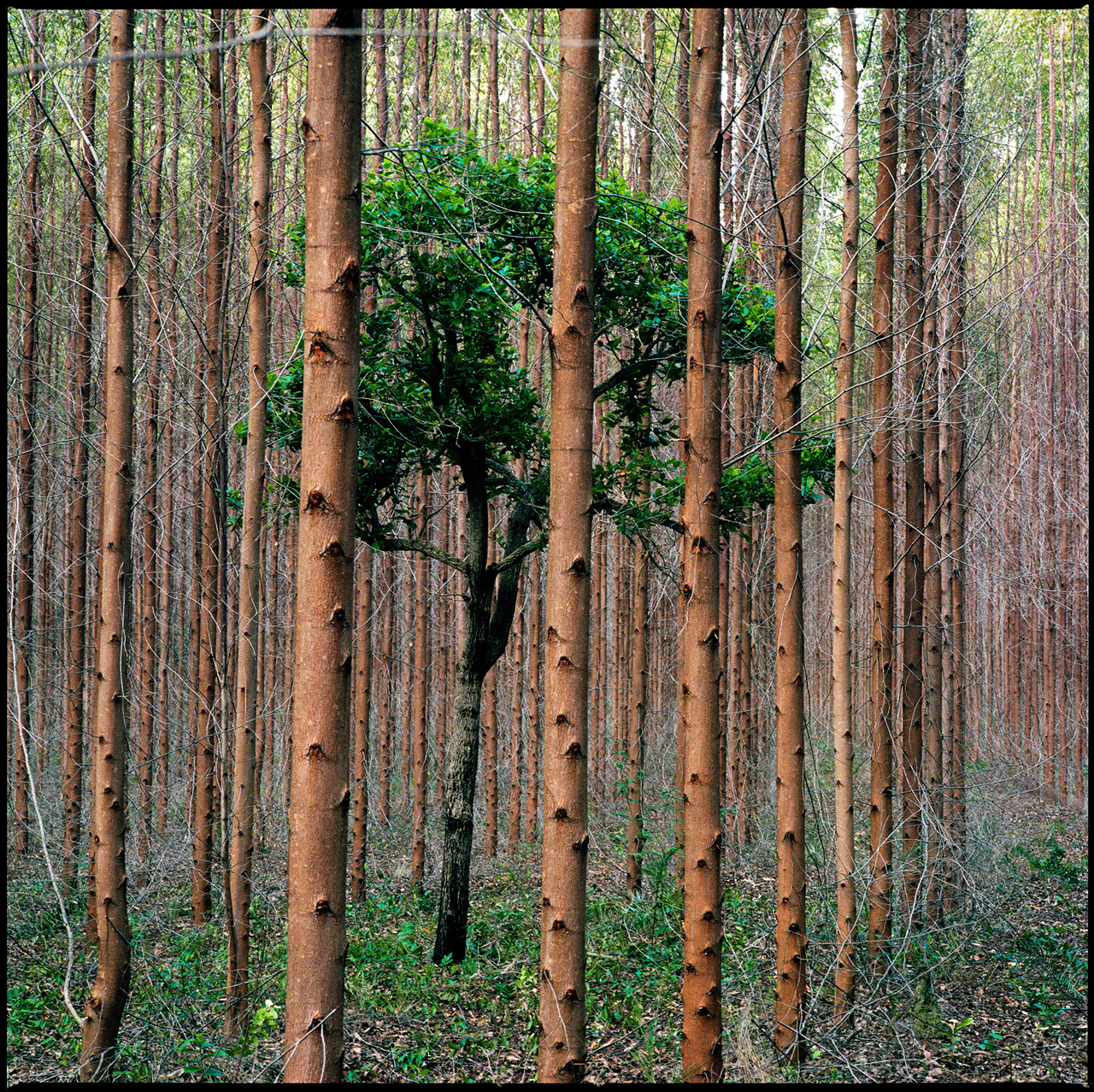
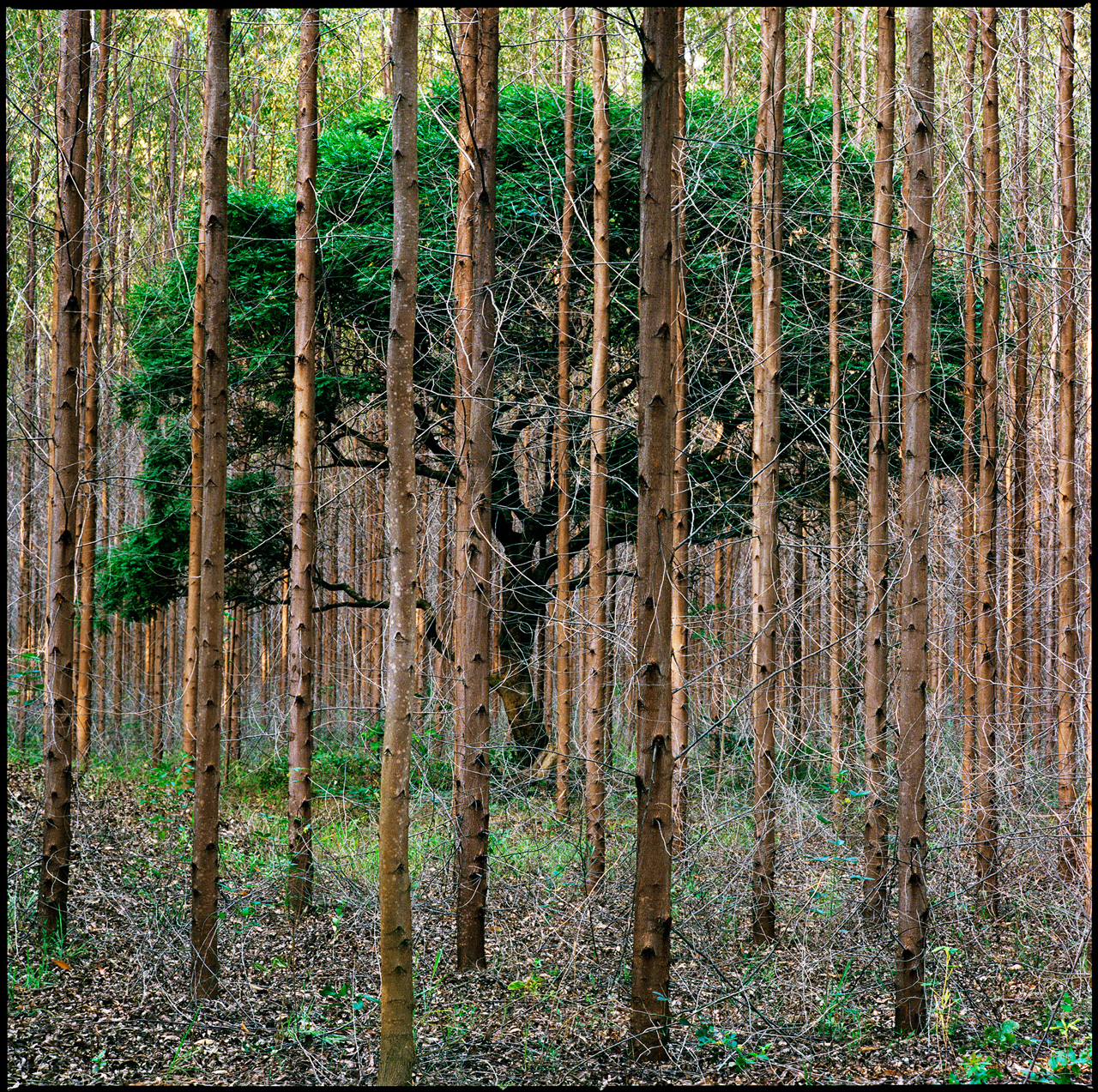
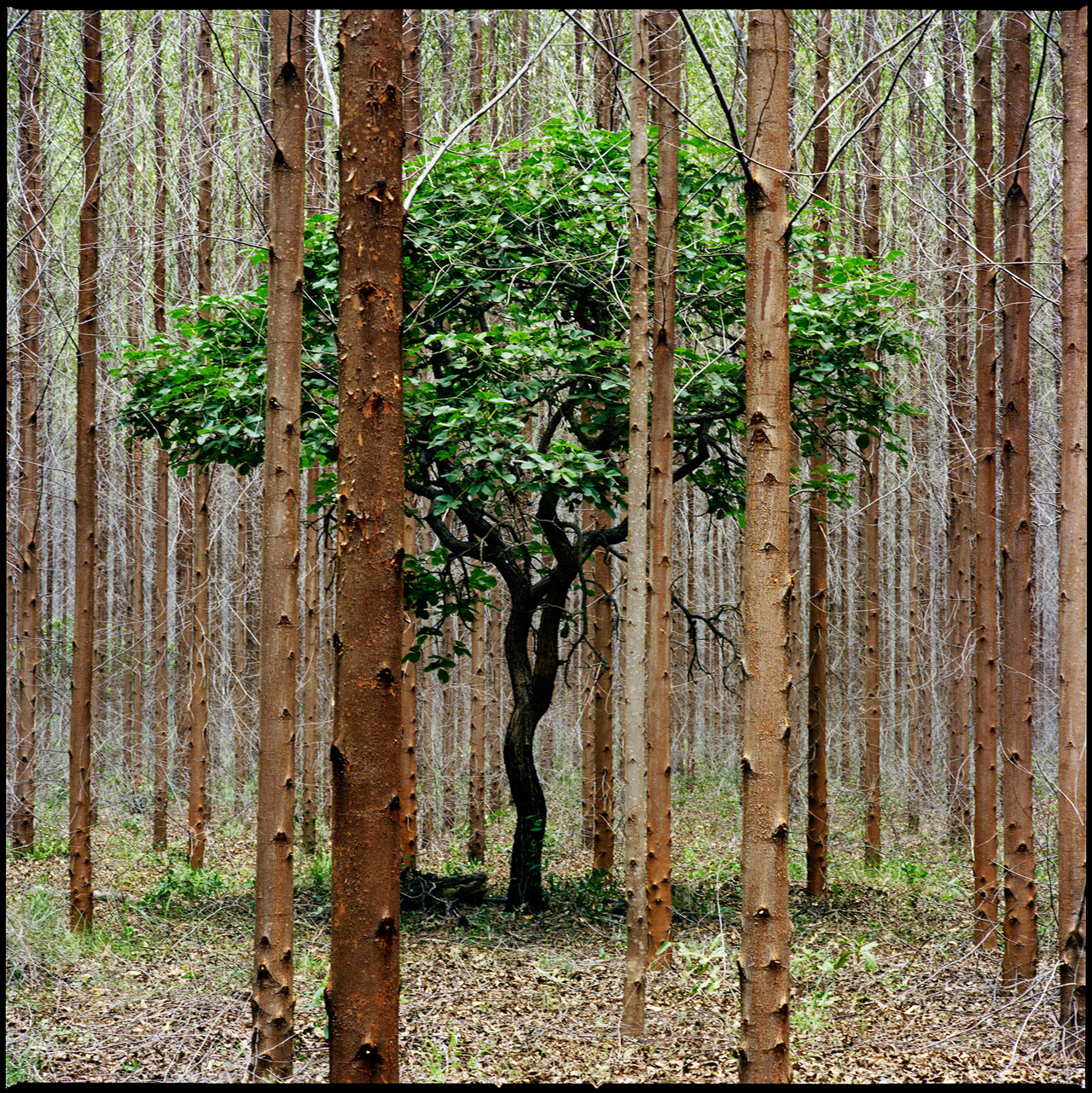
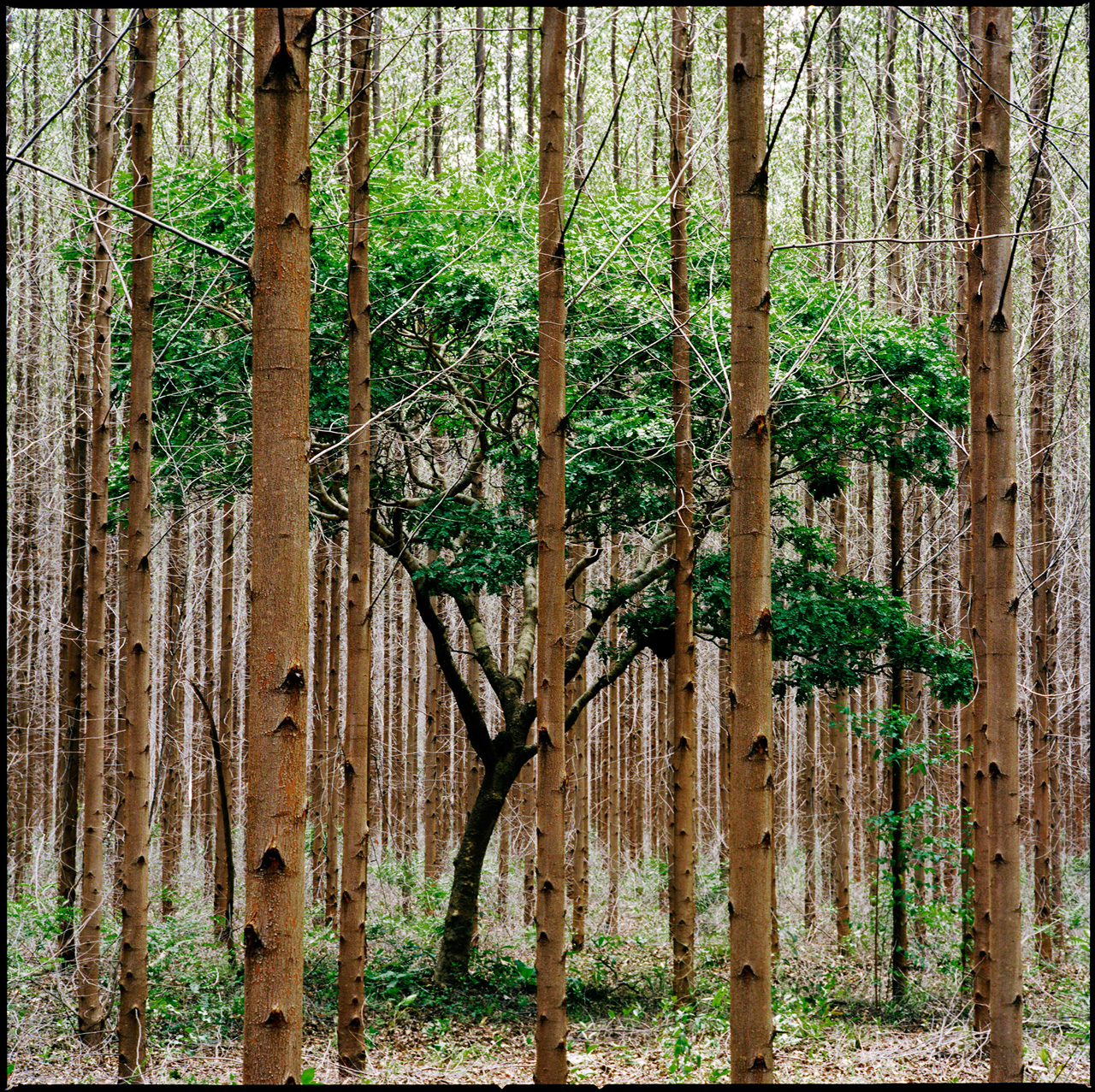
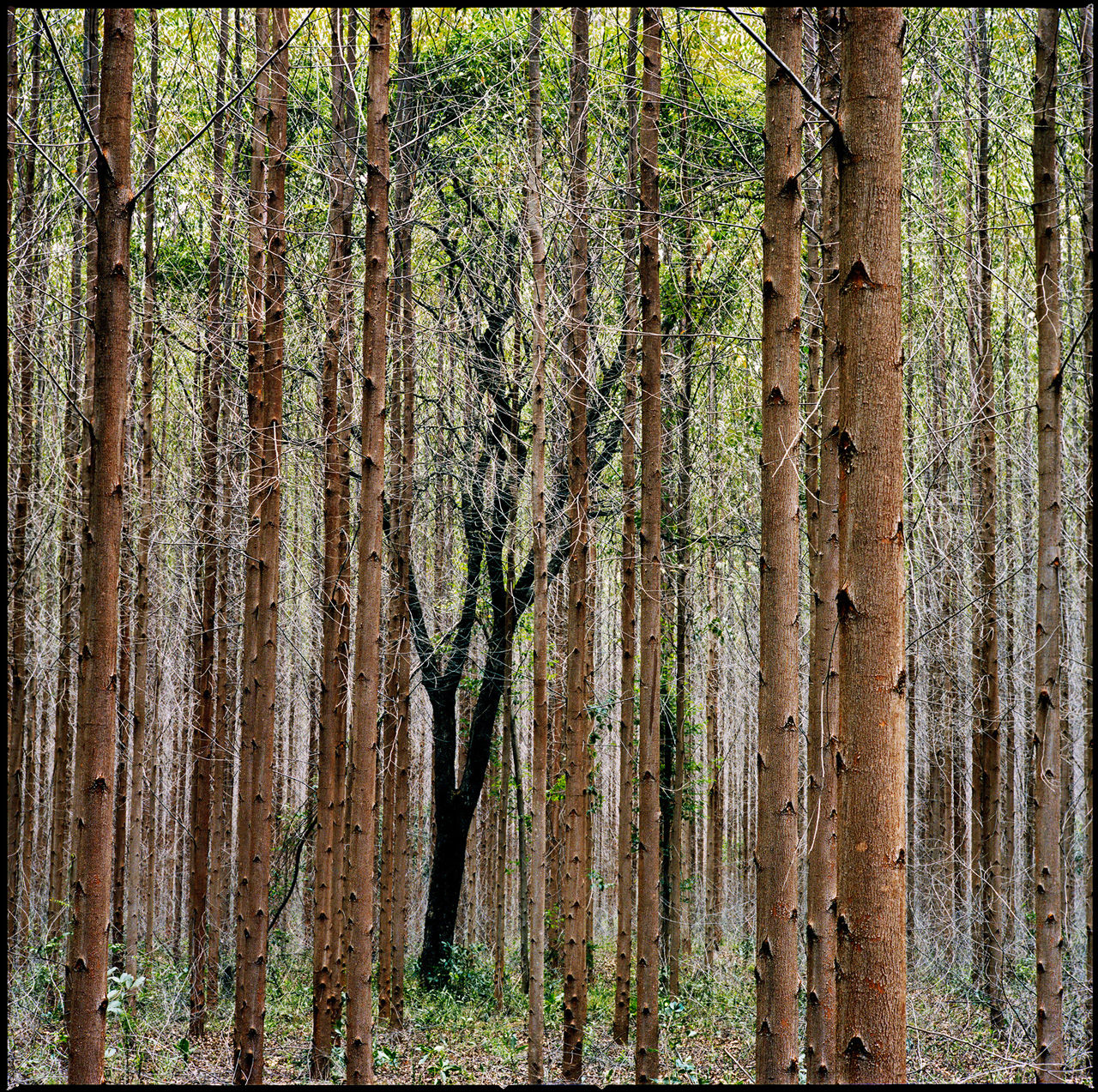
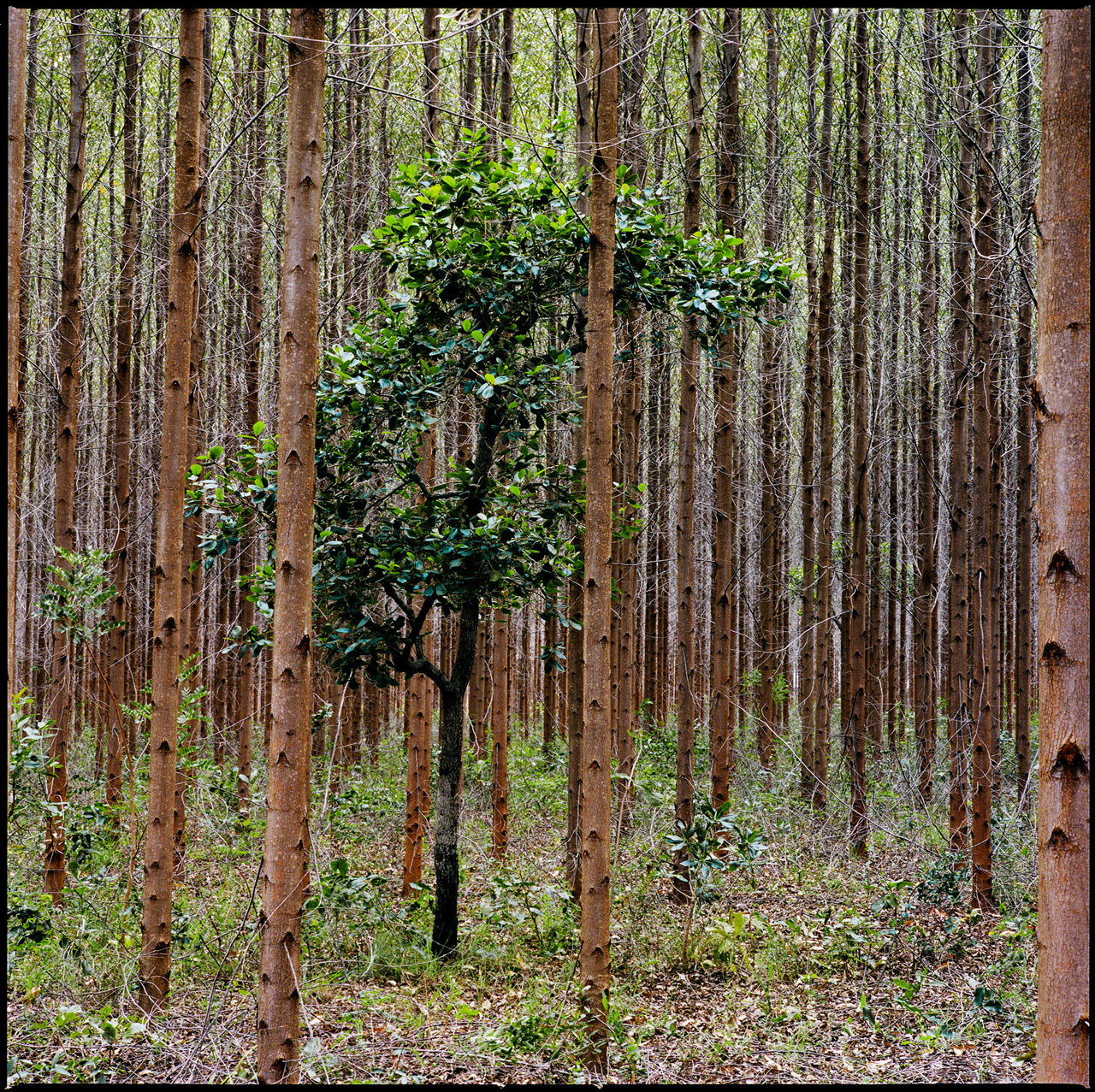
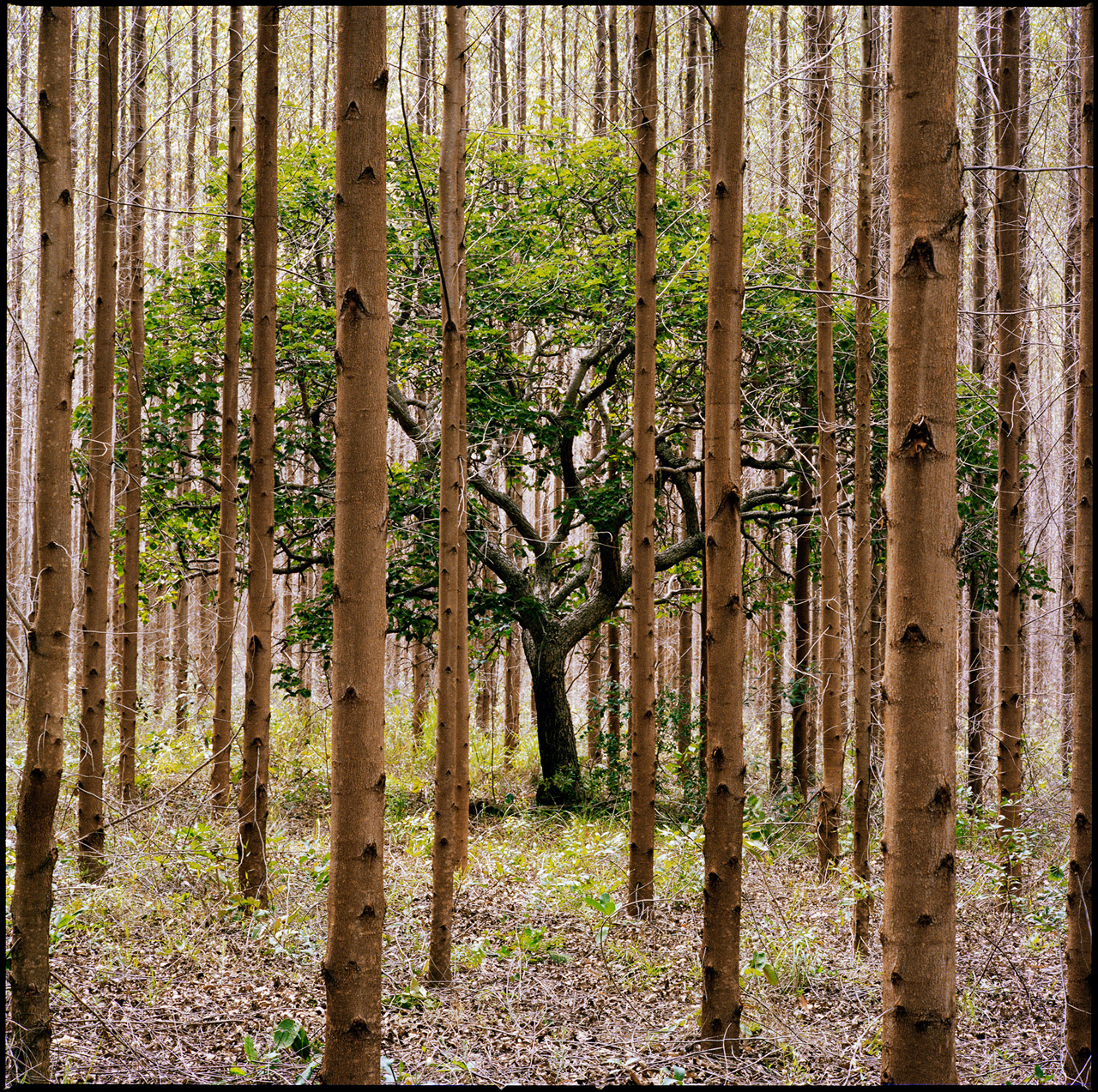
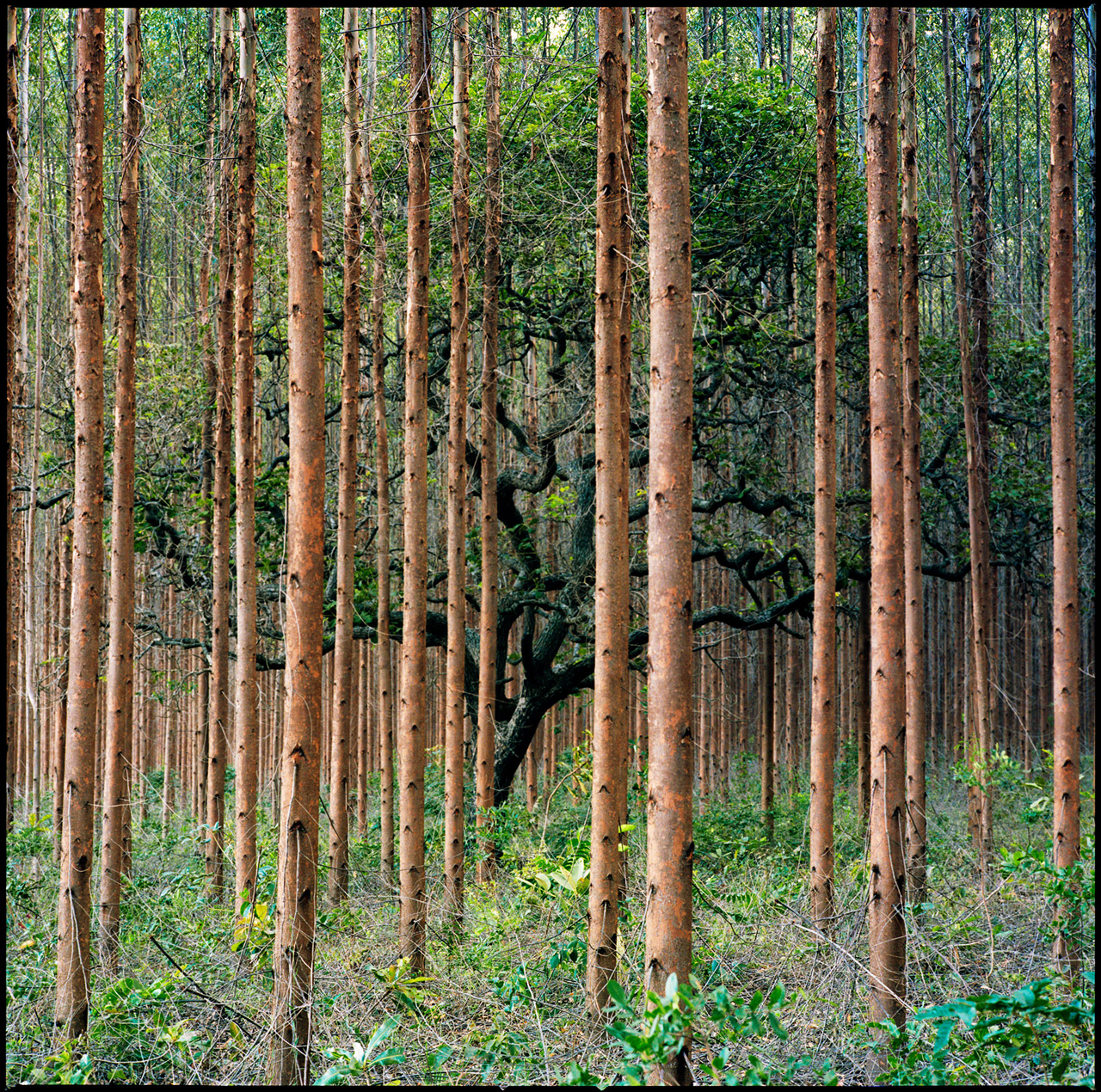
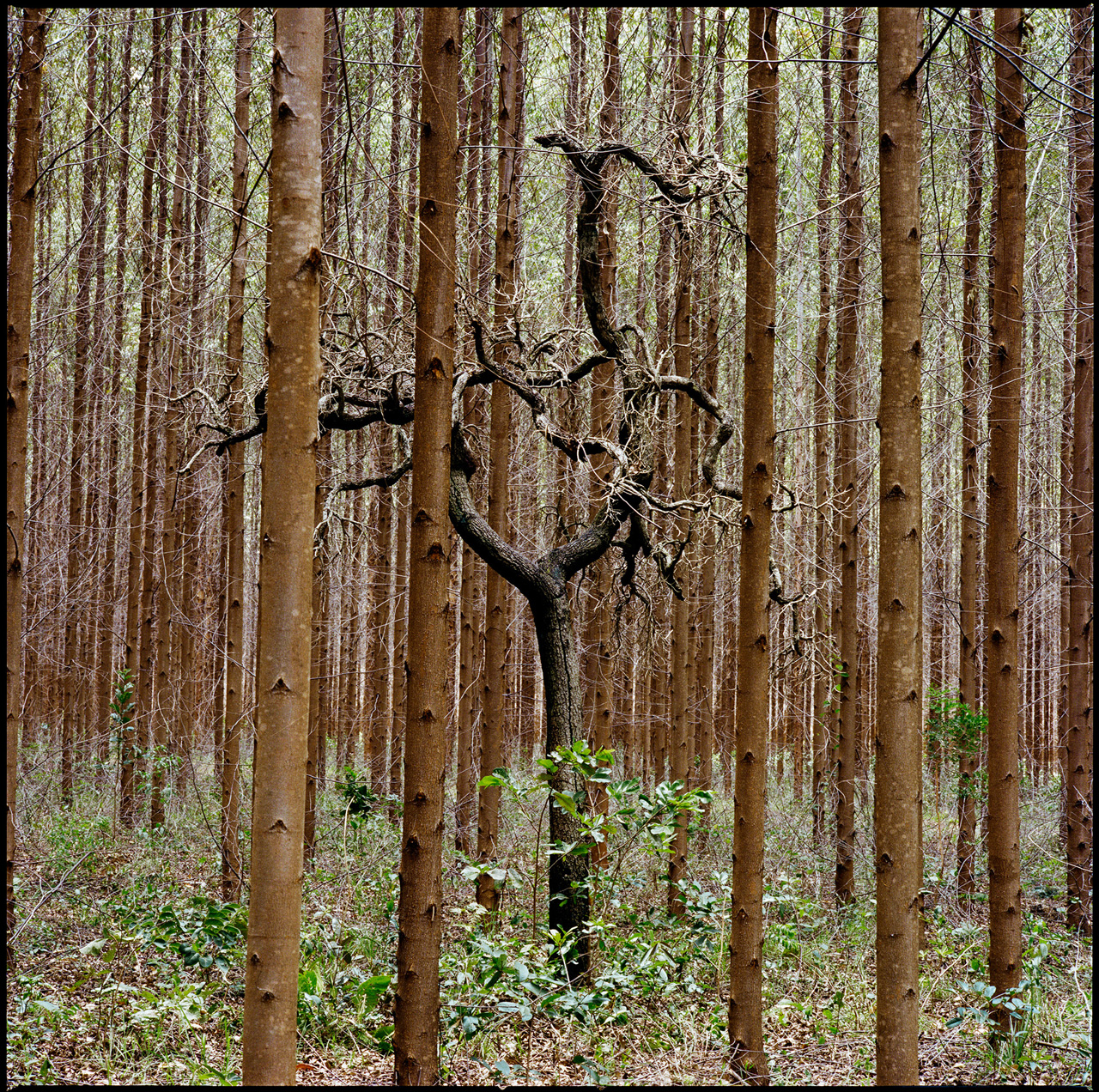
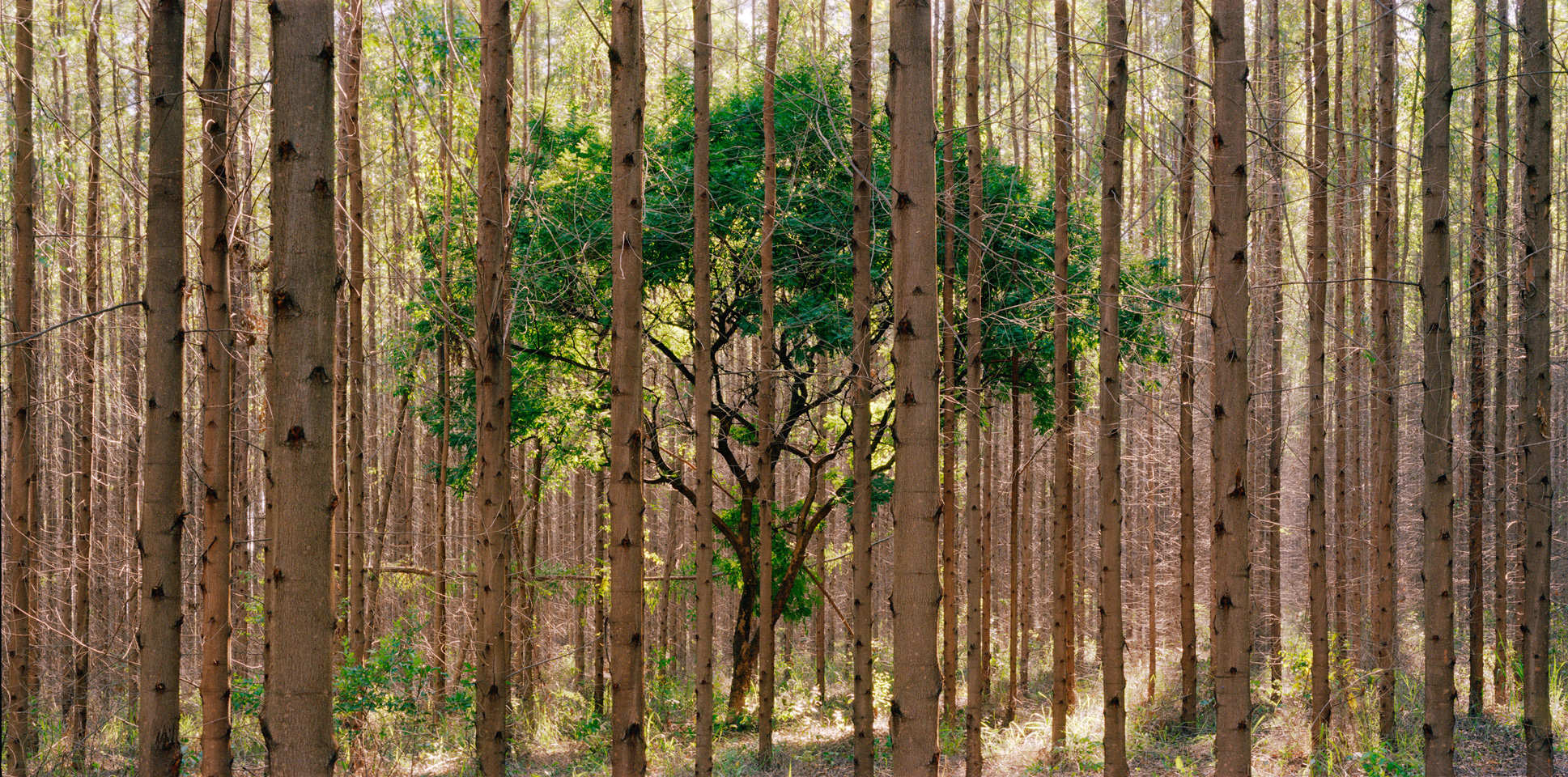
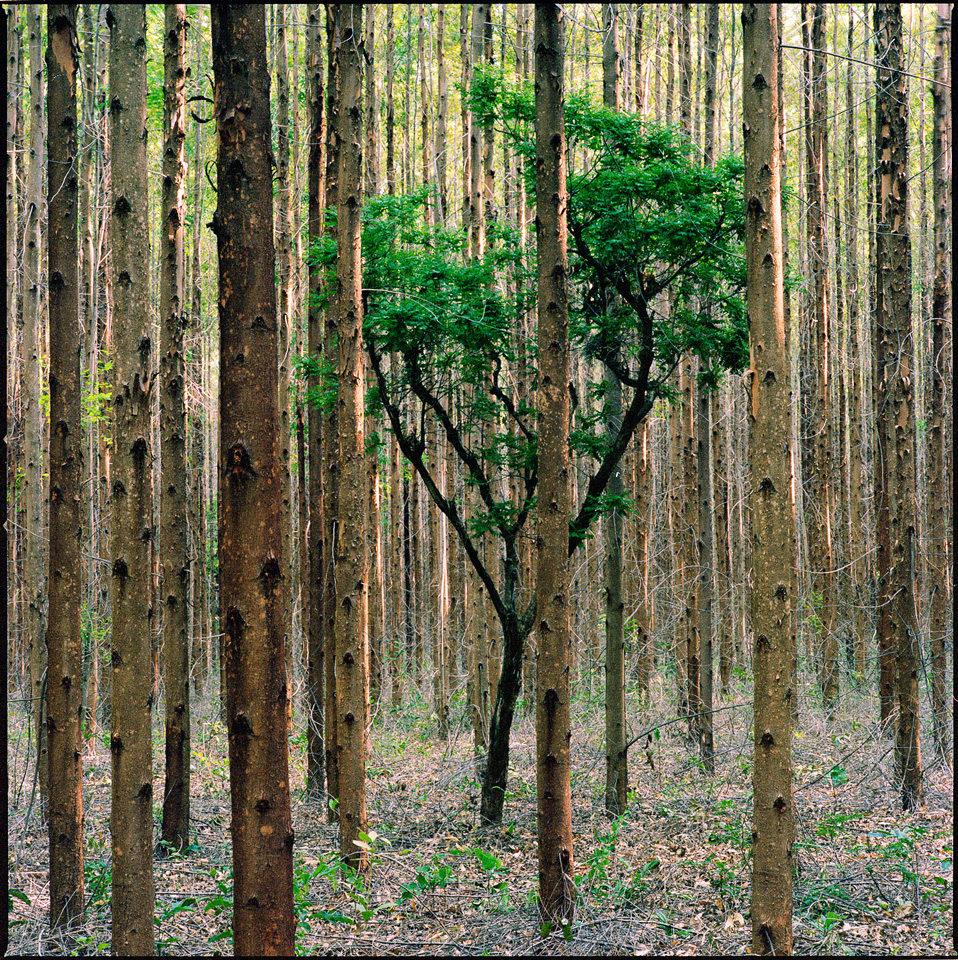
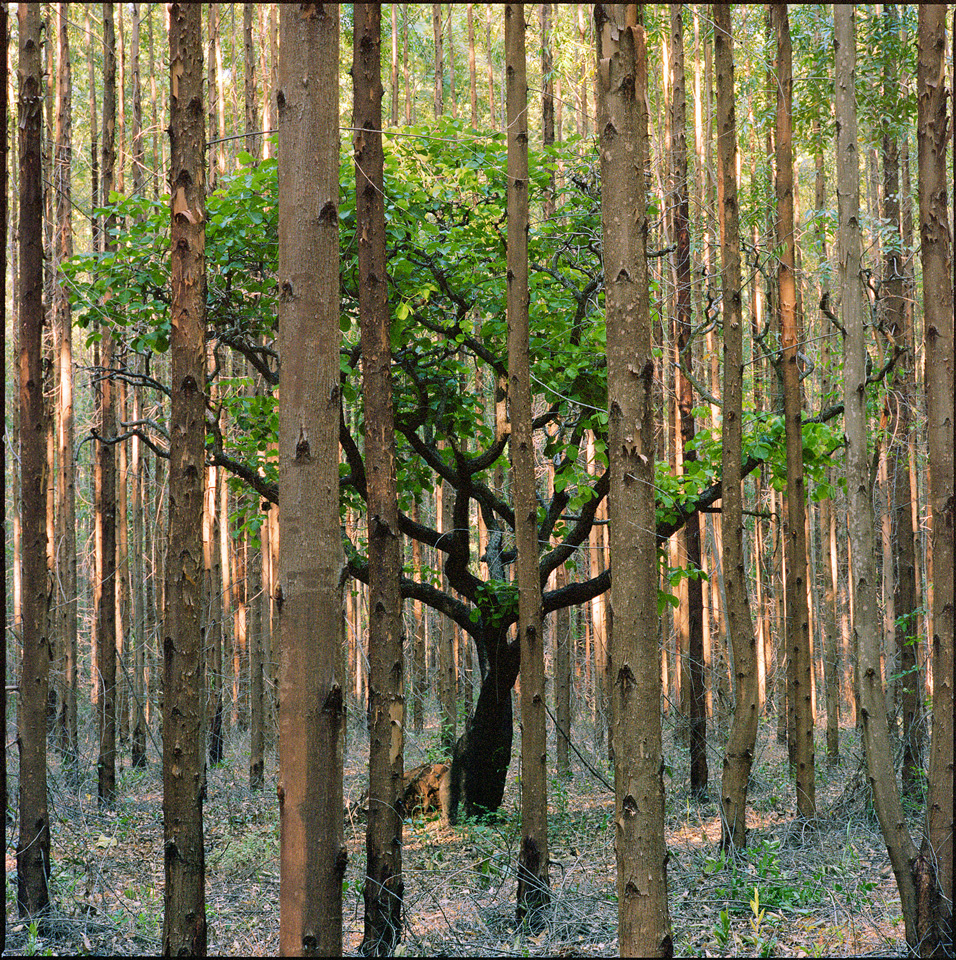
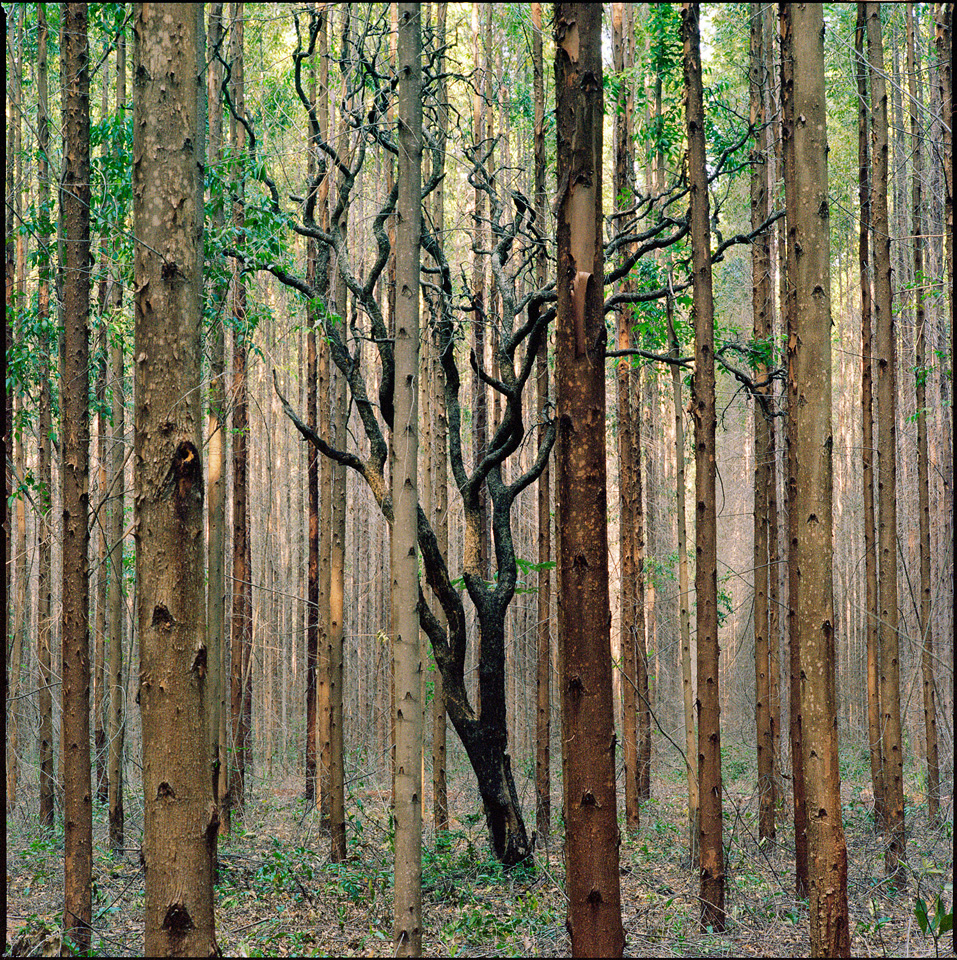
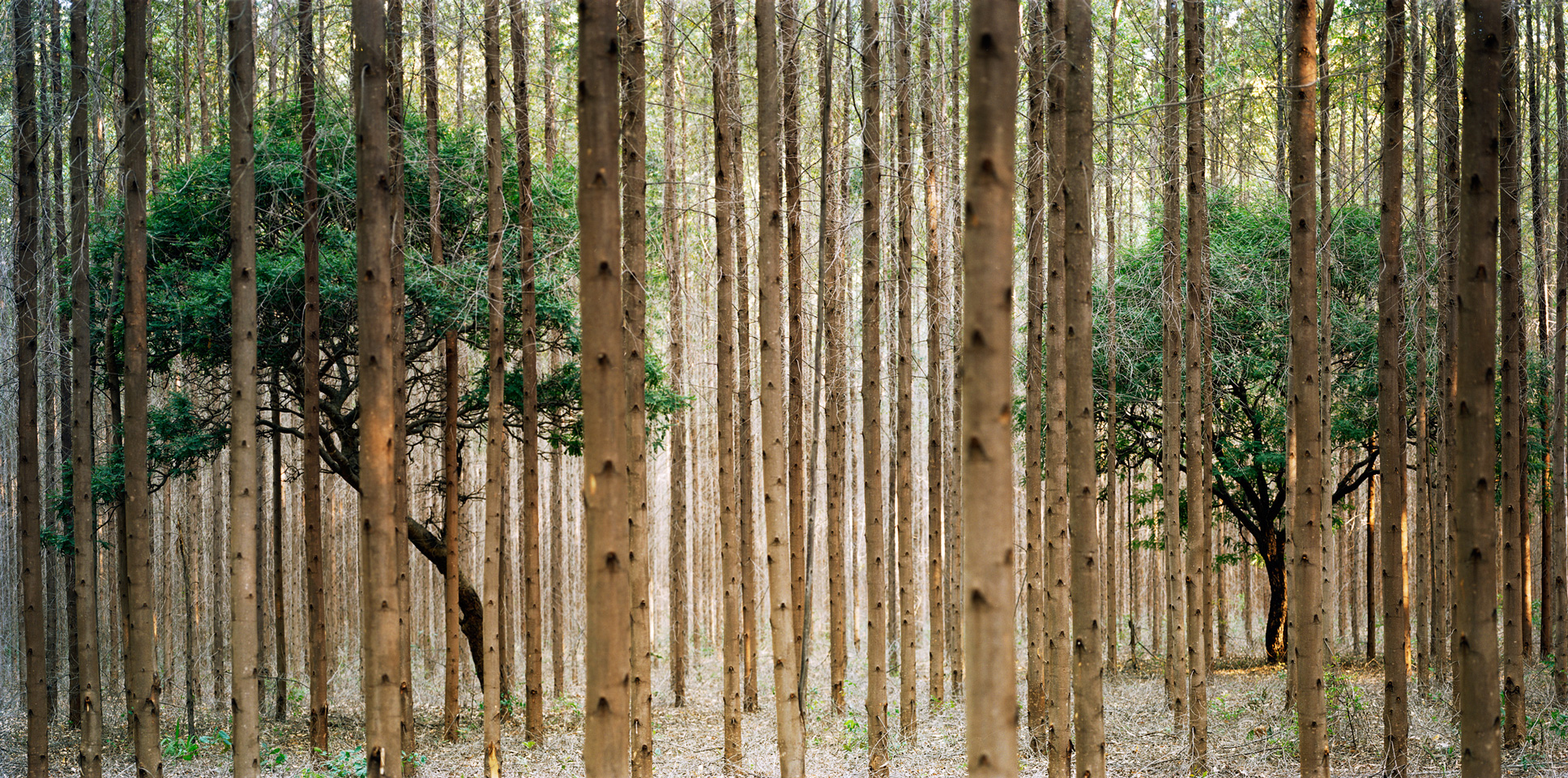
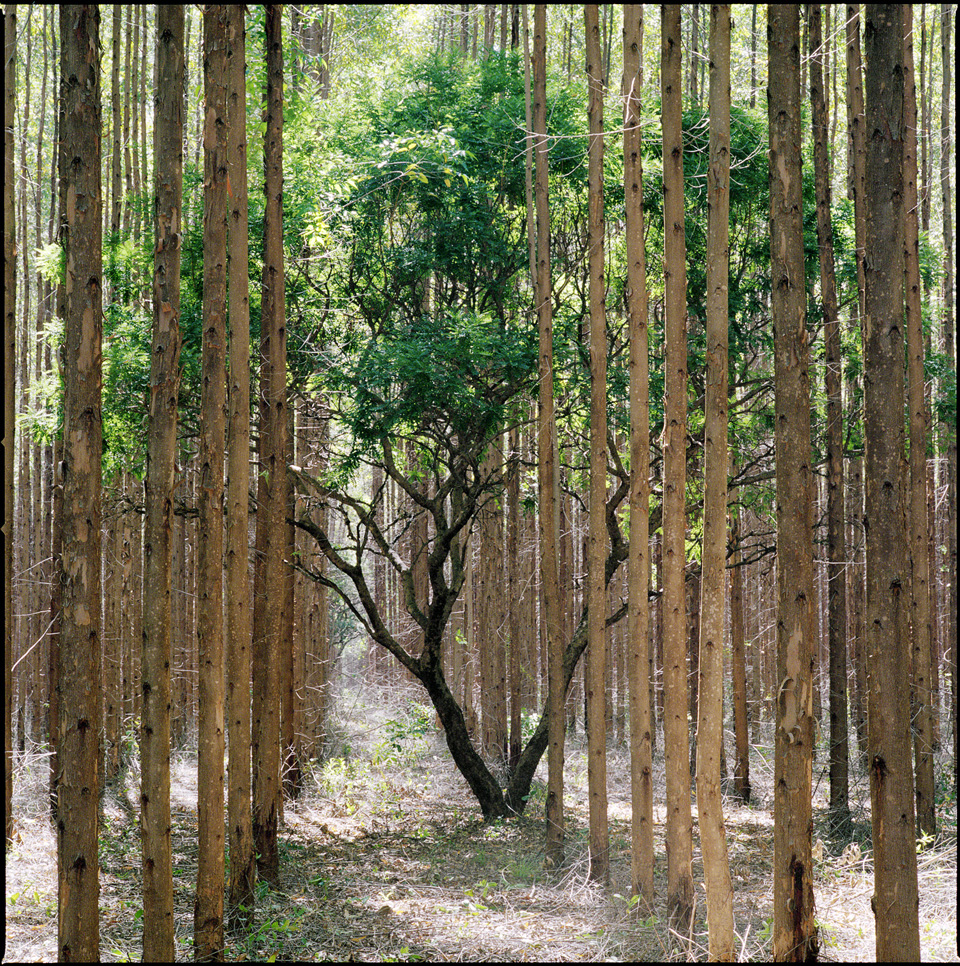
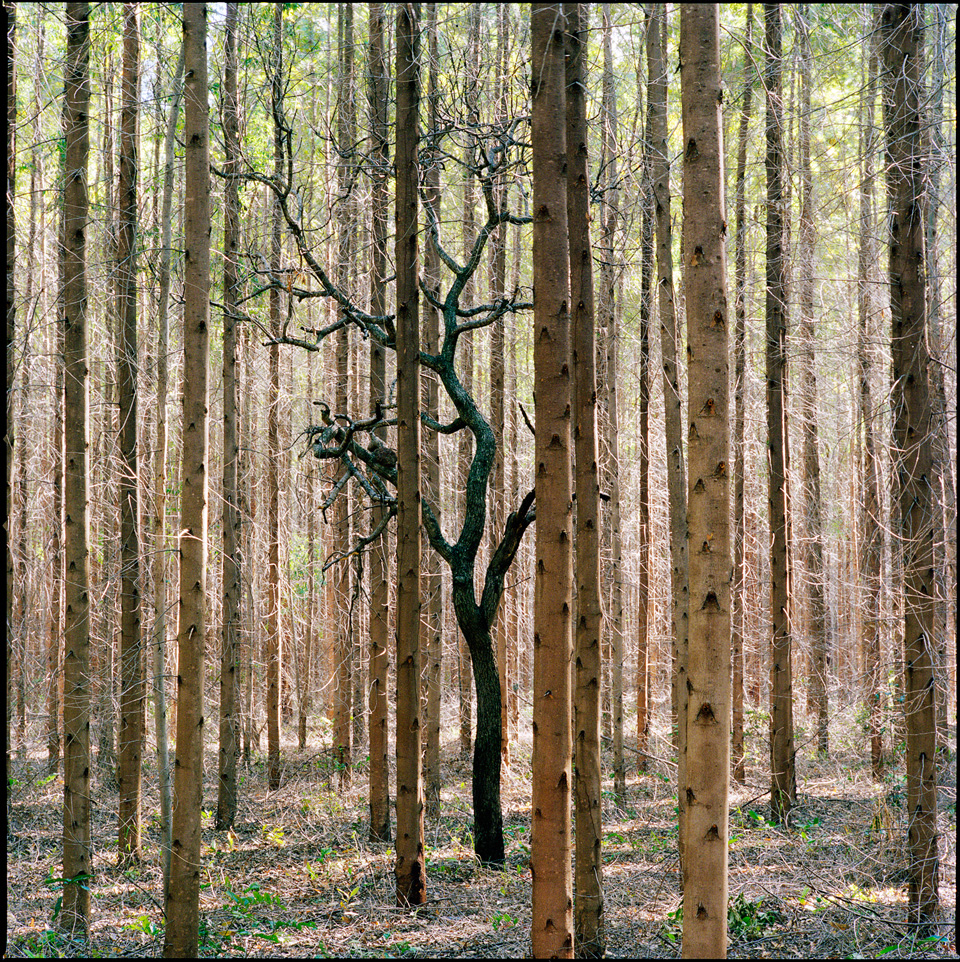
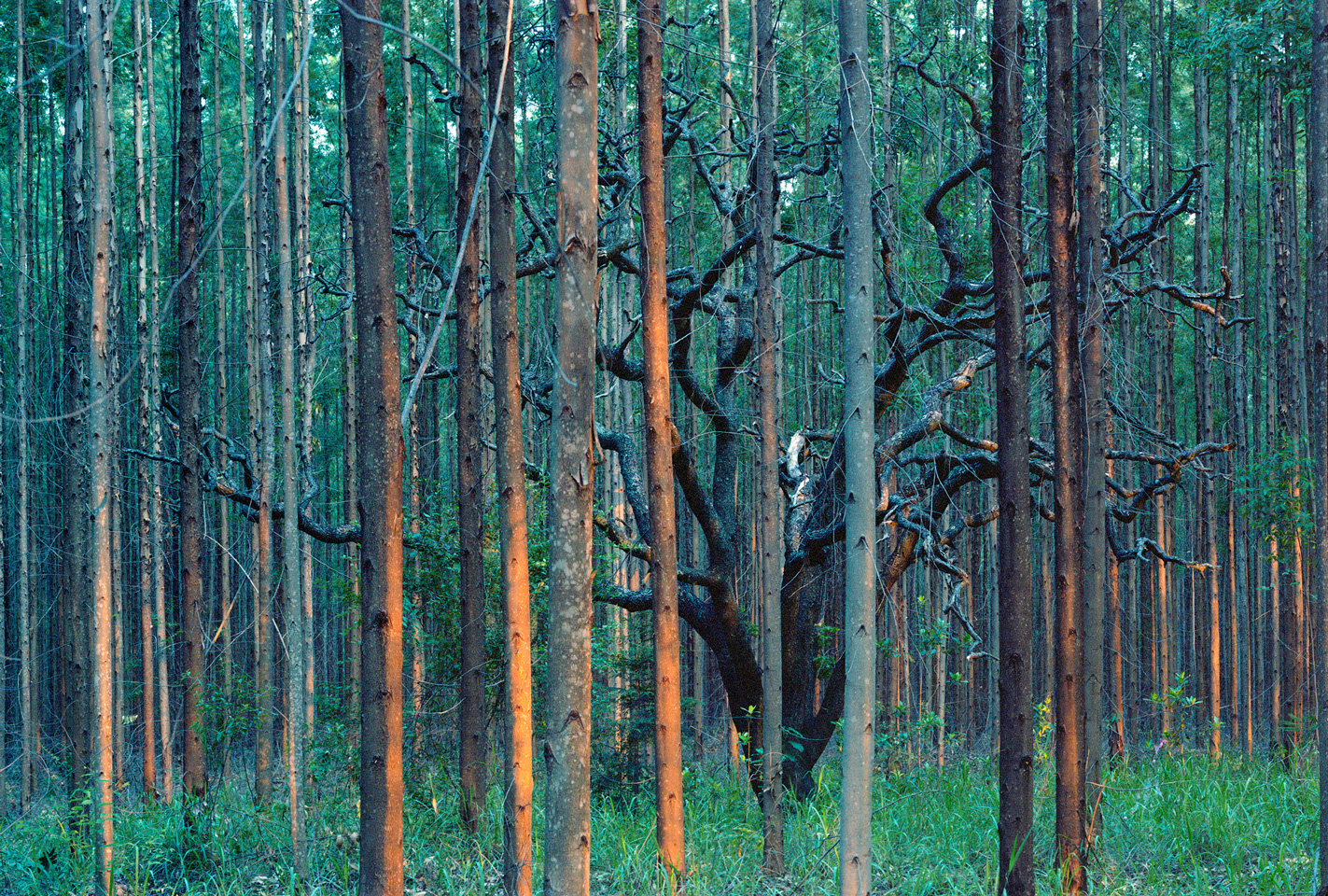
Brazillian country side is being filled with eucalyptus.
The accelerated industrial development and the overtuned importance of steel exportation, lead by sucessive governments, are one of the reasons of the deforestation of the Cerrado, the Brazillian savana, the Atlantic Forest, and even the Amazon.
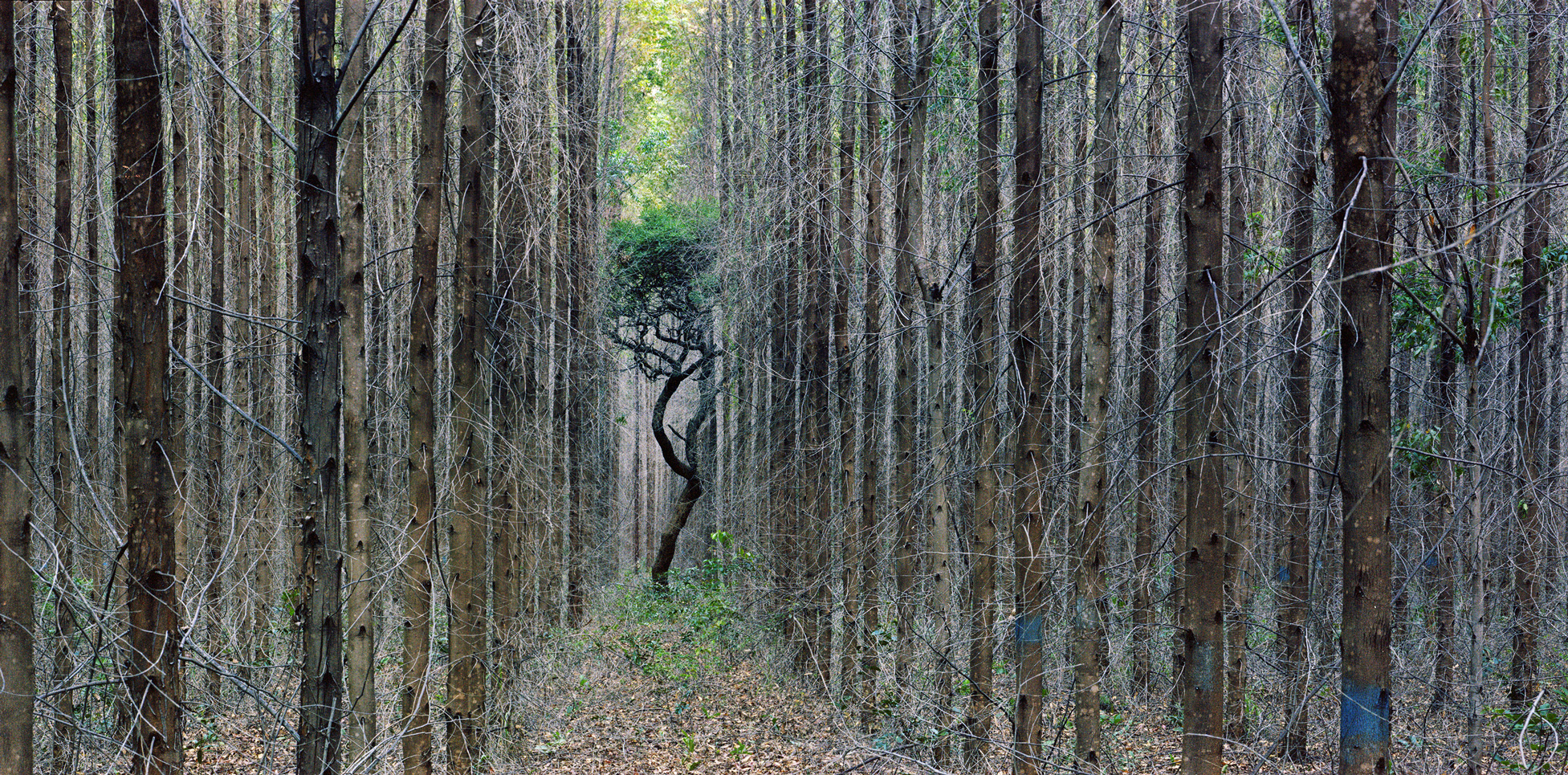
Several international steel companies, established by the country, buys large portions of land and substitutes the natural vegetation by transgenic eucalyptus trees, a fast growing kind of wood, used to make vegetal coal, an important ingredient in the tranformation of the iron ore to steel.
The eucalyptus charges high the environment for it’s fast growing speed: it consumes too much water and nutrients, leaving the soil exhausted and dry.
I’m working in some regions affected by these monocrops since my beginning as a photographer. The extensive and visually growing areas of the eucaliptus fields always concerned me, because of the environmental and also social impact it brings, changing the landscape as a whole, the geographical references, the natural resources, the economical activities, and the amount of water, now a global issue. I’ve ridden, and walked, a lot inside these fields since 2002.
I’ve photographed several situations trying to discuss this question in the last 13 years. But when, in a recent travel, I passed by road swallowed by an enormous eucaliptus field, I faced one of this hybrid scenes and saw the opportunity to make a representative image of the situation, a straight photograph containing: the past, a native tree, something that is desappearing of those landscapes, the future: those supra-vegetal, eucaliptus clones, in the present of the photography.
Besides this documentary facet, that is being effective to sensibilize people of the problem of the extensive growing of this and other kinds of monocrops, a basic Brazillian problem, I also see this work in a simbolic way. I note that people feel something beyond the direct meaning of these photographs, something like a direct identification with these encaged lifes, struggling to survive in an artificial, oppressive and vanishing world.
Pedro David (Brazil, 1977). He graduated in journalism in 2002. His works are in public and private photographic collections. He has received the Situações Brasília Contemporary Art Prize in 2012 and 2014; Conrado Wessel Foundation Prize of Photography, in 2013, Itamaraty Prize for Contemporary Art in 2012 and 2013; Arte Pará Prize in 2012; Pierre Verger Prize of Photography, in 2011; Latin Union - Martín Chambi Protography Prize, in 2010, and the 5thPorto Seguro Brasil Award. He has published the books: Fase Catarse (Catharsis Phase), 2014; Rota Raiz (Route Root) Tempo D’Imagem, 2013; O Jardim (The Garden) Funceb, 2012 and Paisagem Submersa (Underwater Landscape) Cosac Naify, 2008.
Surveillance Landscapes
Written by Marcus DeSieno
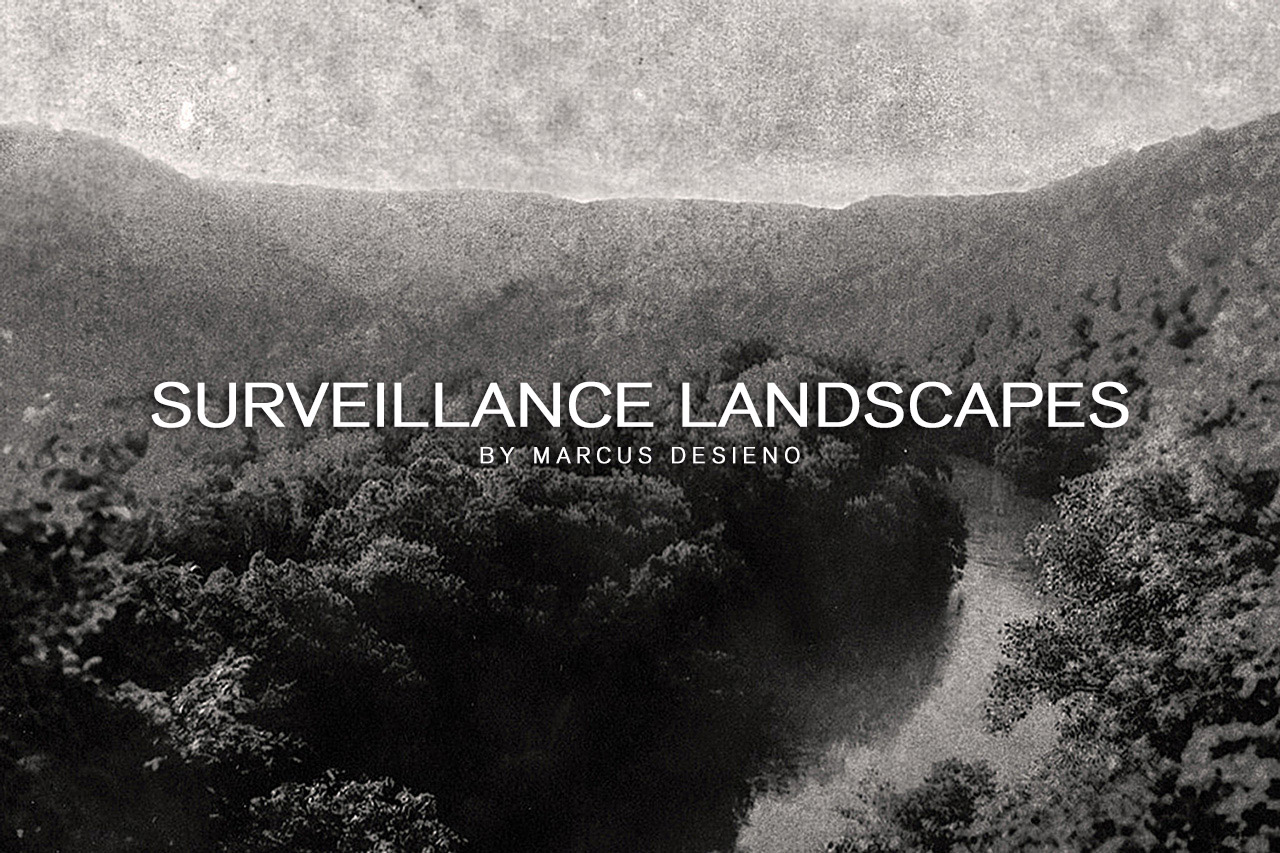
Surveillance Landscapes interrogates how surveillance technology has changed our relationship and understanding of landscape and place in our increasingly intrusive electronic culture. I hack into surveillance cameras, public webcams, and CCTV feeds in a pursuit for the classical picturesque landscape, dislocating the visual product from its automated origins while searching for a conversation between land, borders, and power. The very act of surveying a site through these photographic systems implies a dominating relationship between man and place. Ultimately, I hope to undermine these schemes of social control through the obfuscated melancholic images found while exploiting the technological mechanisms of power in our surveillance society.
Marcus DeSieno (USA). His work is concerned with science and exploration in relation to the history of photography. He received his MFA in Studio Art from the University of South Florida in 2015. DeSieno often assumes the role of the amateur scientist in his work in order to investigate photography's historic relationship with science in regards to the notion of the invisible. Antiquated and obsolescent photographic processes are often combined with contemporary imaging technologies to engage in a critical dialog on the evolution of photographic technology in relation to seeing.
Ó Minas Gerais
Written by Júlia Pontés
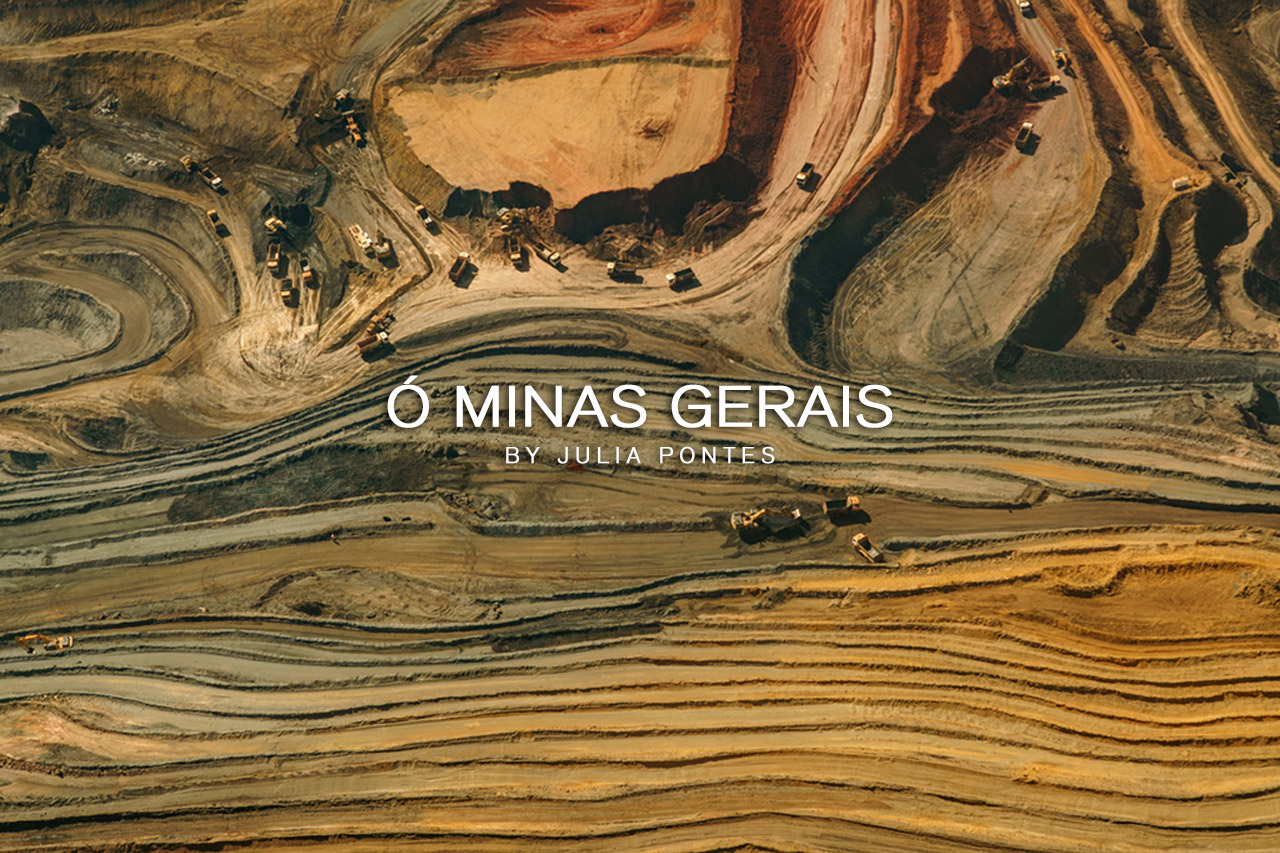
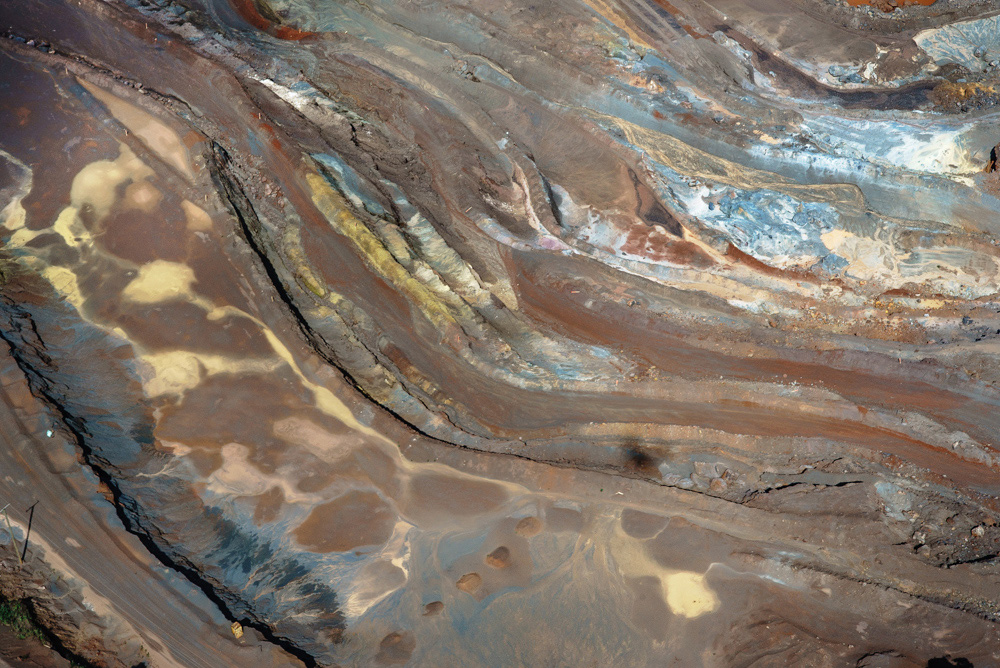
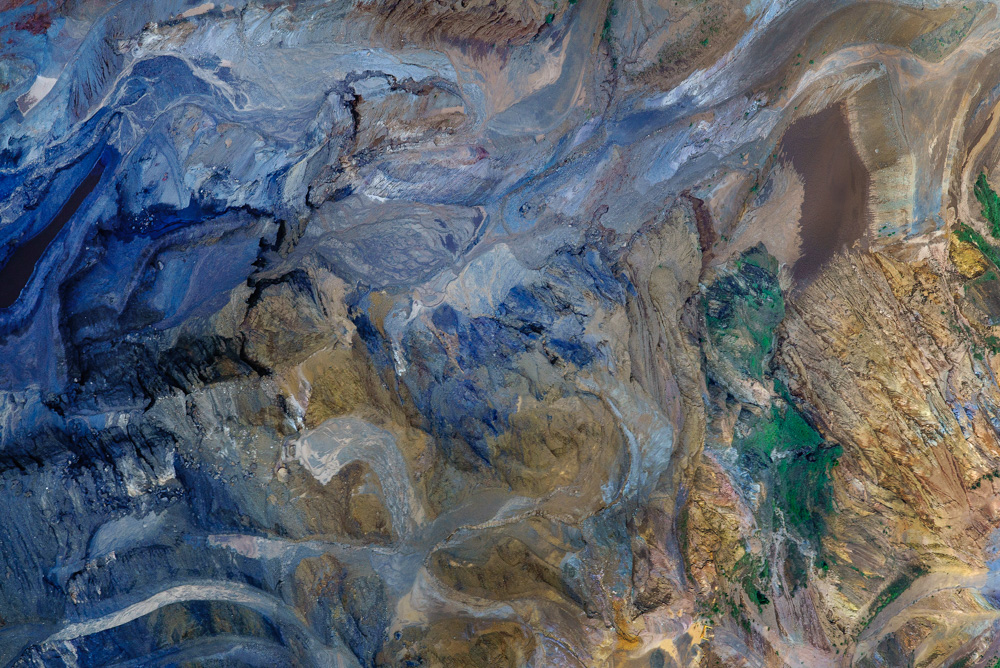
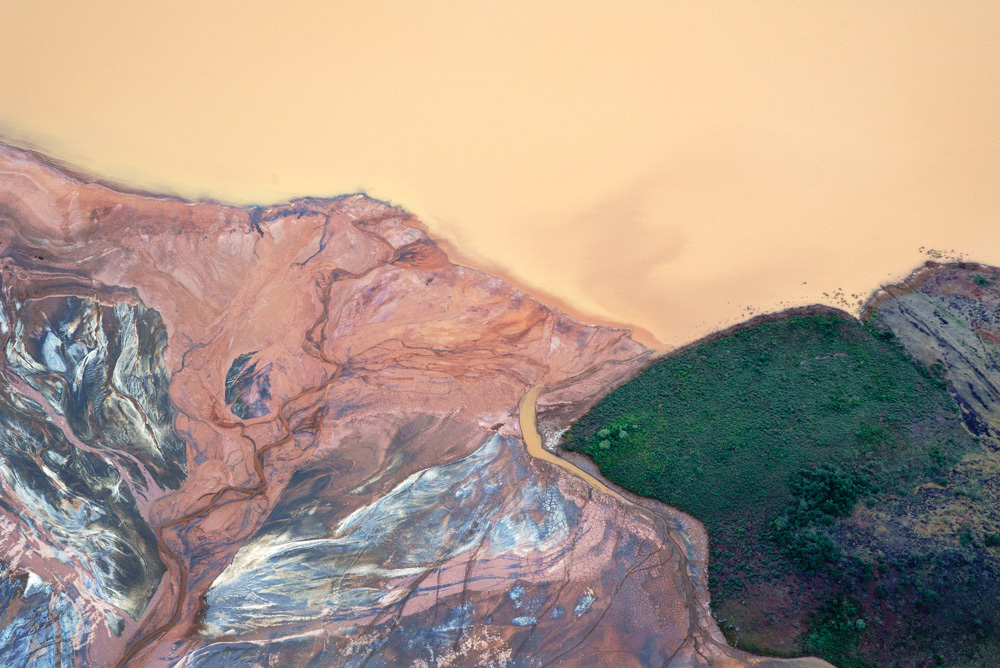
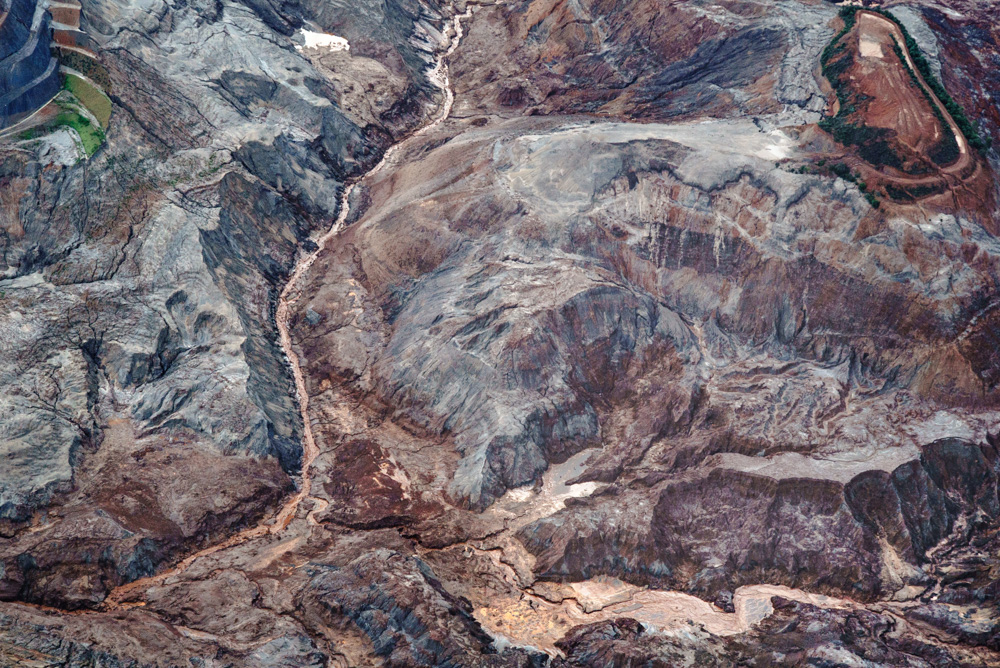
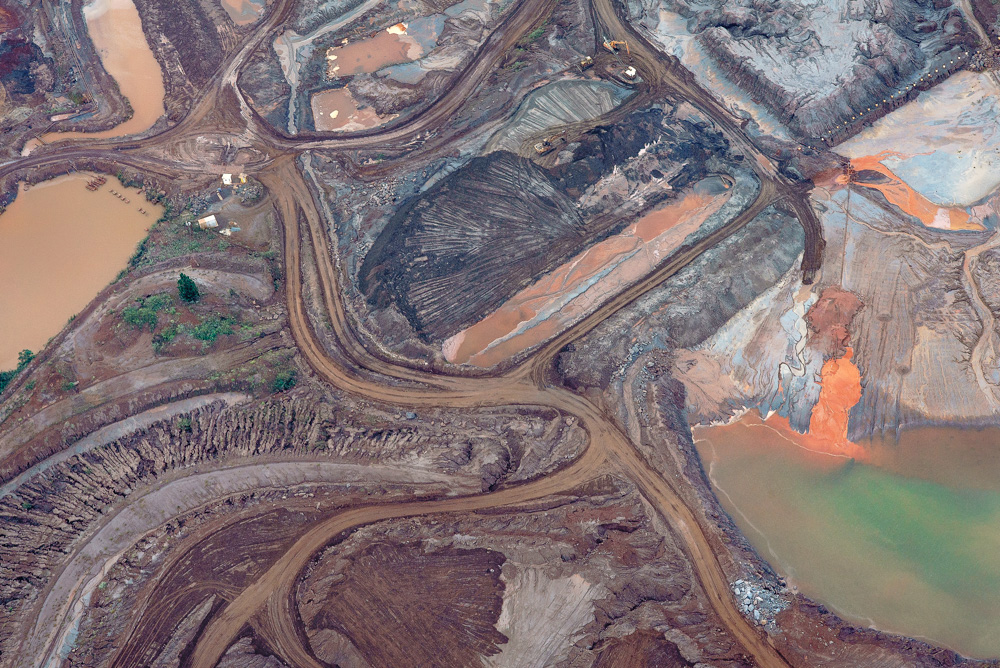
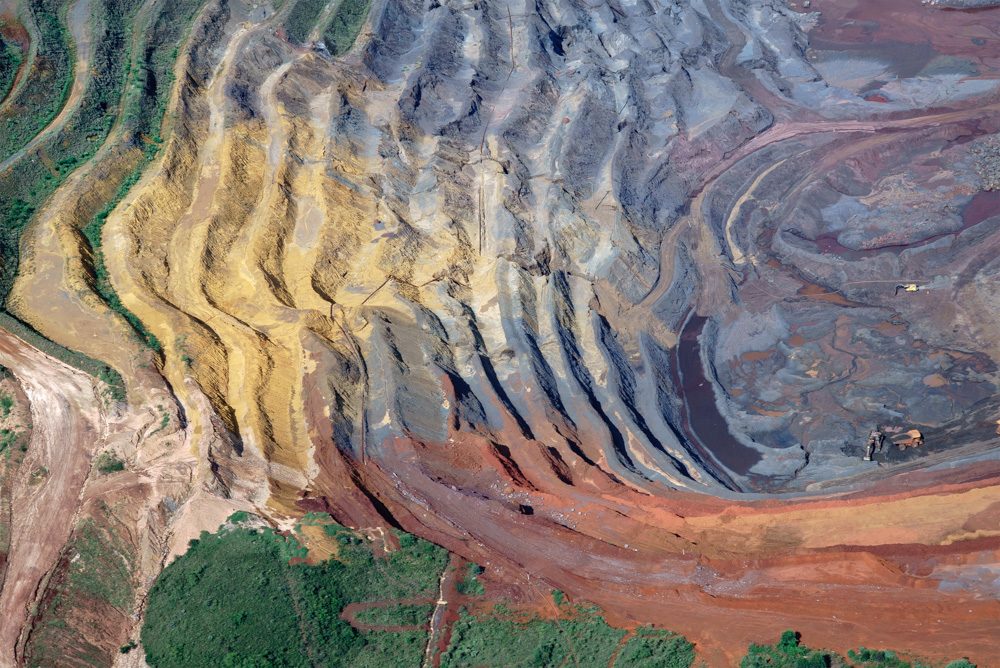
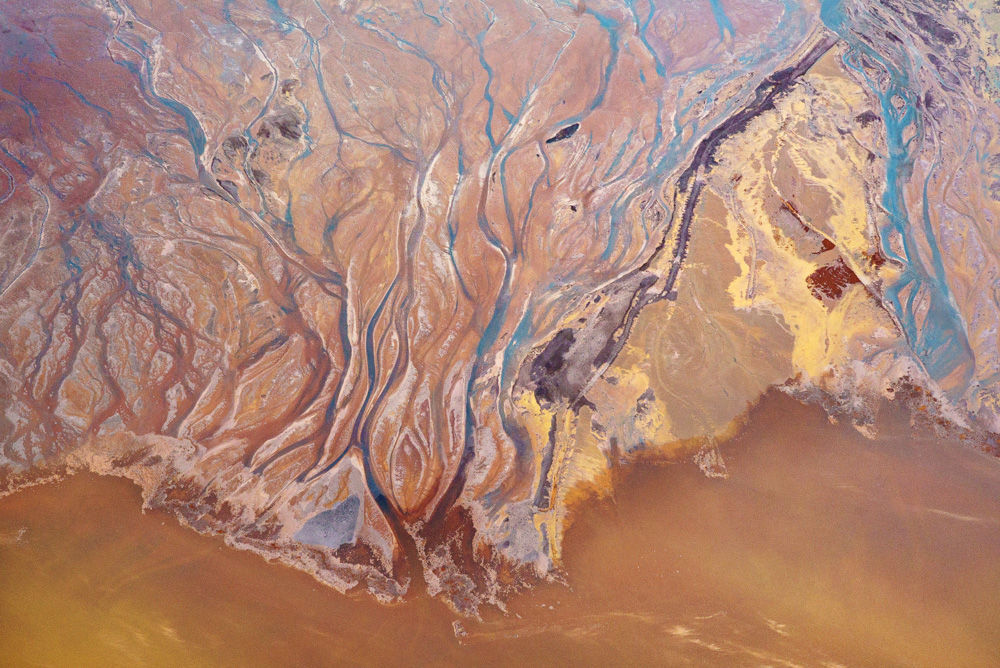
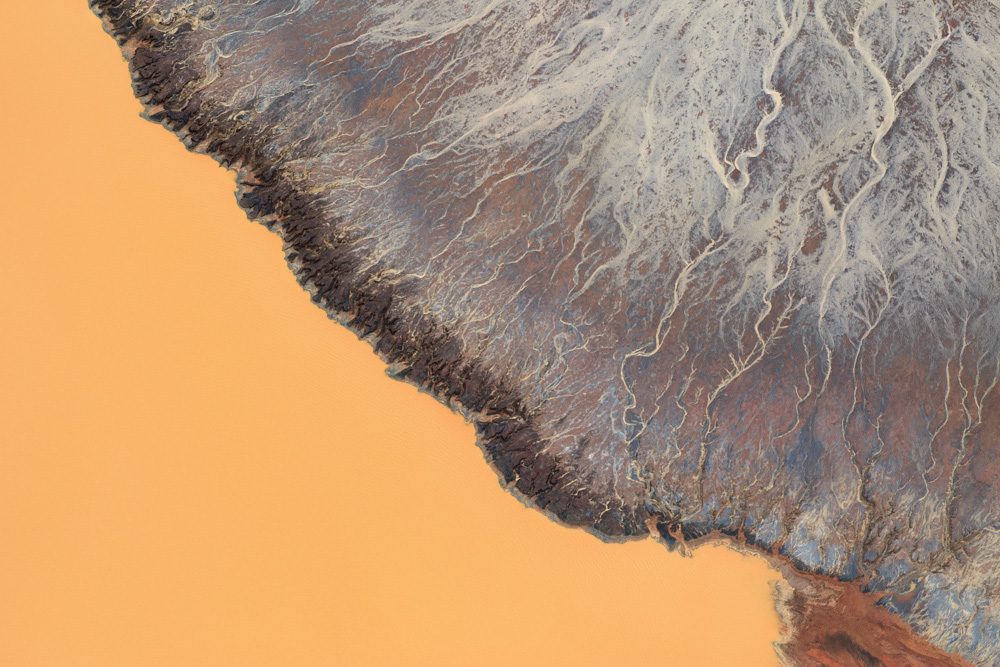
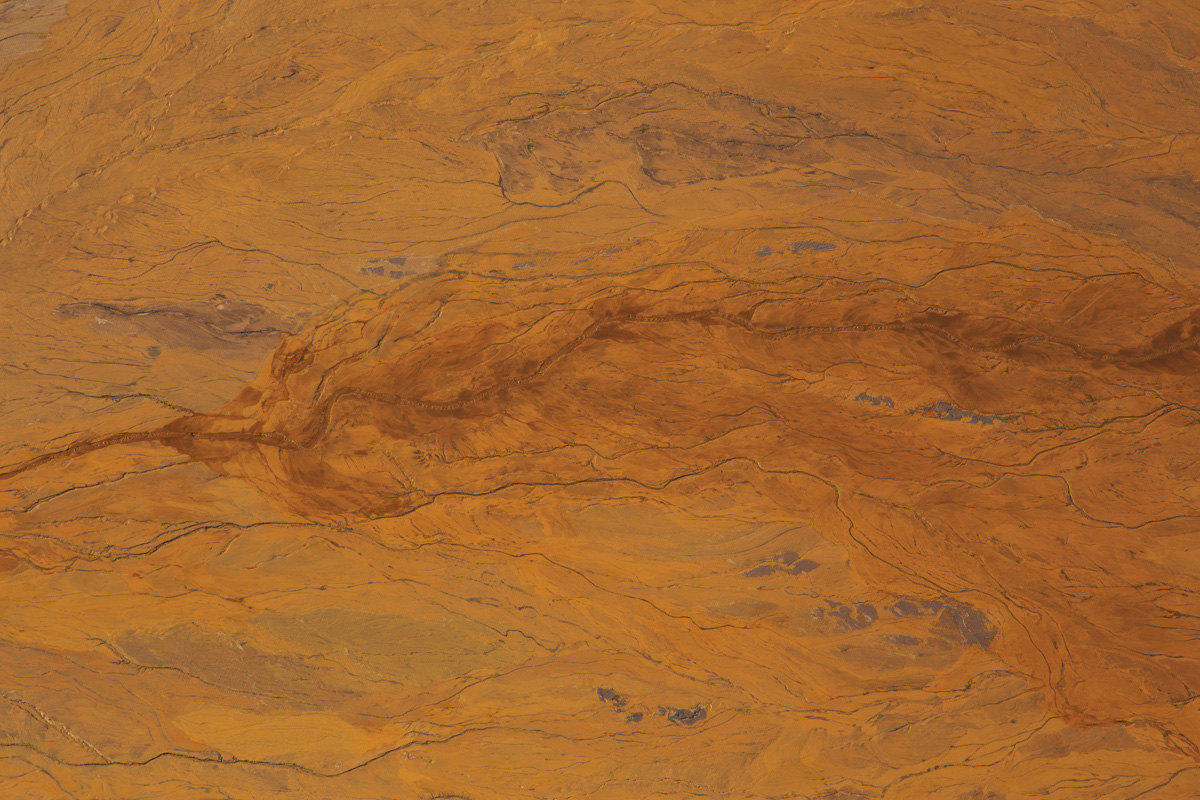
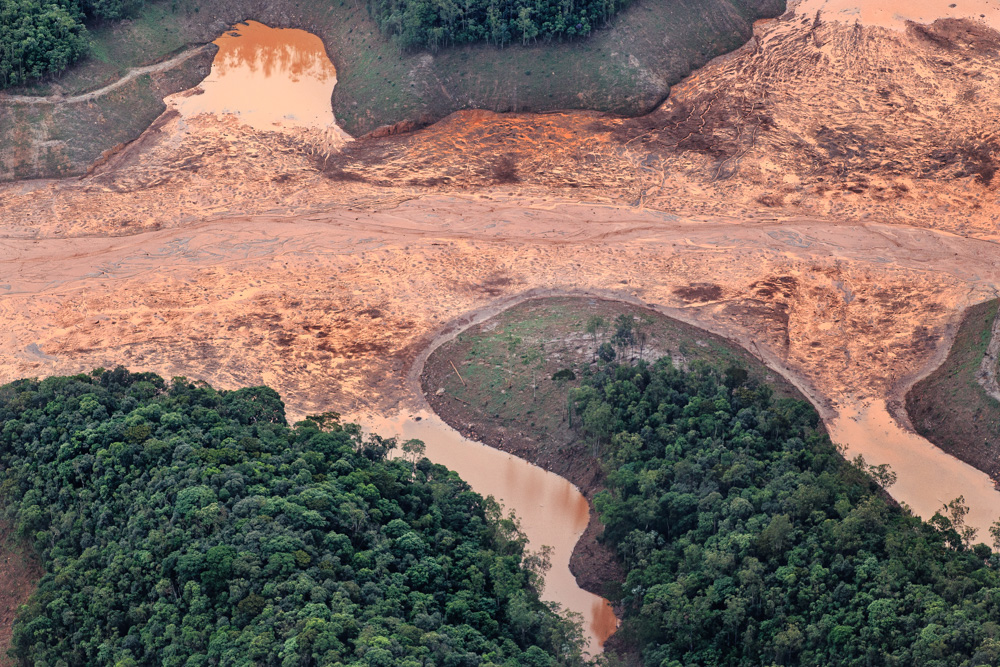
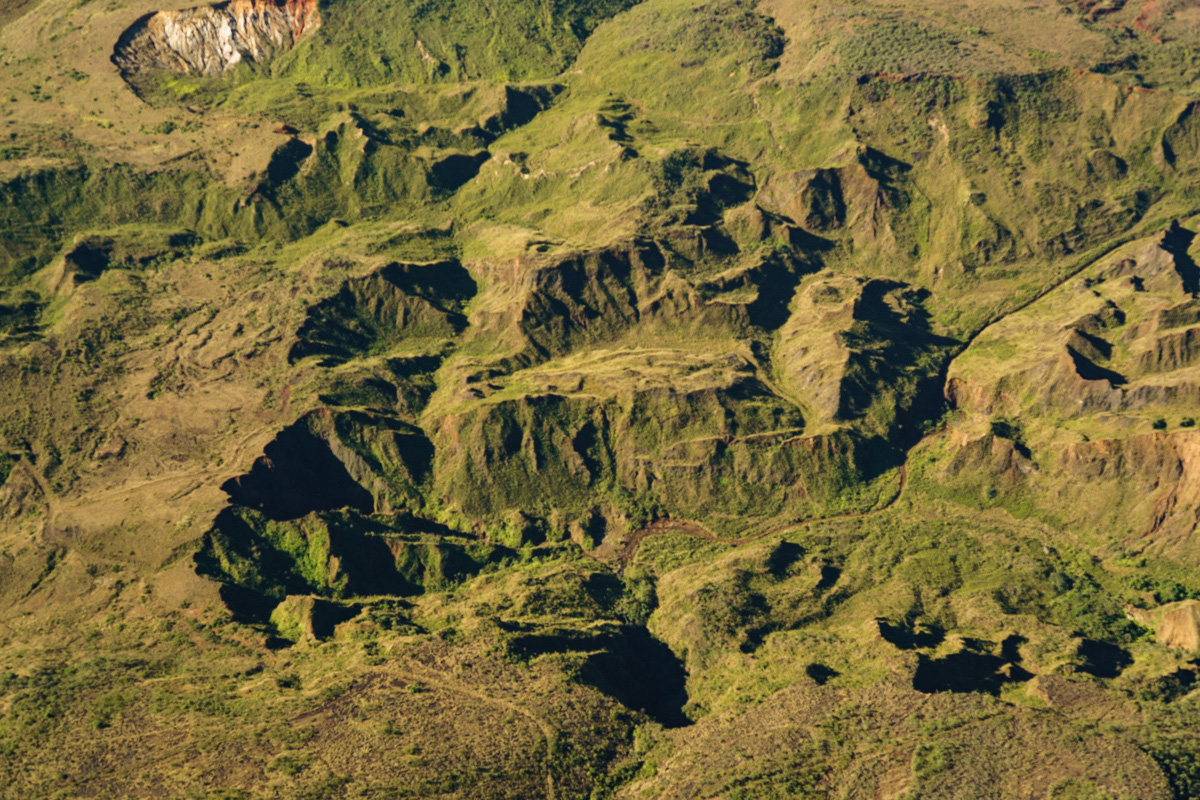
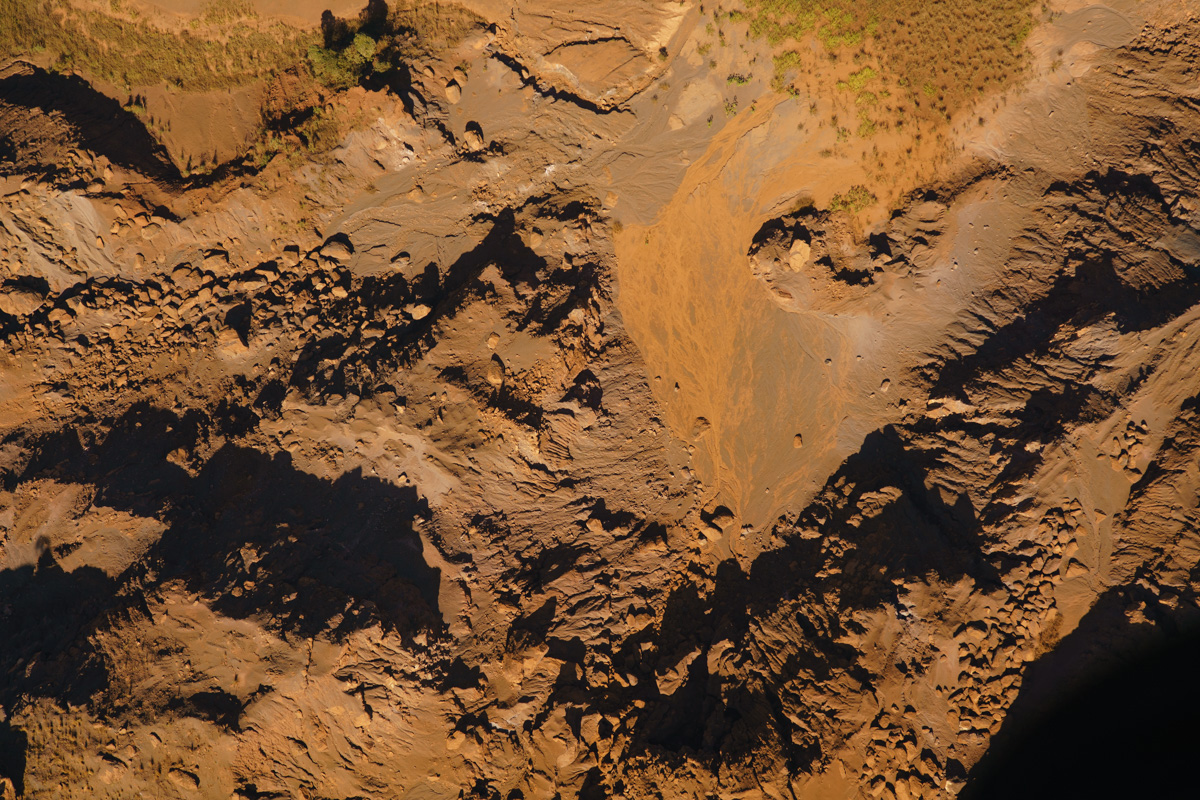
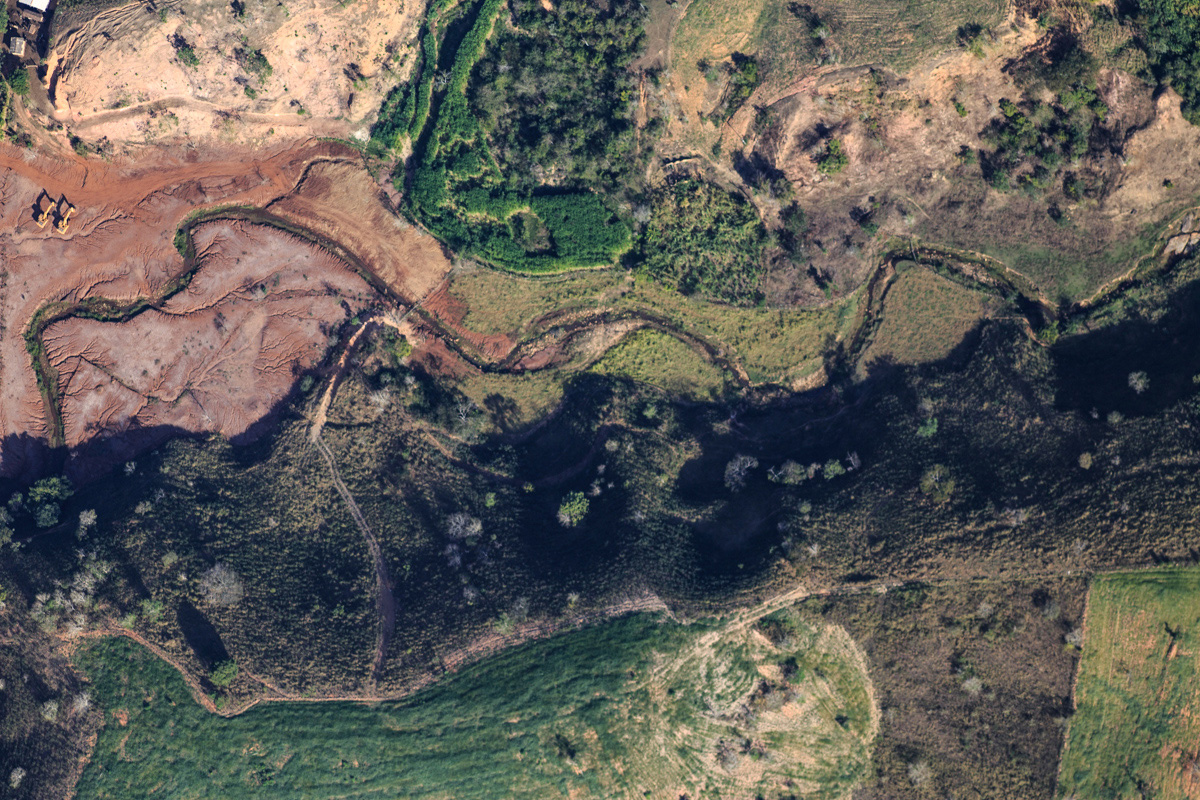
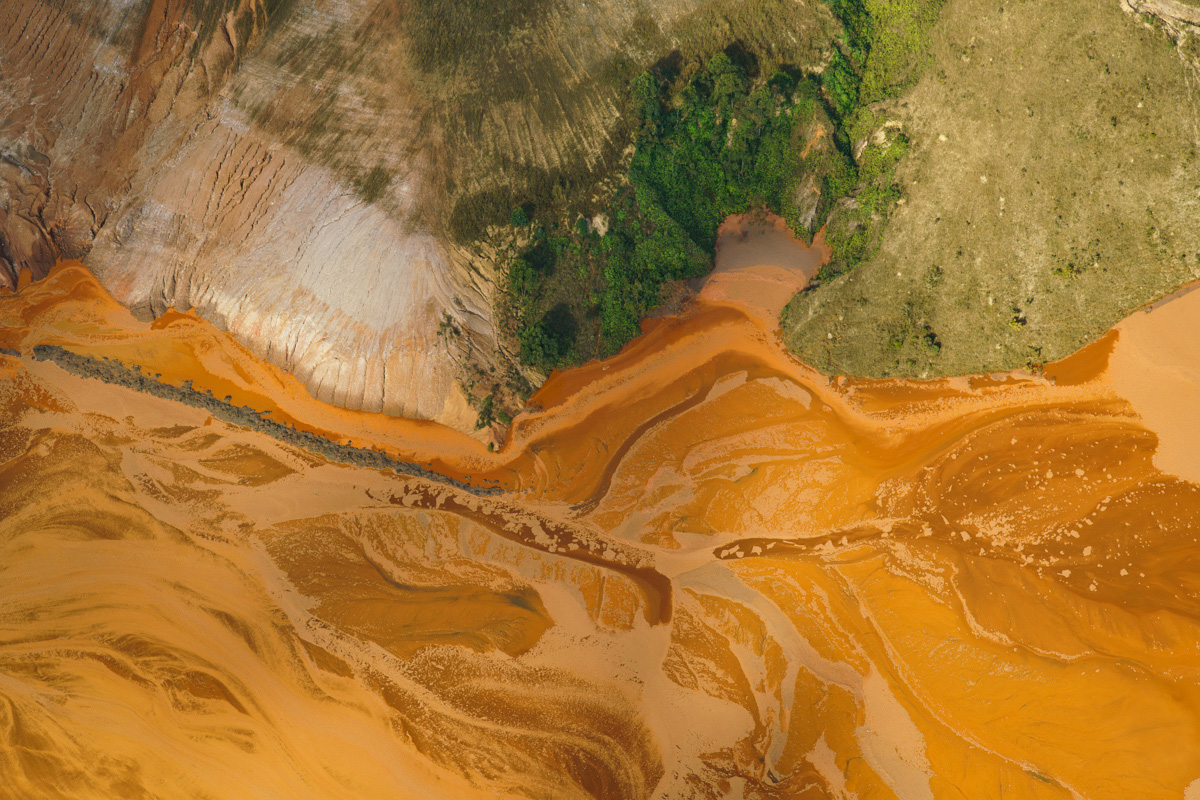
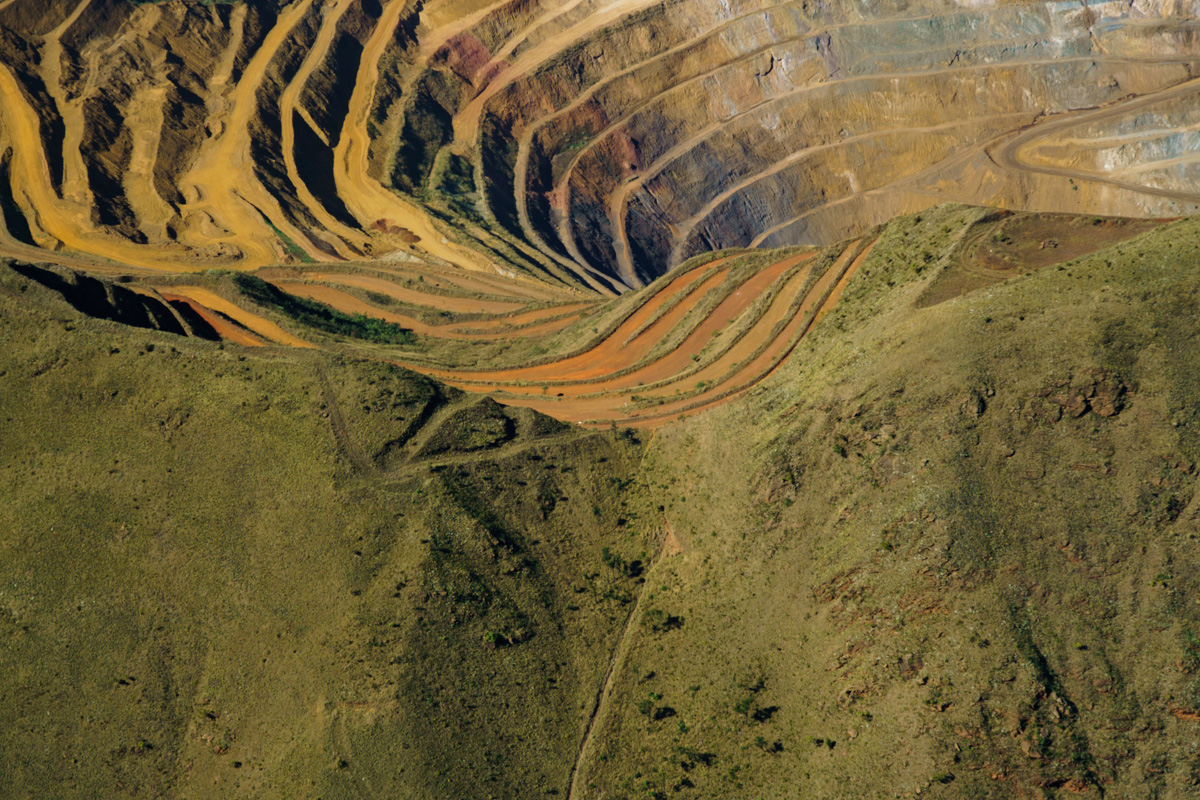
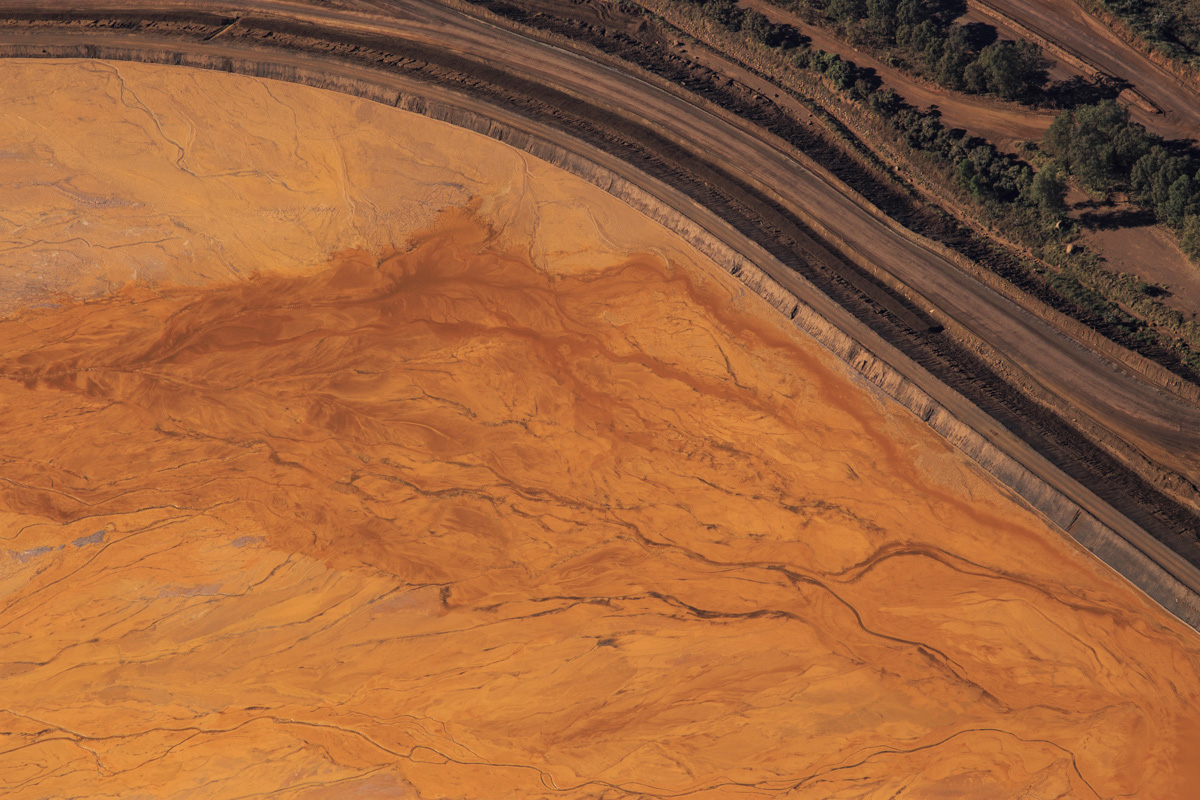
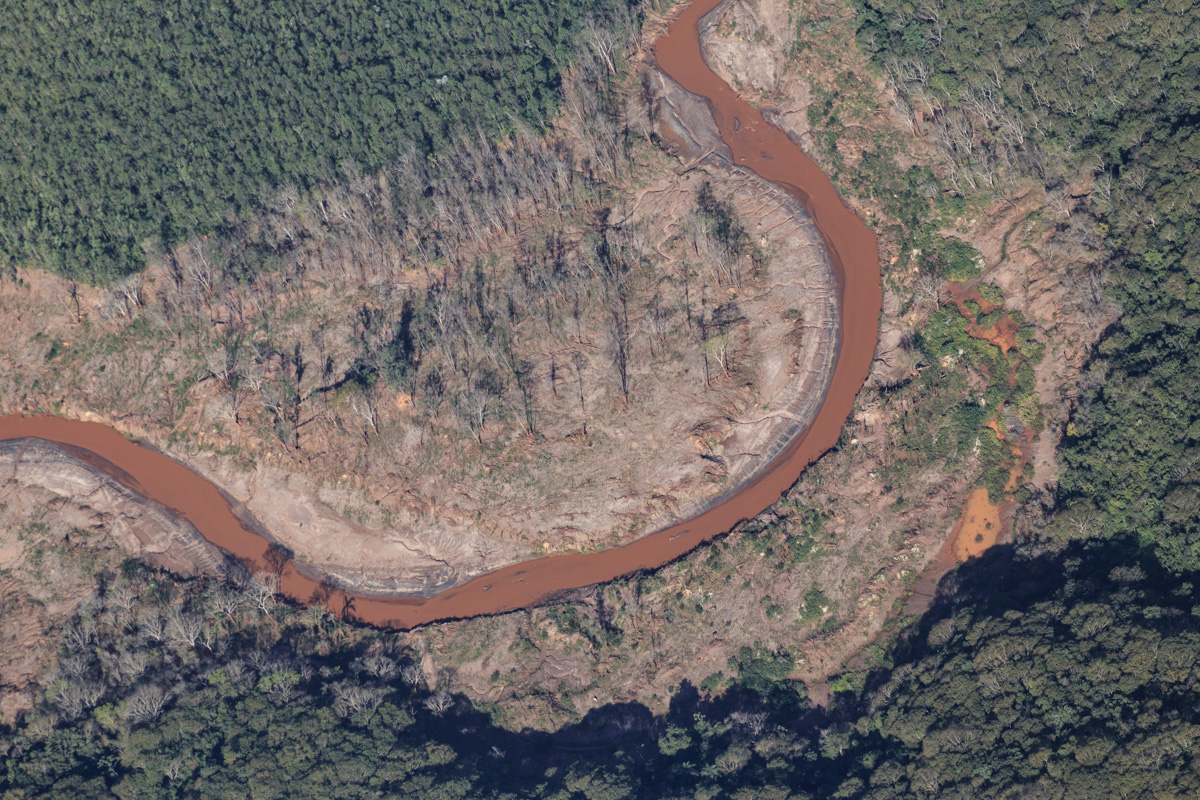
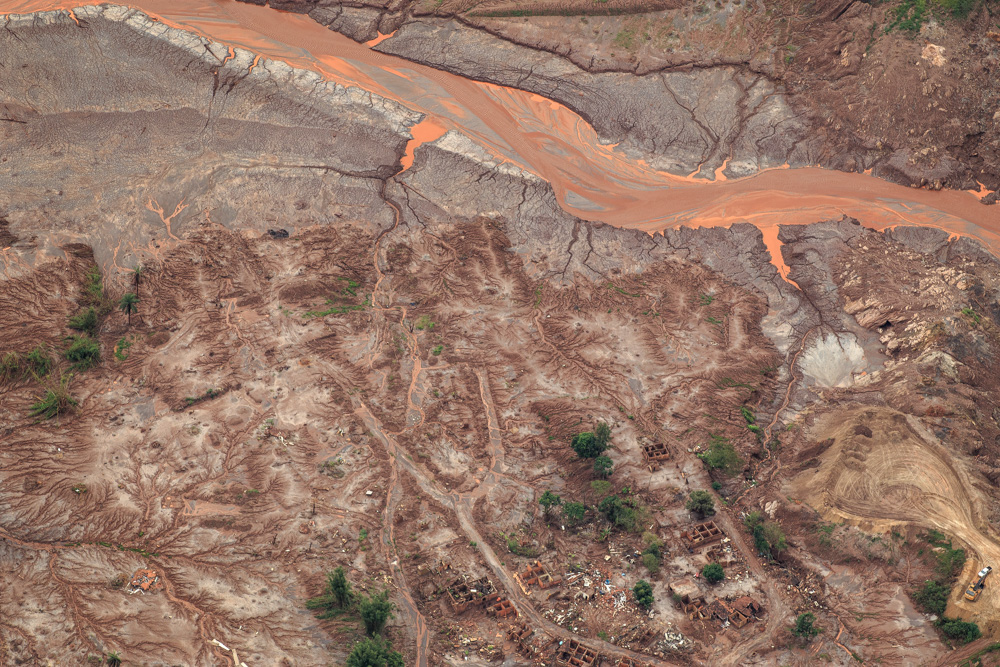
Brazil is facing the largest environmental disaster in its history. Due the lack of specific regulations and low inspection, a mining company’s dam broke throwing 10.5 billion gallons of mud on one of the countries most important rivers and water sheds, covering a whole town and leaving many cities without water.
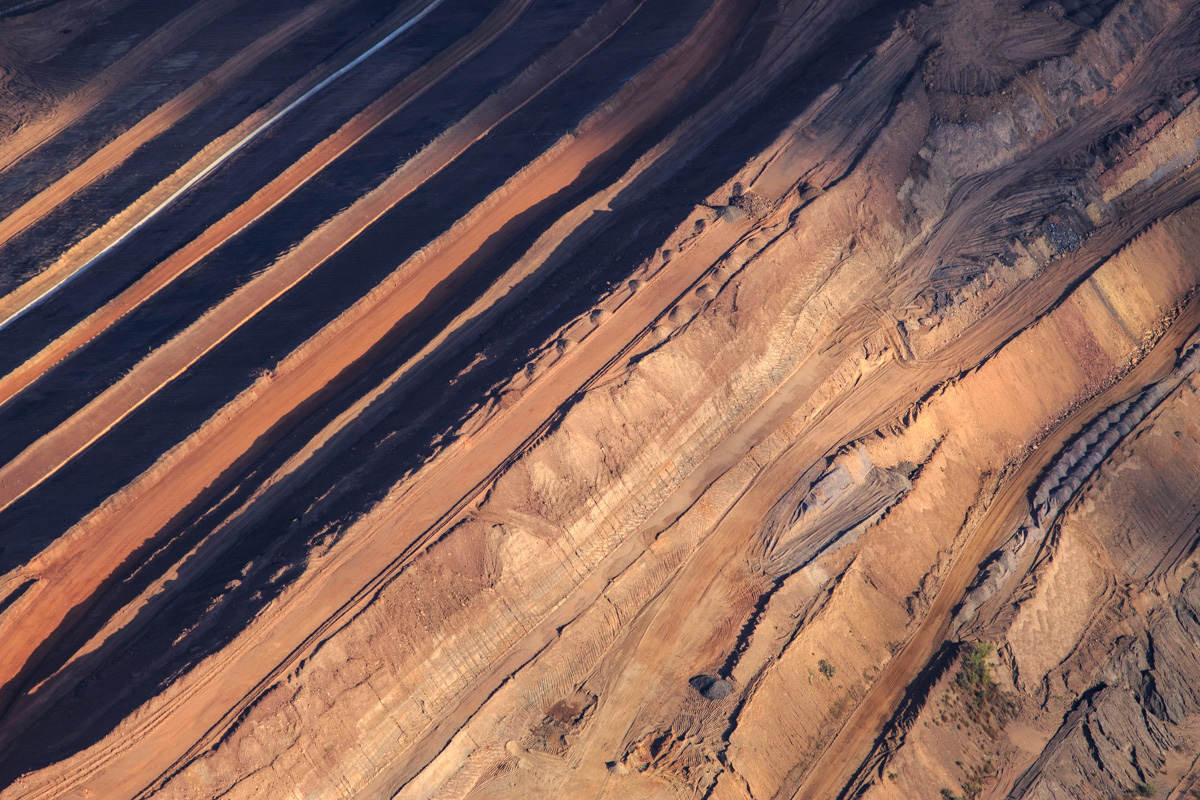
That breakage served as a groundbreaking for me. While flying over the area I was impressed by the landscape damaged that has been caused by the highly intensive mining activity in the state. Many of the open air mines, are hidden between the state of Minas Gerais’ “mountain” chains , therefore, local population has no sight of its extension. Most of the photographs were taken in a forbidden aerial space, with the plane’s transponder being off.
It is a very delicate subject, mining is the main industry in the state and it is so deeply routed that it is on it’s name. Everyone has a relation to the activity. My family had an iron processing company, one of the multiple stages on the mining commercial chain.
There is a mining regulation bill currently being discussed by Brazilian congressman. 20 out of the 27 congressman responsible for the project received money from mining companies to their campaigns.
This ongoing project is a landscape investigation both of the disaster, the unbounded and poorly regulated use of the soil.
Júlia Pontés (Brazil, 1983).Porteña by choice - Live & work in New York Her interests are influenced by Psychology and Public Policies, in which she holds a Master’s Degree. She graduated at the International Center of Photography and she has been chosen as an Emerging Immigrant Artist by the New York Foundation for the Arts, where she has been a mentee twice. She has a polarized practice that involves documenting stories linked to her own life experiences and, on the other hand, a self portraiture practice. In both she applies experimental techniques, the use of different mediums and archive material.
Binary Code
Written by Max de Esteban
ZZ. What led you to appropriation and remix and how are they significant in your work?
M. Appropriation and remix have a long artistic tradition, beginning with Picasso’s collages. As early as the 1920s, Hannah Hoch and the Dadaists used this mode of expression to create major photographic works. In music, for example, from today’s DJs and Pop to Glenn Gould and Miles Davis, the practice of remix, collage and appropriation has been an essential part of their production. What I mean is that as an artistic concept, appropriation and remix are pretty standard and not particularly groundbreaking.
The interesting question is why their aesthetic power has been reasserted in photography precisely now. And I think one possible answer would be the combination of the formal exhaustion of the linear perspective as a photographic representation of the world and the huge impact digitization is having on every aspect of our lives. I would answer your question by turning it around and saying I find it hard to think of a truly relevant form of photography for the world we live in that continues to respect the Eurocentric, reactionary structure of the dark room.
ZZ. What do you mean by Eurocentric and reactionary?
M. The linear perspective, the visual structure resulting from the dark room, is a very particular and ideological way of visualizing the world. Panofsky has a text about it he wrote in 1927, a real classic, that is a pleasure to read.
But what is really remarkable is that it is an exception in art history. In 10,000 years of history, the linear perspective spans only 500 years and is located exclusively in the West. It has never been of interest to Asian, or pre-Columbian or African art ... it is a European way of seeing in a period beginning in the Renaissance and ending in the 19th century.
And this is no coincidence because its ideological content is well known. The linear perspective arranges the world from the point of view of an autonomous individual whose individuality is the world’s principle of meaning. It is pure Descartes. And we all remember Descartes’ Fifth Meditation, which states that since the essence of matter is its extension, geometry is an essential instrument for understanding nature. Modernity can be defined as the advance of abstraction and the prevalence of the quantitative over the qualitative in which the mathematical-scientific order is regarded as the only source of valid knowledge. There is so much contemporary thought that debunks this narrative that I won't repeat it here.
Thus, surprisingly, my earlier comment is still valid. Why should digital photography continue giving priority to a functionally and ideologically devalued visual structure?
ZZ. Why do you think digital photography changes the way we understand appropriation and remix?
M. Digital technologies are leading us towards the radical transformation of our world. By replacing the industrial economy with a bio-cybernetic system, digitization is modifying our environment, our subjectivity and soon, our bodies. This is the technological phenomenon that will define our era and therefore our culture.
Unlike an analog file, a digital file is invisible. It is a code whose visual expression is a translation highly mediated by default algorithms, whose most prominent feature is precisely its immateriality.
This technical structure fits our current era of abstraction and non-referentiality and the digital financialization of the economy. How do we see the world today? We have the answer on our computer and Smartphone screens. What is the essential aspect of the financial economy? The recombination of existing information units to create new information, in other words, “constructive compositing”. Digitization has definitively invalidated linear narrative, the monocular perspective and the author’s “authority”.
ZZ. You attach a great deal of importance to the concept of technology in your work. Could you explain why?
M. We are moving towards a world as a “technological whole”. Technical manipulation has already invaded our bodies, the last frontier, and no-one doubts that having machines inside our bodies will soon become commonplace.
The cyborg raises more complex issues for our species, which, though somewhat deteriorated, continues to maintain the autonomy of the subject as an essential value. Abstraction, digitization and cyborg are three sides of the same coin that heralds our new world, whether we like it or not. In my opinion, reflecting on technology is necessary, urgent and politically essential.
ZZ. And how do you think technology affects the practice of photography?
M. I’d like to point something out. One of the problems of photography is the confusion between technology and use. Writing is a communication technology that serve to draw up a commercial contract and compose a poem by Virgil. It is the same technology but nobody would ever mistake Virgil for a notary. In photography, we tend to combine uses, which creates enormous confusion in critical discourse. Throughout this interview, I have been referring to the use of photography as a means of artistic expression.
The thing is that photography has always been halfway to a cyborg. It is a machine that affects and to some extent determines human power, thought and expression and is therefore an ideal place for reflecting on the issues I mentioned earlier. To give you an example: How can you visually depict the abstraction of the economy when the material references of wealth have been replaced by a binary code? That’s what I’m doing at the moment and it forces me to rethink what “representation” means in this new visual regime.
Another example: How does the idea of the cyborg affect art categories? That’s the topic I try to get my teeth into in the text “Cyborg Art: art in the bio-cybernetic era”. And there are a thousand other possible ideas that make photography an exciting medium at this particular historical time. The point is that if photographic practice does not take up the challenge raised by contemporaneity, it will be relegated to banality and antique shops.
ZZ. How do you choose the sources you use and what significance do they have for your series?
M. Like nearly everything in life, it is a combination of determination and chance. In my case, too much planning and/or reflection in my work paralyzes me while dreams or rather daydreams are of paramount importance.
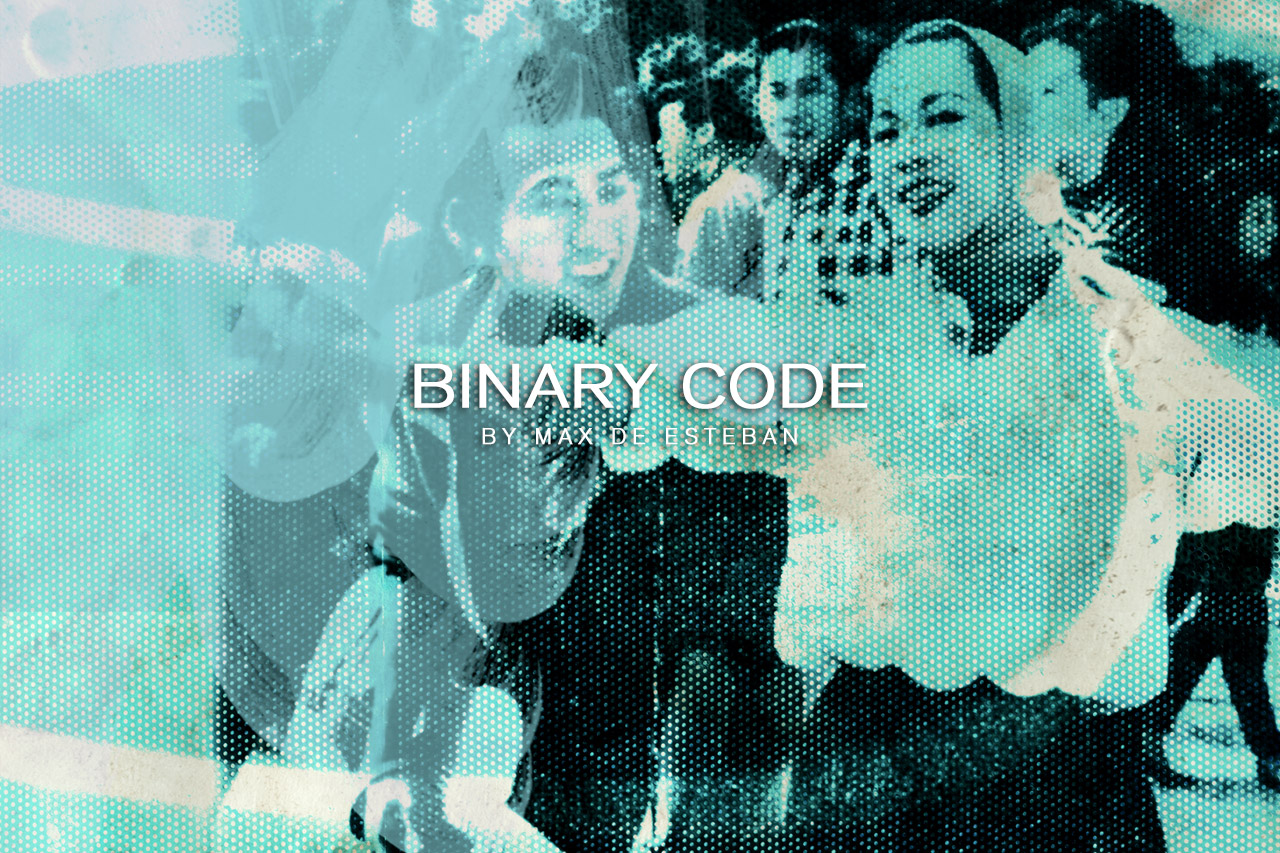
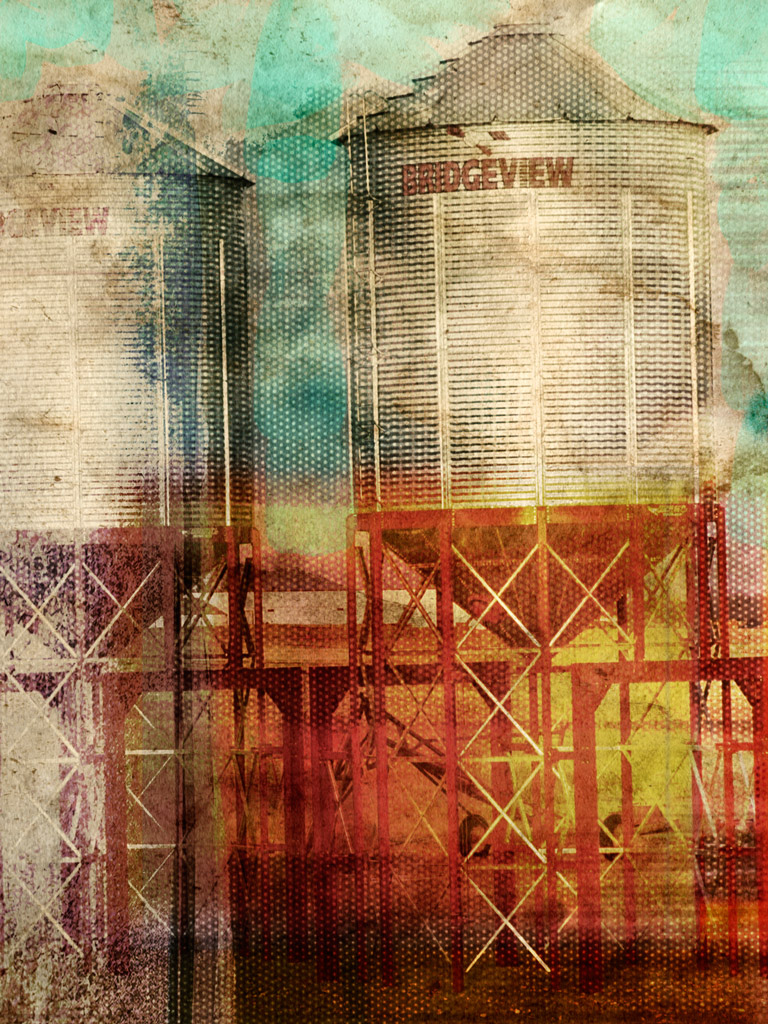
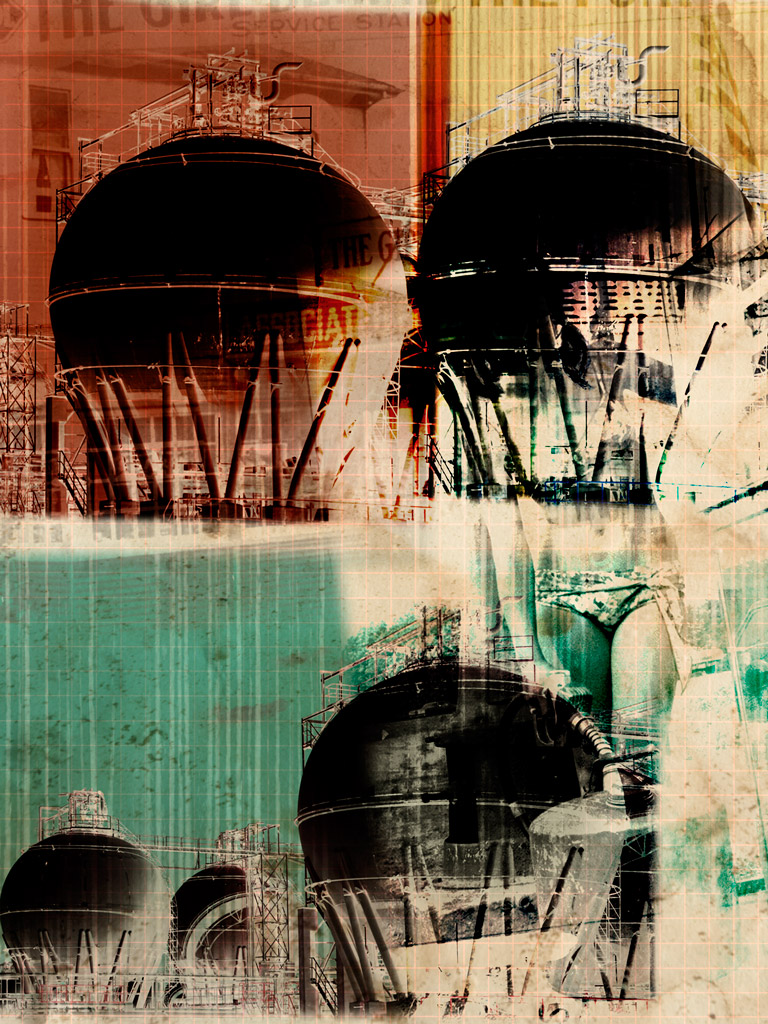
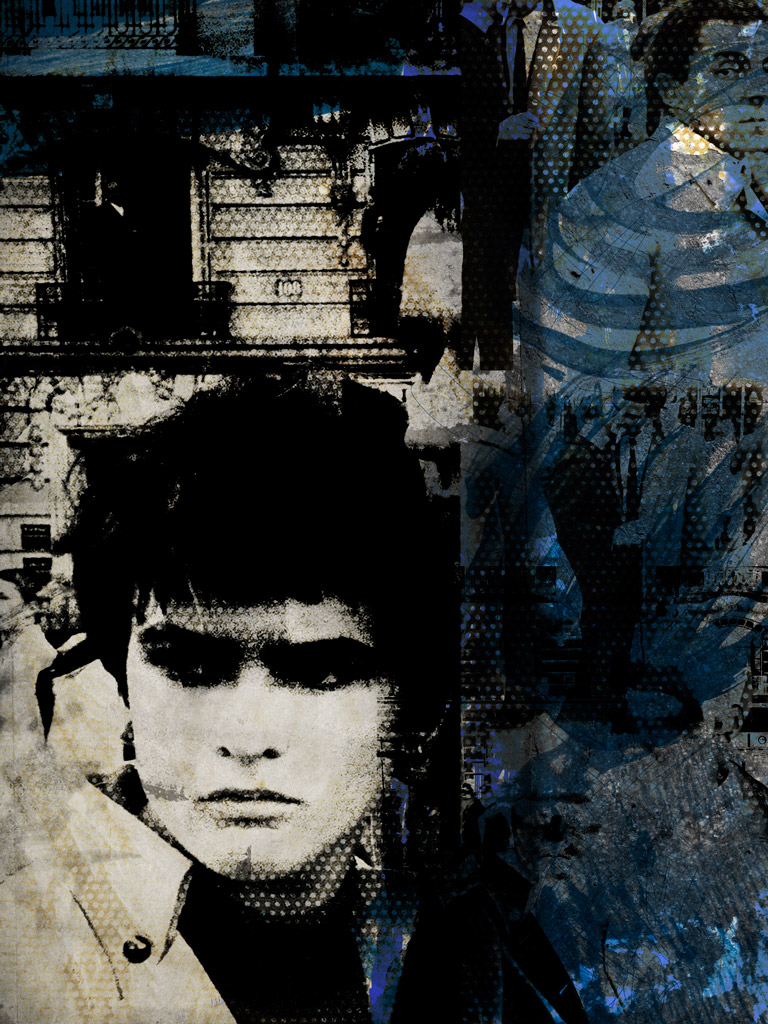
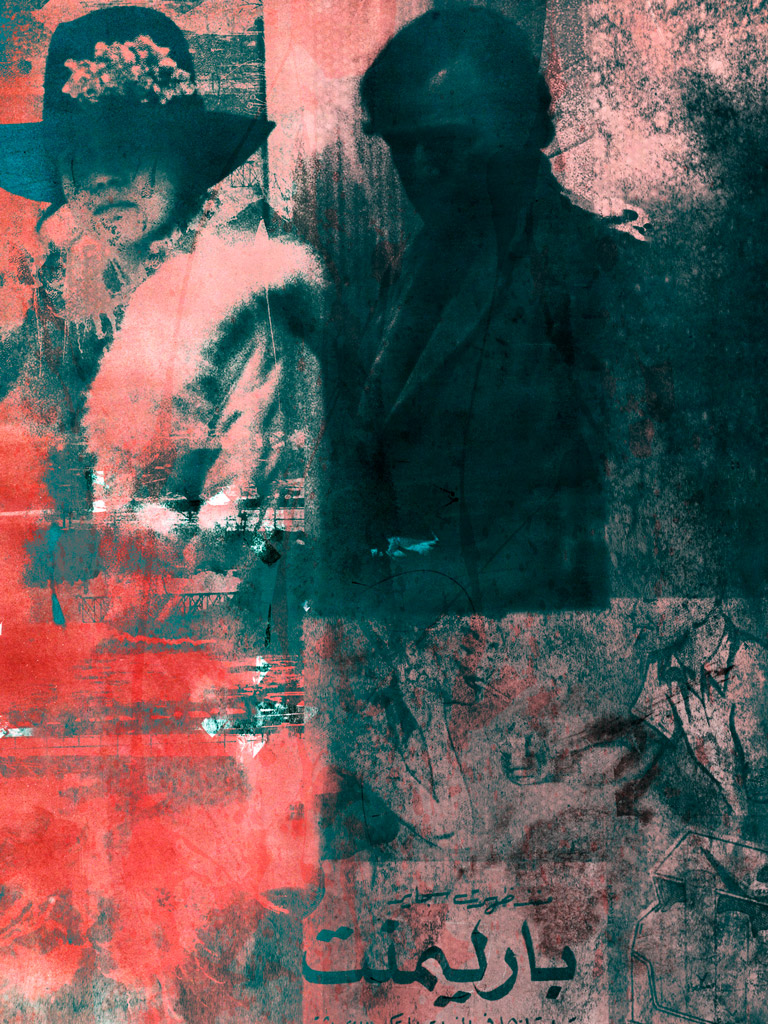
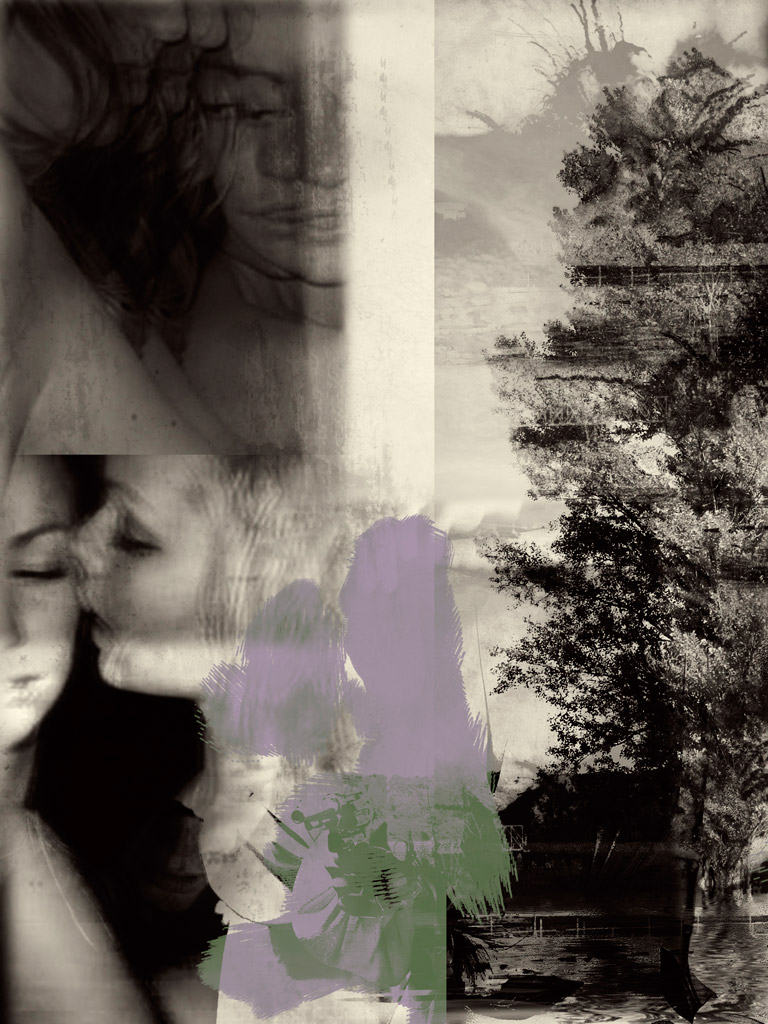
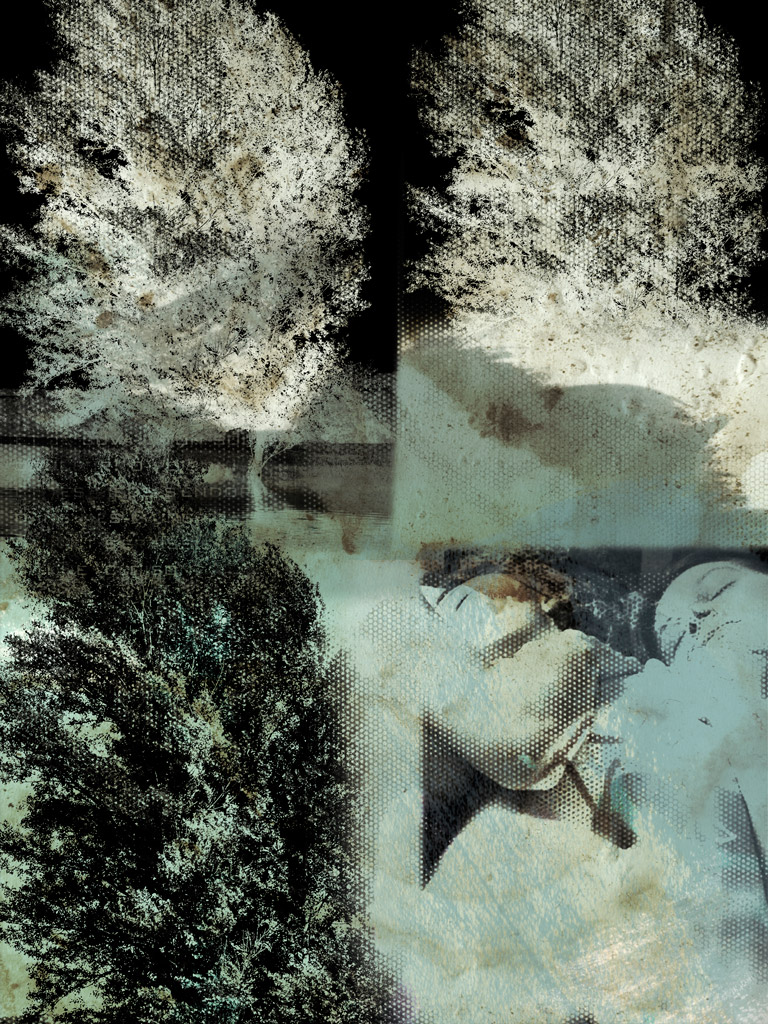
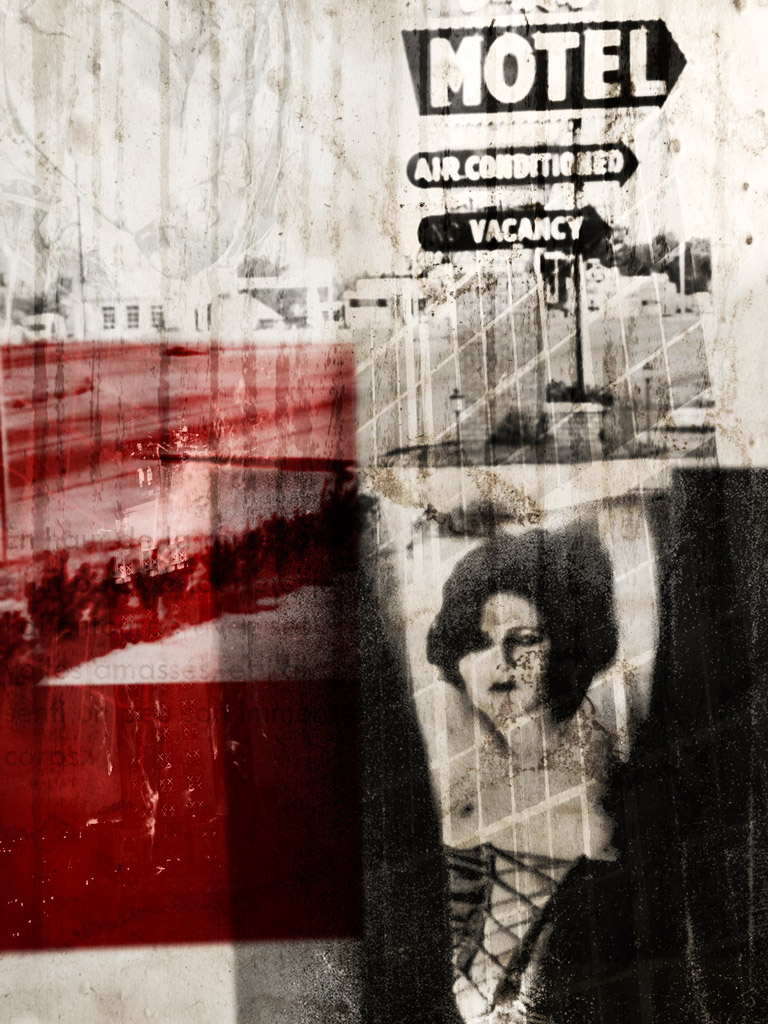
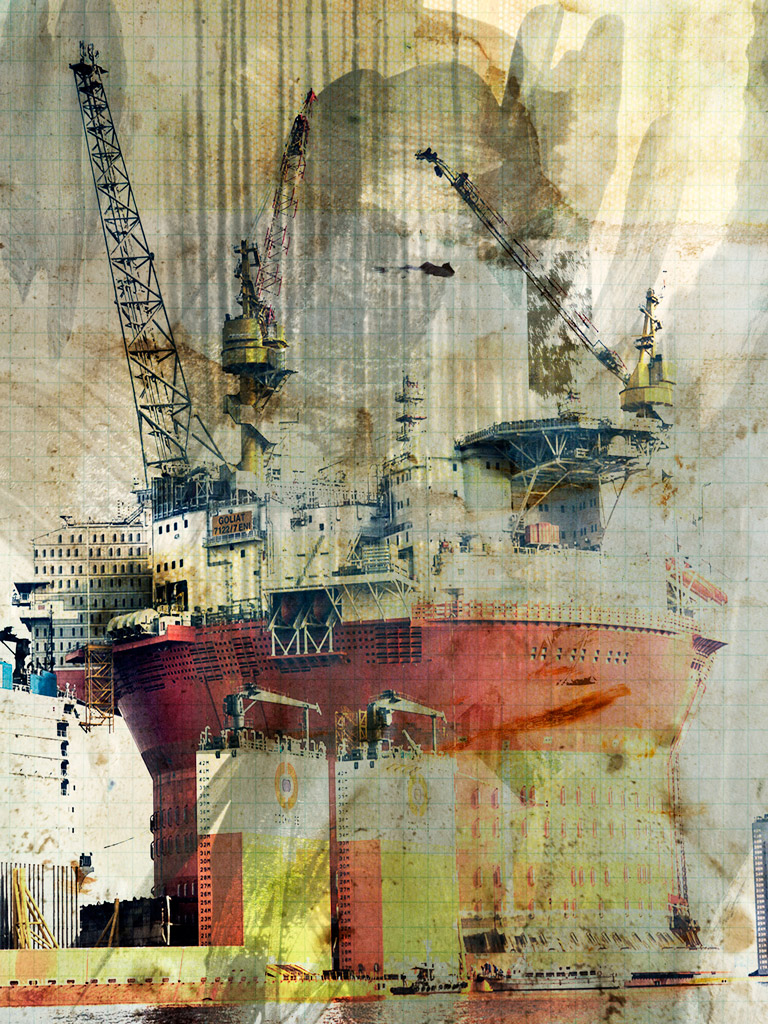
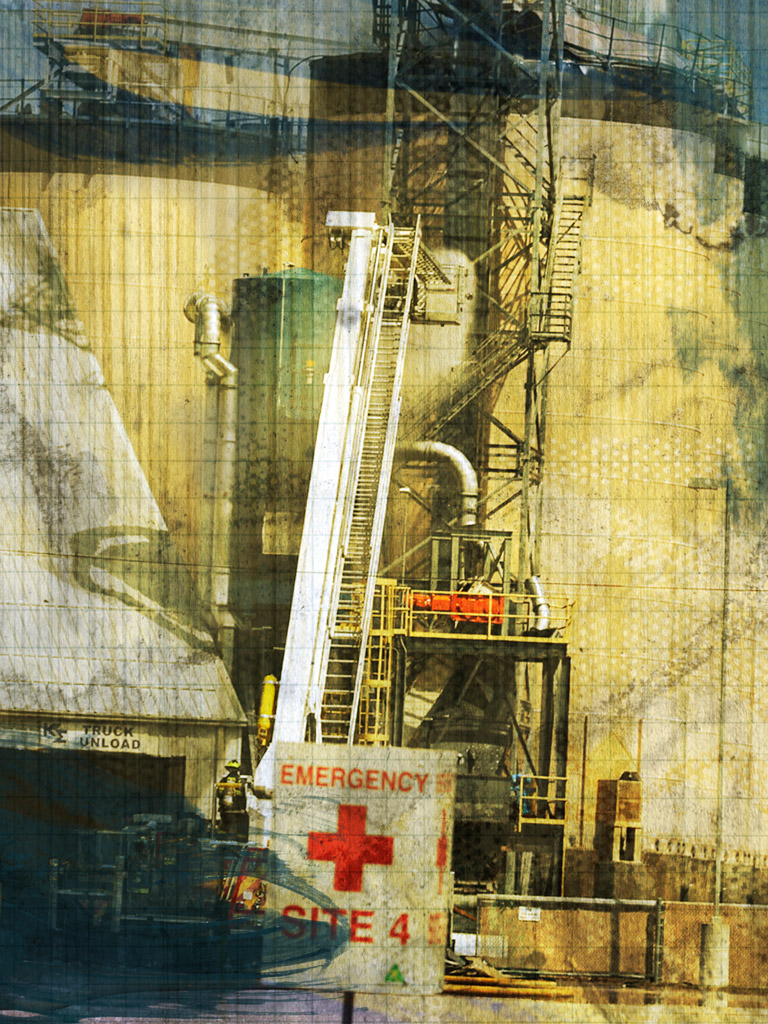
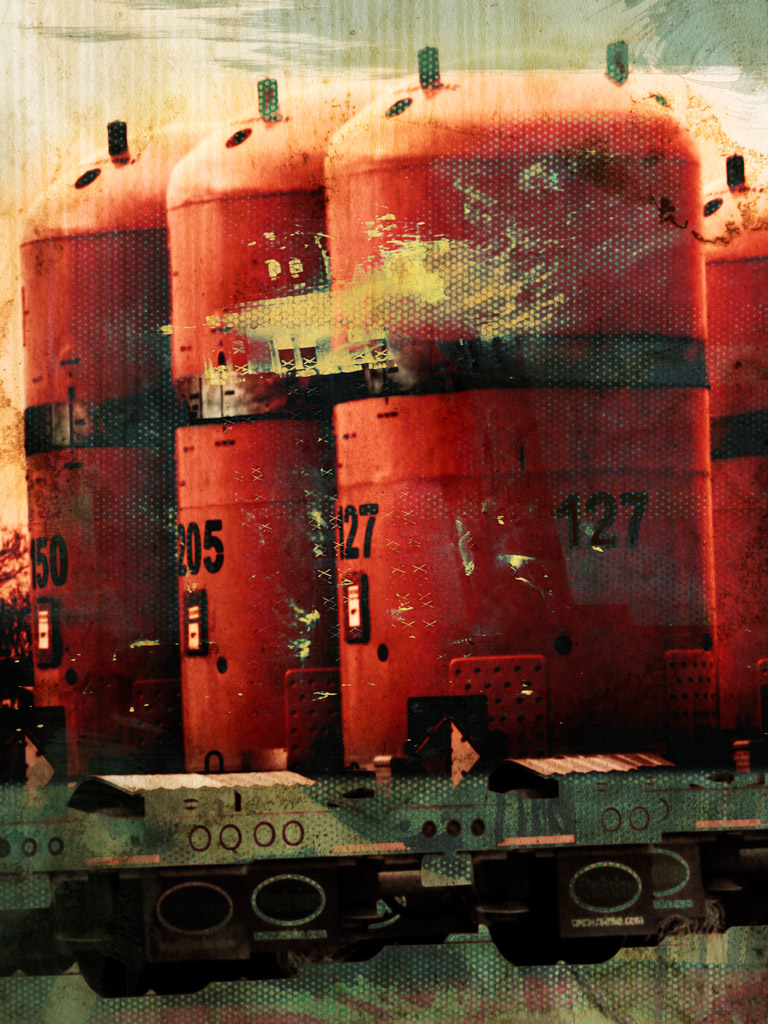
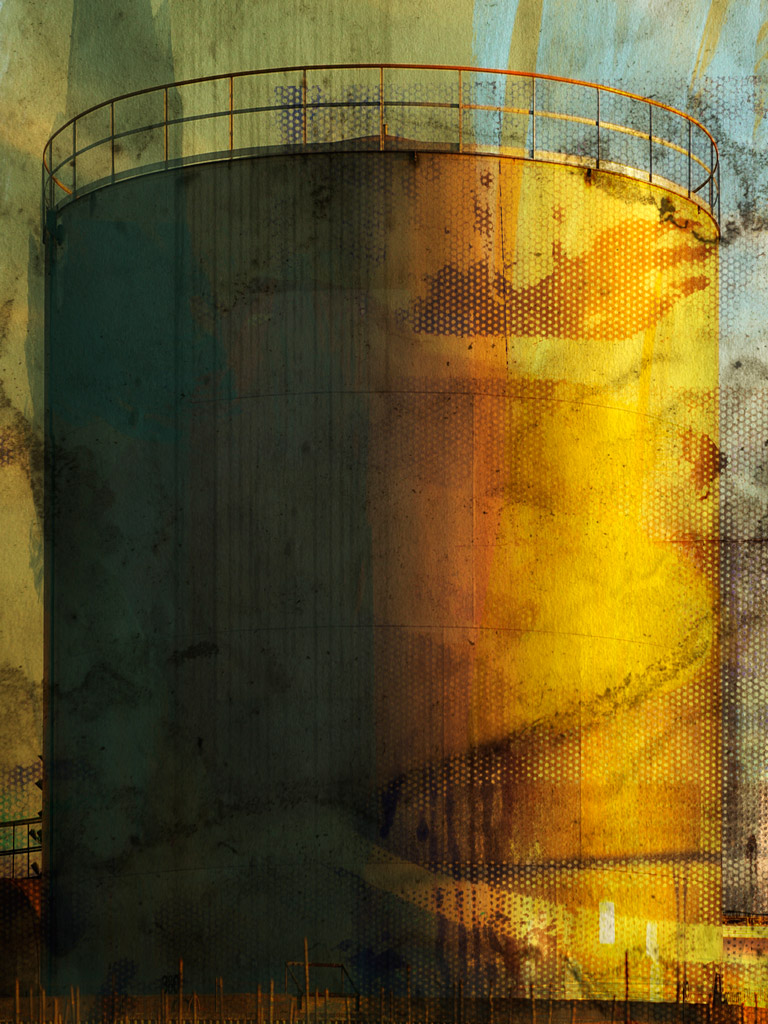
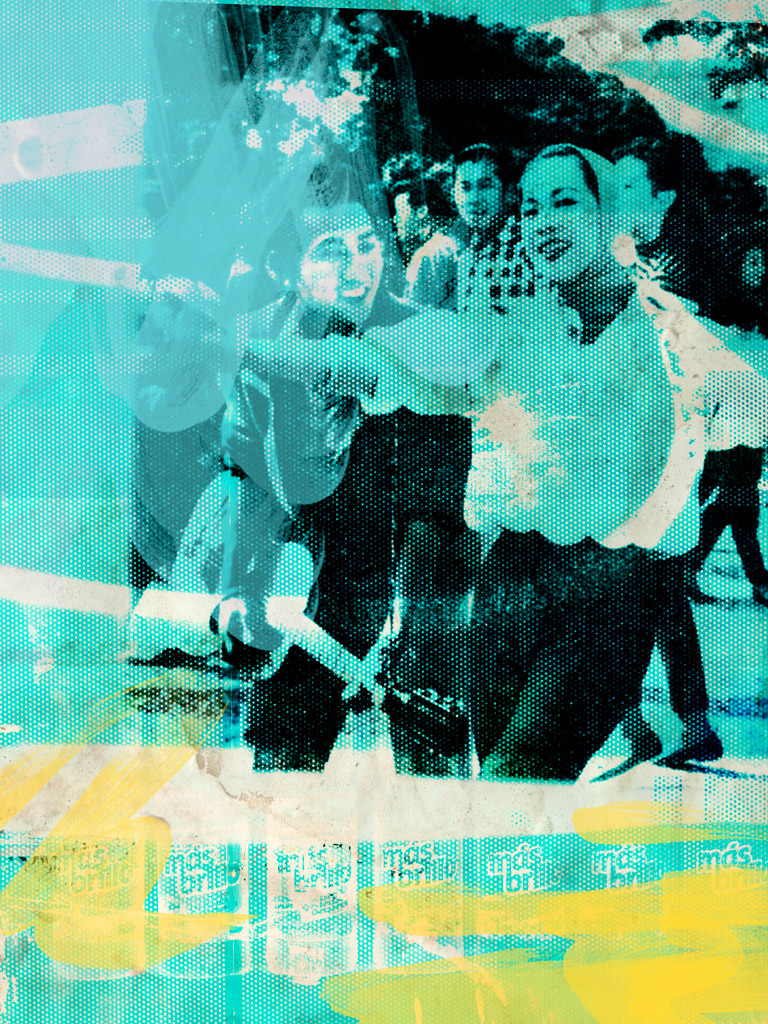
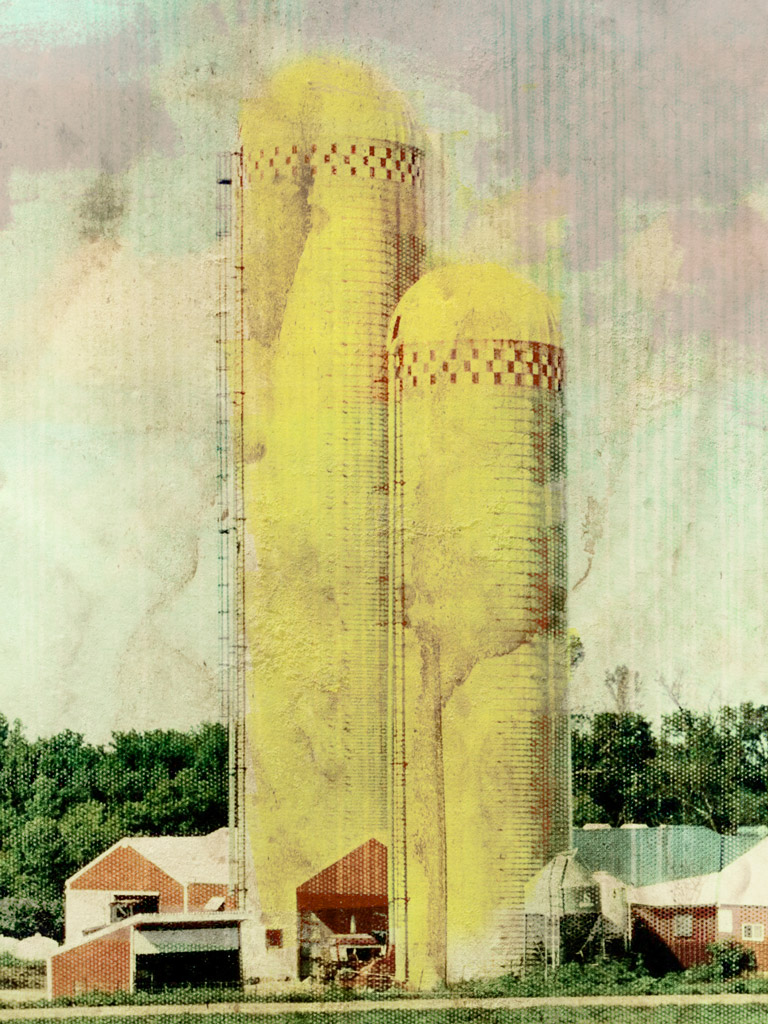
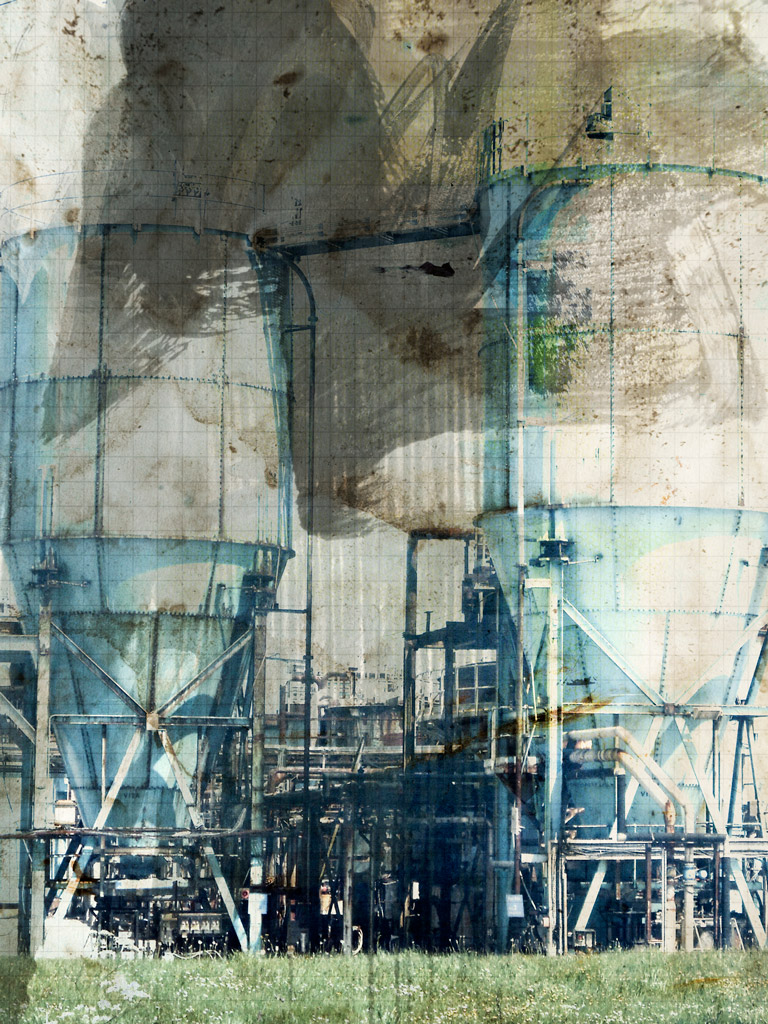
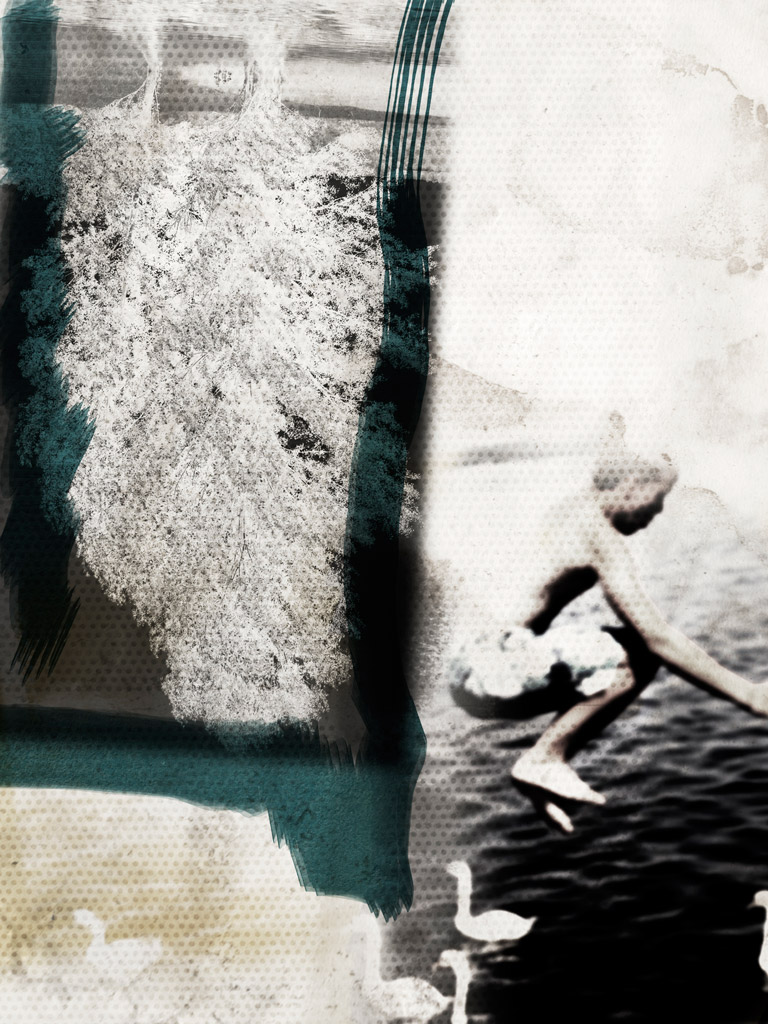
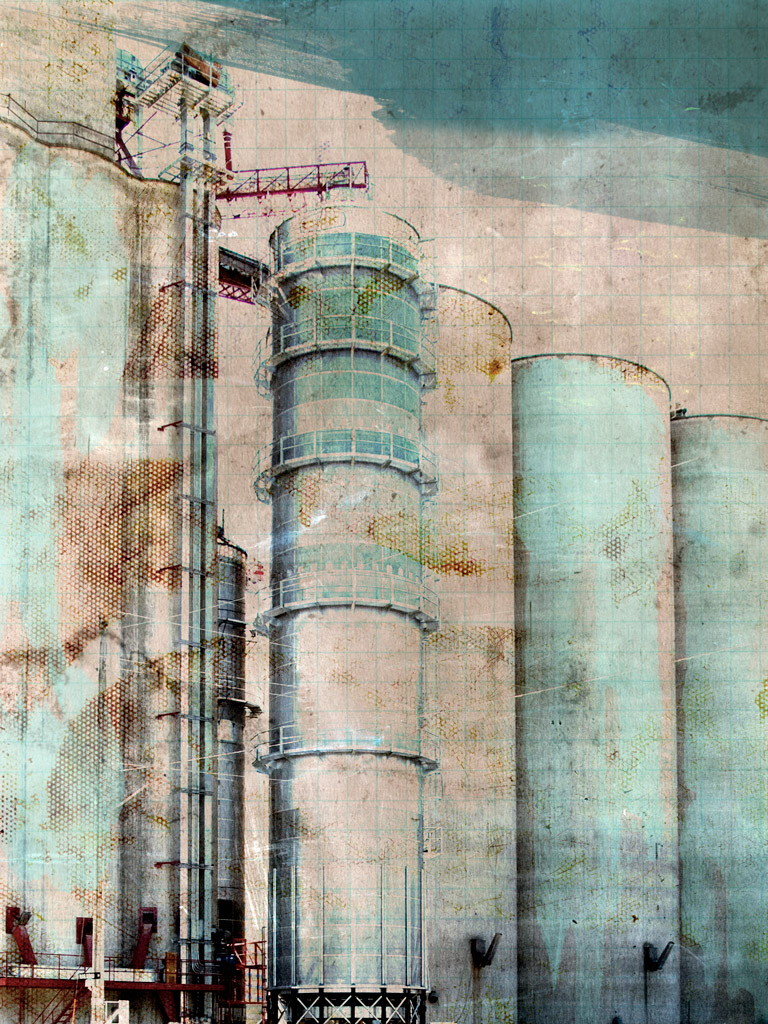
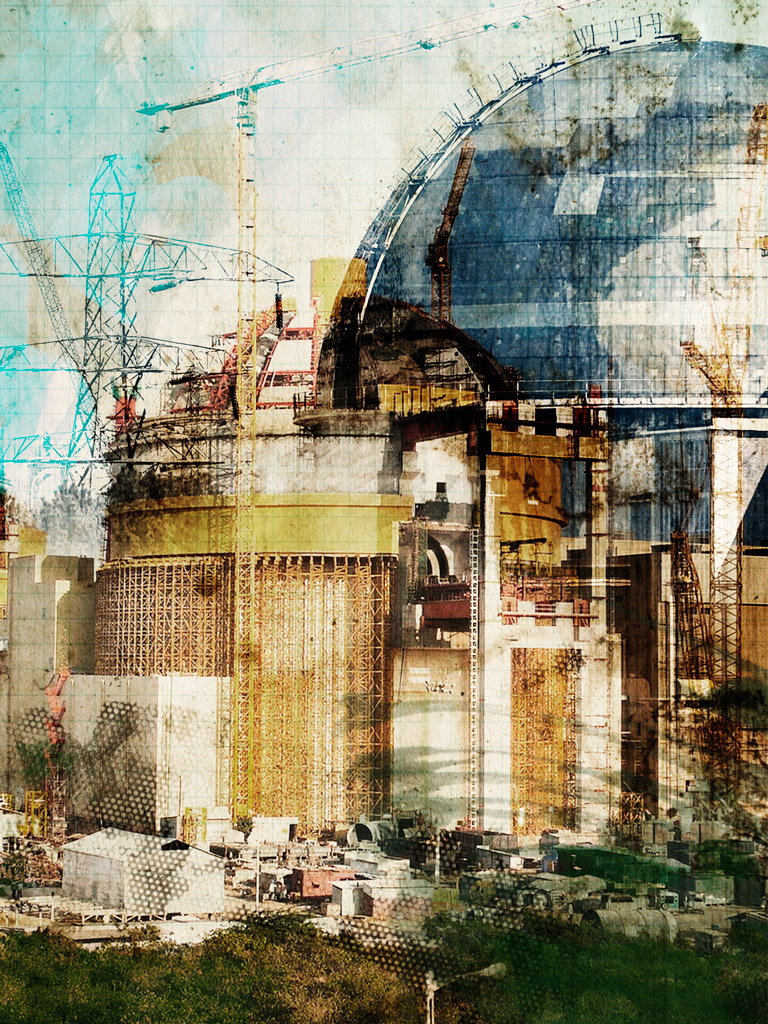
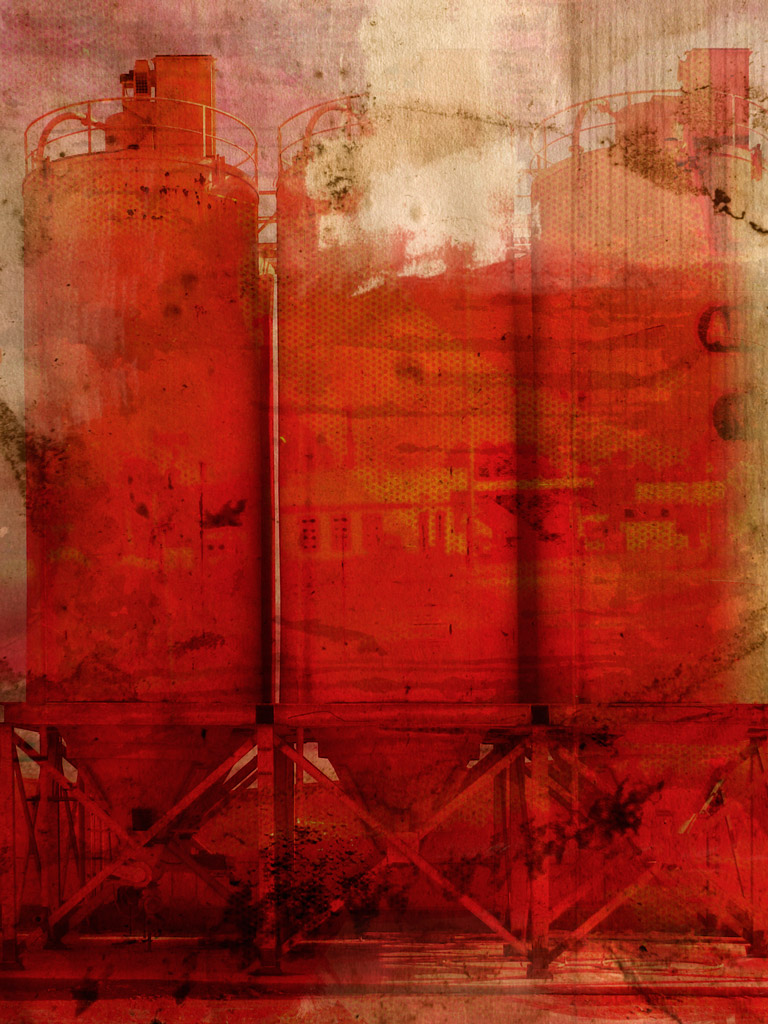
My latest project, called Binary Code, attempts to give visual expression to a world where databases and algorithms determine the ultimate reality, including nature. This is essentially the end of the order of nature as we know it.
And for some reason I can’t explain, the whole series consists of images of women and industrial silos. It could be because my files are full of these images which I have always found fascinating although I could also be trying to justify it as the end of a fundamental symbol where the woman and uterus are no longer relevant symbols for representing fertility, reproduction, beauty or nature.
I would like to comment on an aspect that is important for me. The criteria on the basis of which the artist selects an “appropriate” object may vary but the relationship between artist and subject is never univocal. The artist is only one of the parts. The object rebels and fights for its real nature, reacting to manipulation and boycotting it. The sign-object maintains some of its original nature, however much it fights against it. I think this negotiation between idea and reality is what makes appropriation so interesting.
ZZ. How does having sources with such diverse origins affect the narrative and timing of your images?
M. Nothing has different origins. Our only access to reality is mathematics, and quantum physics has eliminated time as an explanatory element for the behavior of elementary particles. Stripping photography of narrative and temporality is a lofty and necessary goal.
Narrative and temporality can be analyzed from many perspectives. For example, for Cyborg art, time is irrelevant because it can accumulate and eliminate modifications from its code indefinitely, meaning that there is no original or copy. Another less visionary example would be the way we experience the Internet today, jumping from one hyperlink to another, breaking up the original narrative structure of a text. Narrative as a mechanism and source of truth only continues to operate in Hollywood.
But it is a complex topic, because with narrative and temporality, what we are talking about is the issue of meaning. Refuting narrative entails resisting a set meaning that permits redemption (here I am referring to Adorno’s famous essay on Beckett). Eluding narrative prevents access to the comfortable world of history and fable.
In Binary Code there is no narrative. There are simply visual objects seeking to reclaim their meaning in their material specificity. Binary code, from its maximum abstraction, creates objects whose significance is drawn from its materiality rather than the code. The disenchantment of modern nature, its non-meaning, does not prevent nature from speaking through our bodies, desires, suffering and needs. By reclaiming the object, this project calls for a return to aesthetic materialism (albeit in an updated form).
If you think about it for a moment, it may also be time to reclaim the Aztec god Ometeotl as a contemporary symbol. Ometeotl, the immanent, invisible and immaterial god who had no temple, is the creator of all dualities (and therefore predates them): time and space, male and female, day and night, matter and spirit, zero and one. He is the creator of everything. Ometeotl is the binary code.
Max de Esteban (Spain). A fine-art photographer. Holds a Graduate degree from UPC, a Master from Stanford University and a PhD from URL. He is a Fulbright Alumni. His work is organized in two distinct bodies: Elegies of Manumission and Propositions. Awards: the 2010 National Award of Professional Photography (Spain)- Gold LUX.[2] and Grand Prix Jury's Special Award, Fotofestiwal 2010, Poland.
Beijing: Recycling and memory
Written by Lei Lei + Thomas Sauvin
Beijing Silvermine is a project by french photographer Thomas Sauvin to recover the photographic records of the people of Beijing after the Cultural Revolution, from 1985 when photography (mainly 35 mm) became popular in China, until about 2005, when it began to give way to digital photography.
For several years, Sauvin collected negatives (many of them never printed), recovered from a recycling plant on the outskirts of Beijing. After an exhaustive selection and digitization, he has created a fascinating archive with over half a million 35 mm negatives that has become an intriguing record of the public and private lives of the inhabitants of that city. Over the past 20 years, China has experienced unprecedented economic liberalization, which has completely redefined the way people in its cities thrive, travel, eat and enjoy themselves.
This collection of material from anonymous sources has served as the input for editing a collection of photo books and exhibitions, in which Sauvin provides an authorial contribution to the reinterpretation of a form of appropriation, which has even been the starting point for collaborative pieces such as the animation by chinese visual artist Lei Lei, who selected 3,000 of these images to create an audiovisual piece entitled precisely Recycled in 2013. Director Emiliad Guillermine produced a short documentary that bears witness to Sauvin’s experience and his meticulous collection, sorting, editing and digitization of the thousands of images he recovered.
Thus, Sauvin’s work brings us closer to part of the collective memory of current Chinese society, enabling us to understand how it has changed its cultural dynamics in recent years, while providing a new perspective on the experience of the visual appropriation and recycling at a time when the mass production and consumption of images leads us to understand the importance, but above all the enormous authorial possibilities of the editor and curator to generate new discourses.
Thomas Sauvin (Francia) A photography collector and editor who lives in Beijing. Since 2006 he exclusively works as a consultant for the UK-based Archive of Modern Conflict, an independent archive and publisher, for whom he collects Chinese works, from contemporary photography to period publications to anonymous photography. Sauvin has had exhibitions of his work, and published through Archive of Modern Conflict.
Lei Lei (China) An up-and-coming multimedia Chinese animation artist with his hands on graphic design, illustration, short cartoon, graffiti and music also. In 2009 he got a master's degree from Tsinghua University. In 2010, his film This is LOVE was shown at Ottawa International Animation Festival and awarded The 2010 Best Narrative Short. In 2013 his film Recycled was selected by Annecy festival and was the Winner Grand Prix shorts - non-narrative at Holland International Animation Film Festival. In 2014 he is the Jury of Zagreb / Holland International Animation Film Festival. and he was the winner of 2014 asian cultural council grant.
Positives
Written by Zbigniew Libera
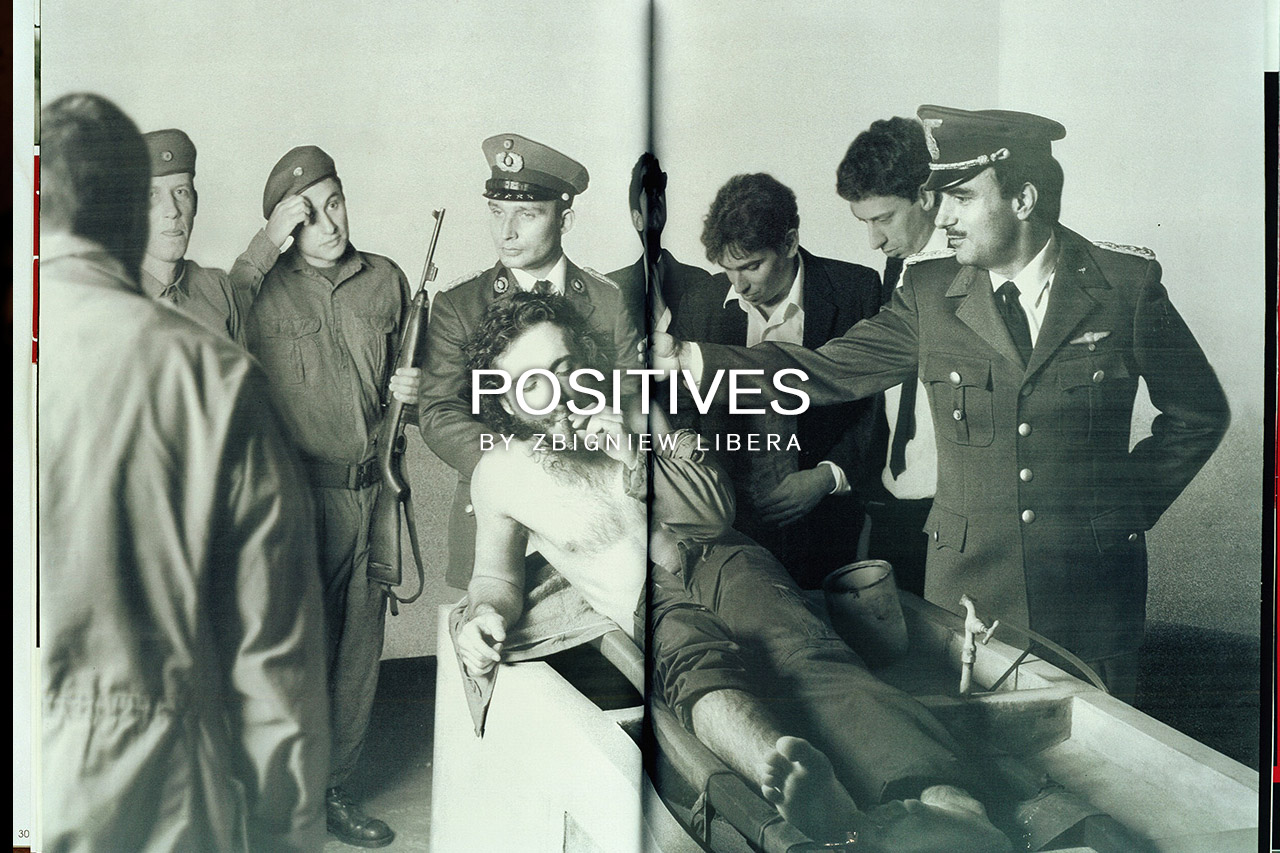
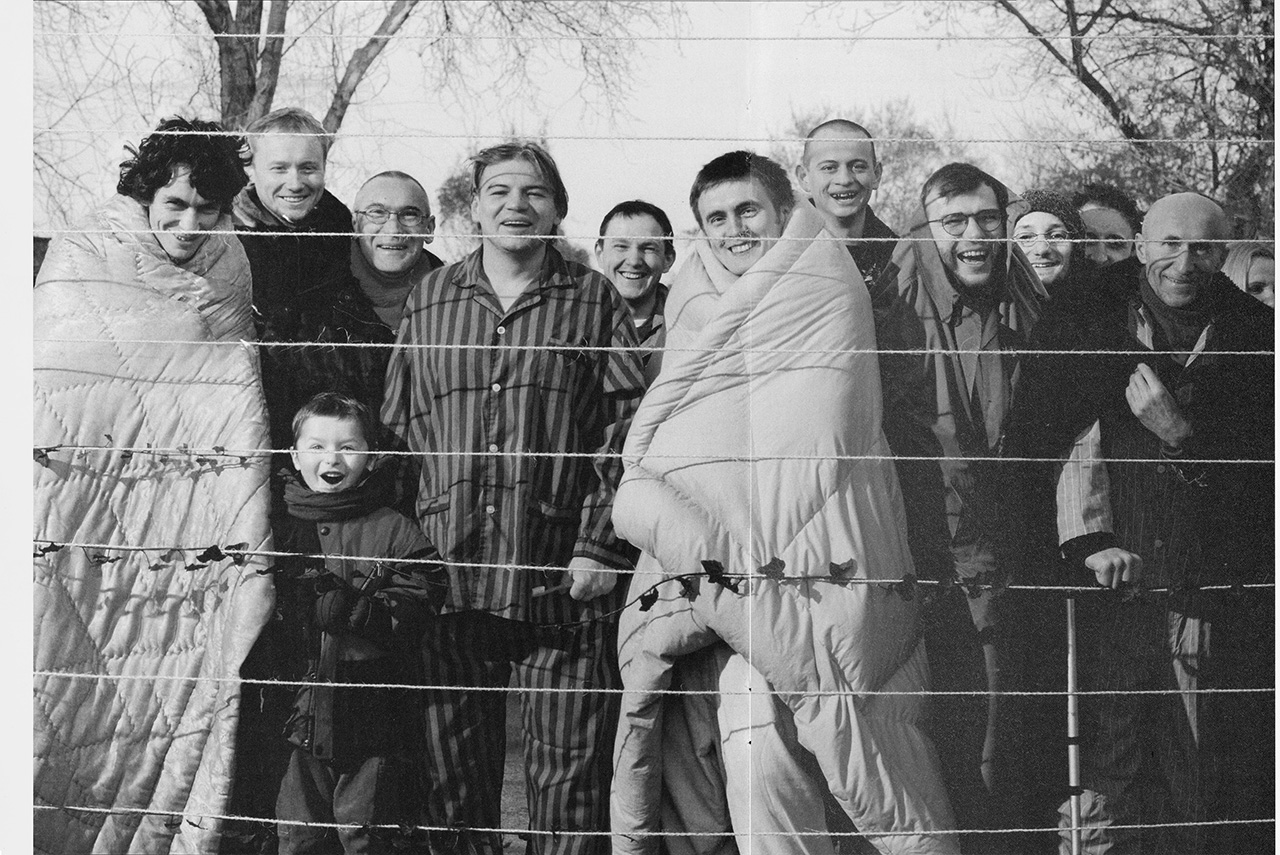
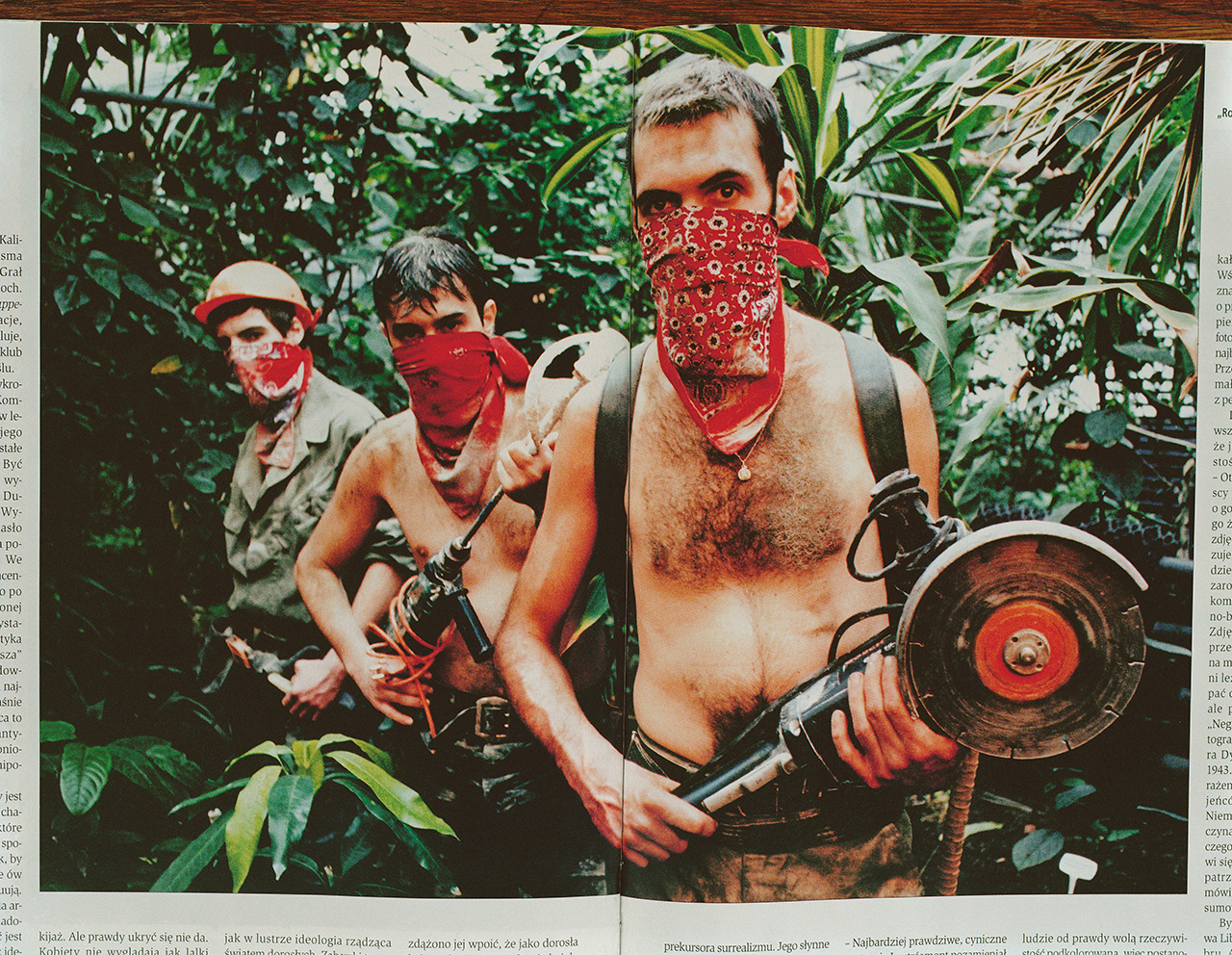
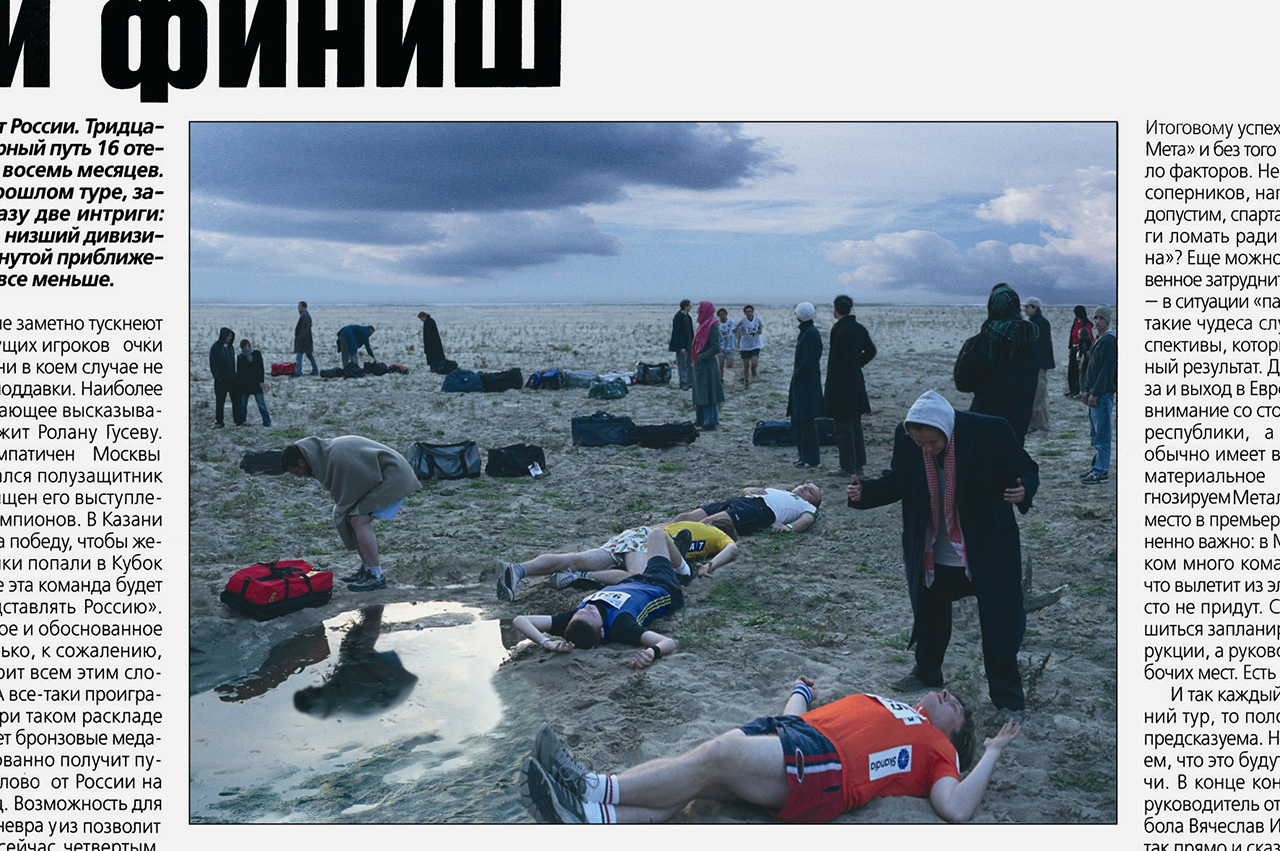
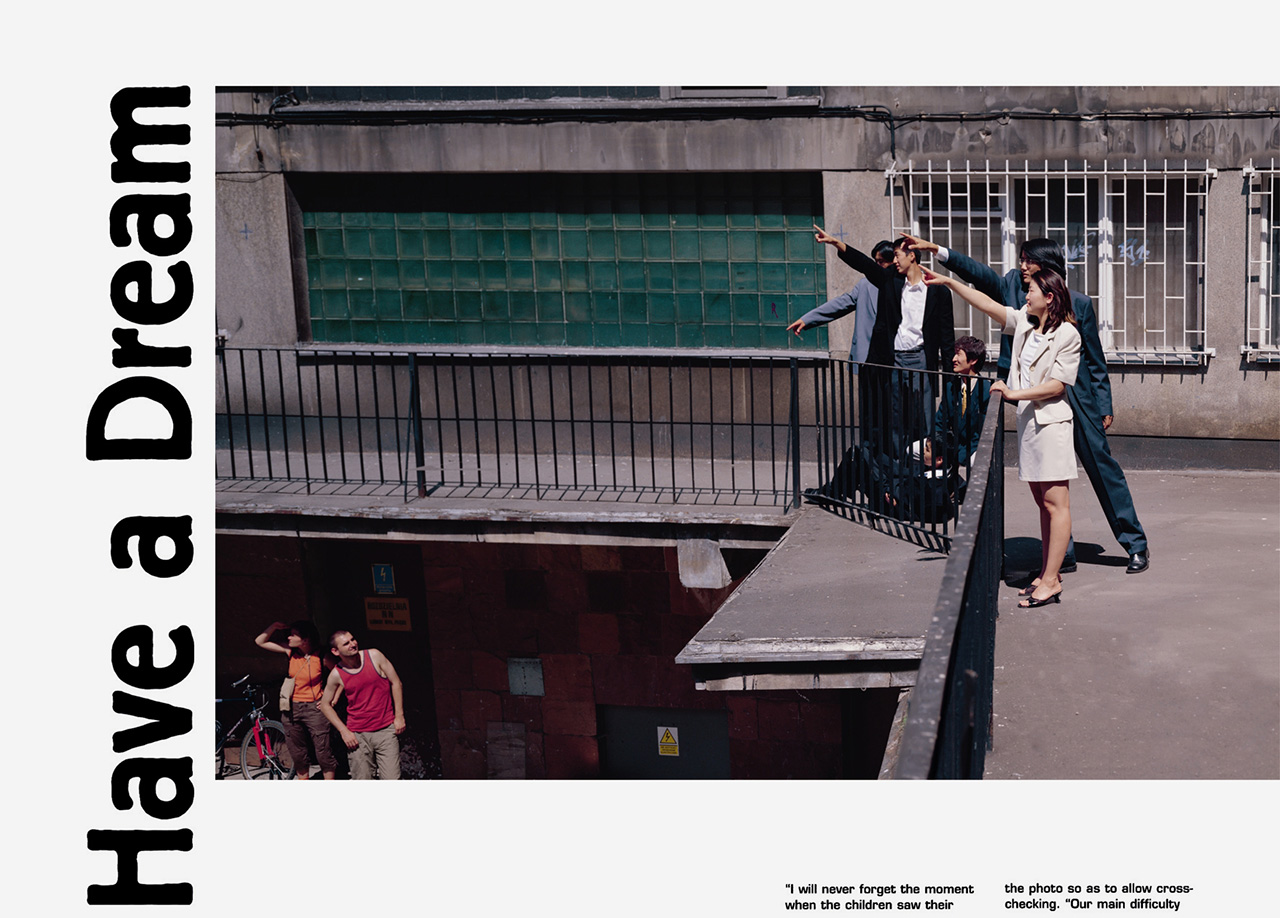
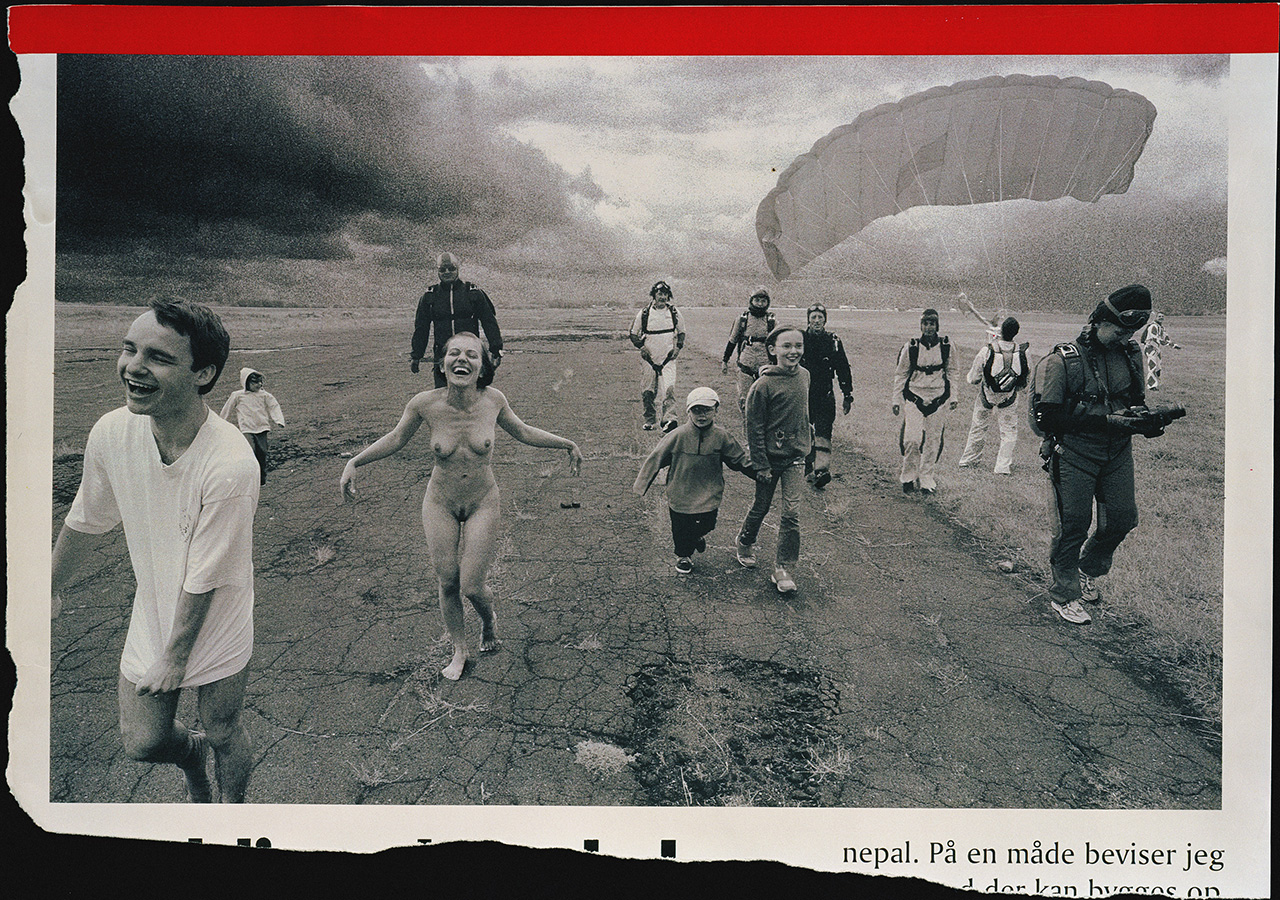
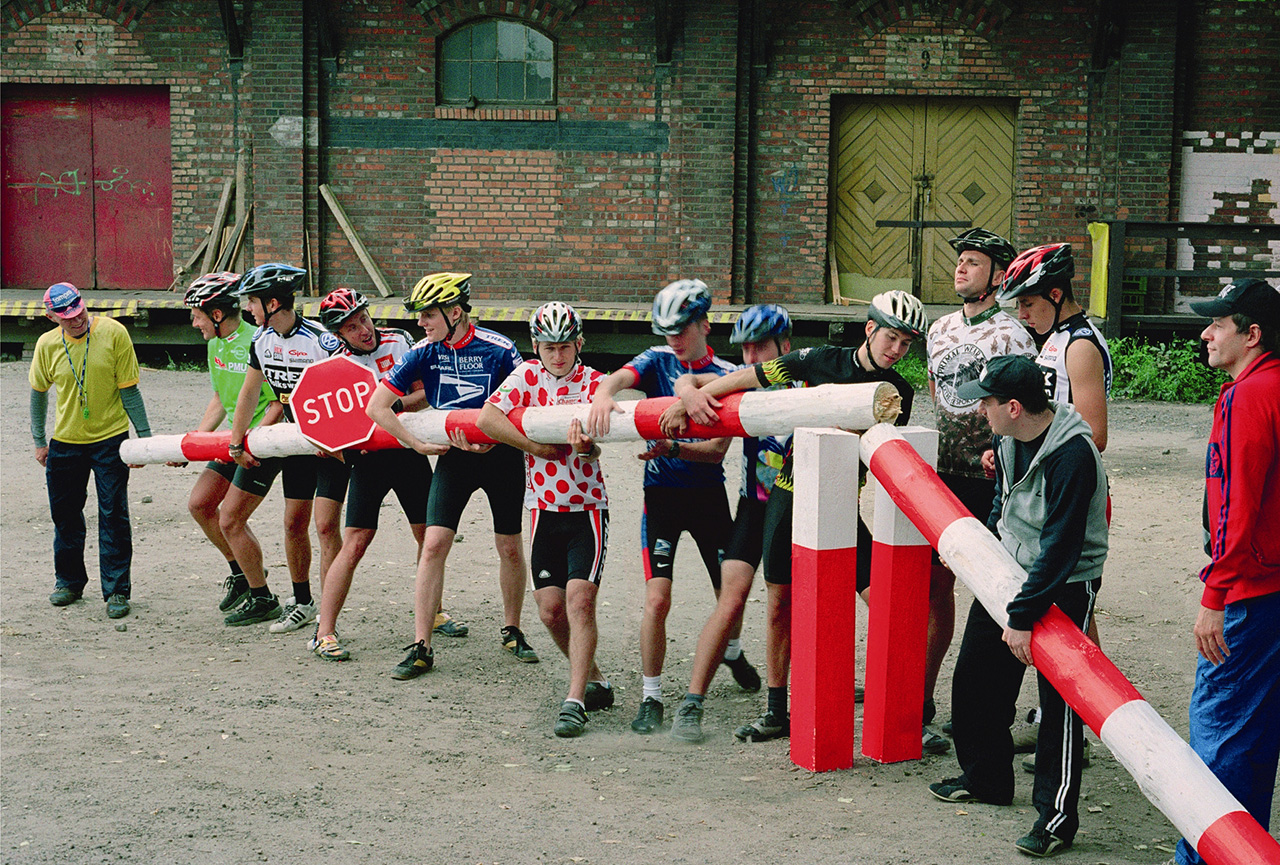
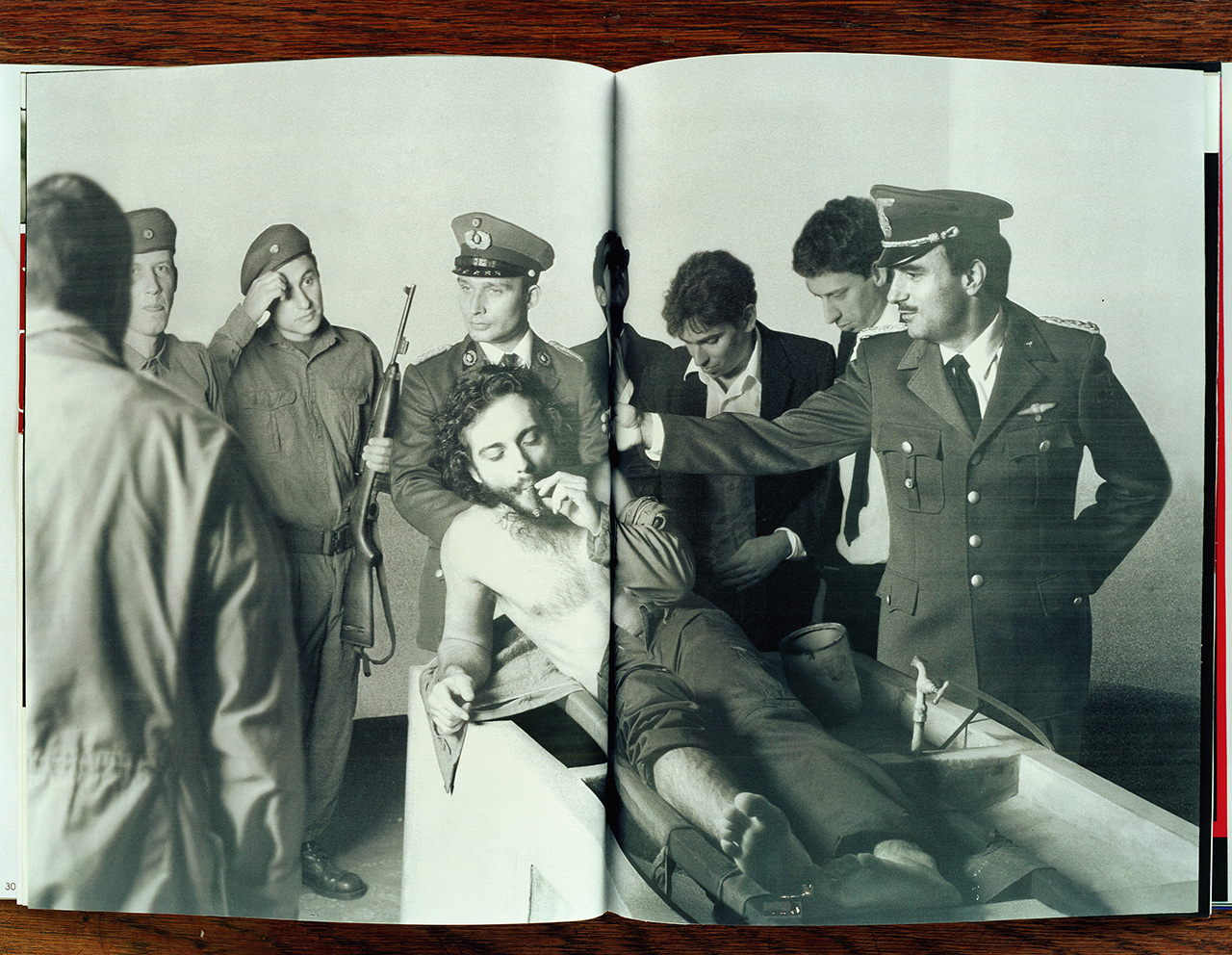
In Positives (2002-2003) famous historical press photos are re-staged, repeating the original in terms of composition, but changing the characters and the general meaning of the captured events, making a positive version of them. Libera comments: "The series is another attempt at playing with trauma. We are always dealing with memorized objects, not the objects themselves. I wanted to employ this mechanism of seeing and remembering and touch upon the phenomenon of memory's afterimages. This is how we actually perceive those photographs [the series "Positives"] - the harmless scenes trigger flashbacks of the brutal originals. I have picked the "negatives" from my own memory, from among the images I remembered from the childhood"
Zbigniew Libera (Poland, 1959) Is one of the most interesting and important Polish artists. His works - photographs, video films, installations, objects and drawings - piercingly and subversively play with the stereotypes of contemporary culture. His shocking video works from the 80s preceded body art by 10 years. In mid-90s, Libera began to create Correcting Devices - objects which are modifications of already existing products - objects of mass consumption. He also designs transformed toys - works that reveal the mechanisms of upbringing, education and cultural conditioning, the most famous of which is Lego Concentration Camp. From that moment on, he is one of the pillar of the so-called critical art. In recent years he has also been preoccupied with photography, especially the specificity of press photography and the ways in which the media shape our visual memory and manipulate the image of history.
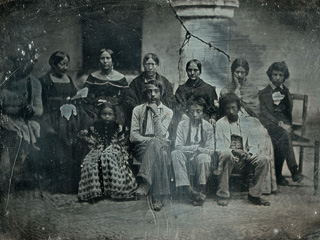
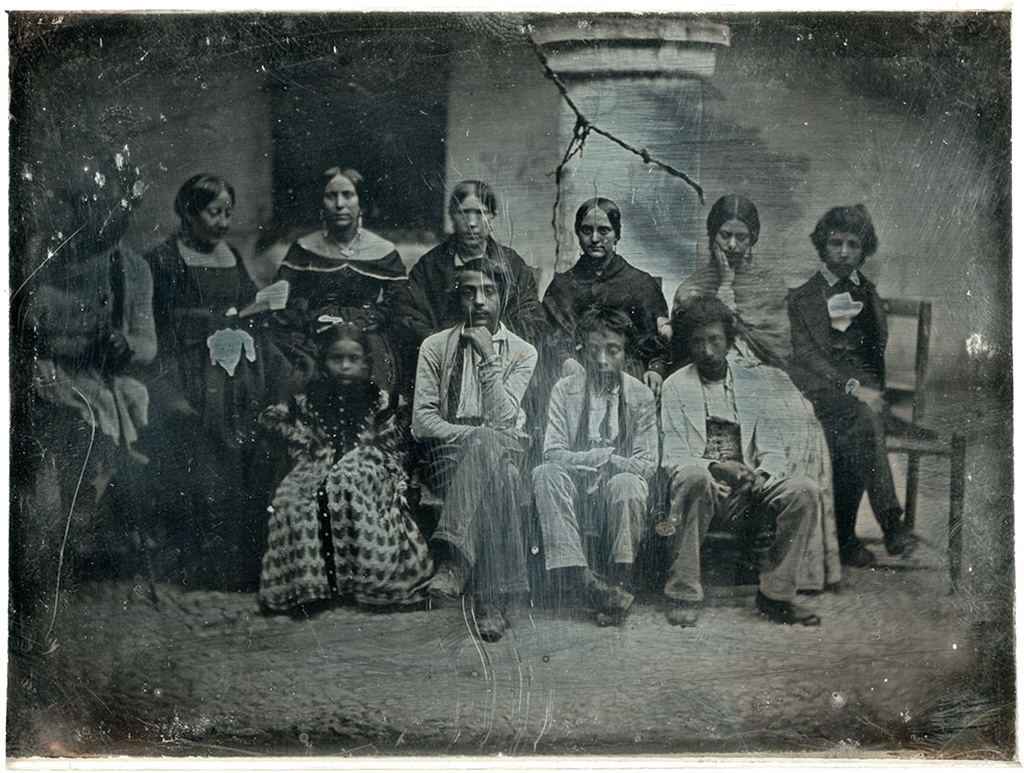
Mexican Family, unknown author, daguerrotype, ca. 1847
Seeing presupposes distance, decisiveness which separates, the power to stay out of contact and in contact avoid confusion. Seeing means that this separation has nevertheless become an encounter. —Maurice Blanchot.
Any representation of a community implies a perspective. Each time we observe a group we become interpreters and with each observation we make, we reveal to which communities we belong. Photography, with its ability to record, was soon considered to be a suitable tool to crystallize these observations and encourage the study of ethnicity and customs. However, being at least as susceptible to ideological bias as any other medium, it immediately revealed its colonialist burden and it is no coincidence that some of the first photographs that try to document a community were taken in company of an army or along trade routes. Images of the Mexico-American War (1846-1848) and the rebellion in India (1857), for example, show the confusion of these early records in the eyes of those portrayed and often leave us with the feeling that those photos were another kind of victory.
In the last decade of the nineteenth century, Ryuzo Torii and Edward S. Curtis introduce a way of using photography on behalf of ethnology, and Jacob Riis published How the Other Half Lives (1890). In those early photo essays on specific communities, there's a clear awareness of the otherness and a sympathetic point of view, but the perspective of the victors or the moral superiority of the observer is also legitimated. That partly naive, partly pretentious attitude of someone assuming to discover or save the others, has permeated much of photojournalism and documentary work since. Arguing a never achieved objectivity, they perpetuated asymmetrical readings and promoted a colonialism that replaced war's firepower with economy and culture. There were reasons for its existence, as an expression of a particular moment in history and a contribution to global integration, but it has been overtaken by a world whose visual center moves across the surface of the globe and where the last word has the duration of a tweet.
Soon documentalists themselves perceived the contradiction and near the beginning of the twentieth century started to explore alternatives to escape this logic: from the numerous attempts to capture the misleading truth in the style of Dziga Vertov's Kino-Pravda, through Cinema Verite, Direct Cinema, Candid Eye in film and their photographic counterparts, all the way to ethnofiction experiments, the long history of participatory documentary or the hopeful outlook of Shahidul Alam's Majority World, which proposes to let those closer to the phenomena and activities hold the camera. All are useful tools to approach the topic, but they don’t offer a final answer.
An image has the chance, as never before, to represent each ethnic, social and tribal group, whether they live in the cities or the most remote regions, and it also has the potential to do so from many different angles. The camera, already present in many devices, is in the hands of almost anyone who wants to register their community. Maybe it’s time to accept once and for all that to represent a community is not to search an objective representation or an intrinsic truth, nor trying to offer a problematic balance. However, in any case we should try to give a fair interpretation and an accurate testimony, where in many cases the sum of multiple perspectives can bring us closer to an elusive reality. This requires more critical reading and analysis from the public, compels the media to hold stronger values than empty veracity and offers the photographer a more honest path to meet the others. This change, like any change, is full of uncertainties, but ends in a space full of opportunities where the image can lead us.
Alejandro Malo (Mexico, 1972). Lives and works in Mexico and is the director of ZoneZero. Since 1993, he has taken part in various cultural projects and worked as an information technology consultant. He has collaborated in print and electronic publications, and given workshops and conferences on literature, creative writing, storytelling and technology. In 2009, Malo joined the team of the Fundación Pedro Meyer, where he directs the Archives and Technology departments.

 Victor Enrich (Spain, 1976). A catalan artist and a lover of nature, literature and architecture. Since childhood has been dedicated through various techniques to create images of fictional scenarios, always linking cities and architecture. Enrich currently dedicated exclusively to the development of his art, which is inseparably associated with his other great passion: traveling. Their work is highly valued abroad and he has succeeded in countries like Israel, where he has made several exhibitions.
 >
> Ellie Ivanova (Bulgaria). She holds an MFA in Photography from the University of North Texas. With a background in literature, her photographic interest is the experience of memory and the self-fashioning of identity, in both traditional and experimental formats. She uses processes and conceptual approaches through which images continue to evolve after they have been captured and printed, blurring the edges between the factual and the fictitious. Her photographs have been exhibited throughout the United States in commercial, non-profit and university galleries and are part of the permanent collections of Human Rights Art at South Texas College and Fort Wayne Museum of Art, among others.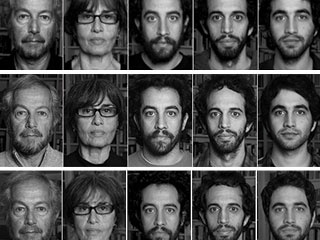







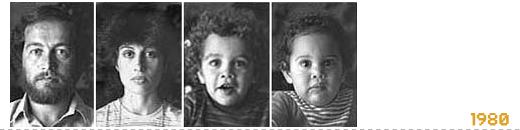



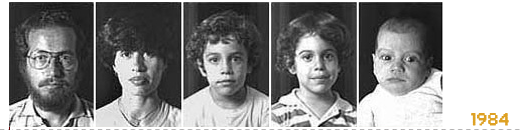
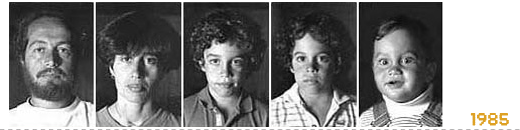
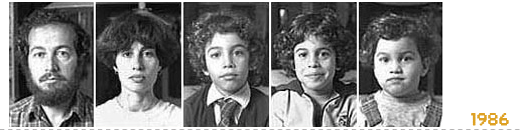
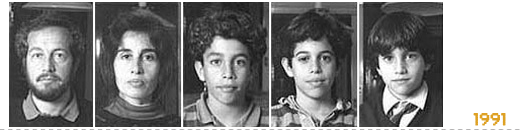
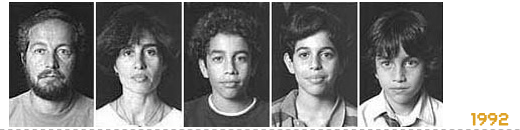
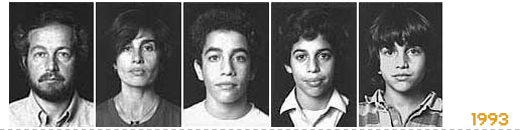
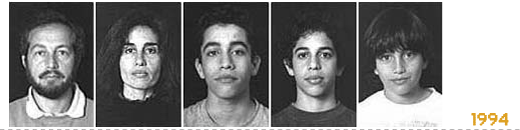
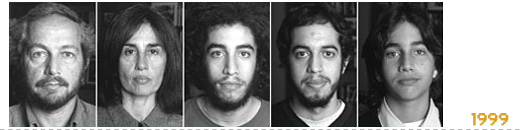
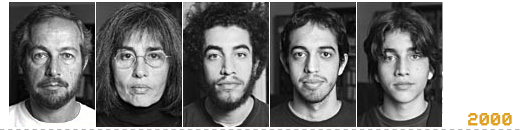
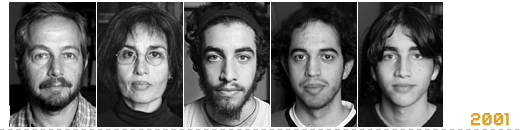
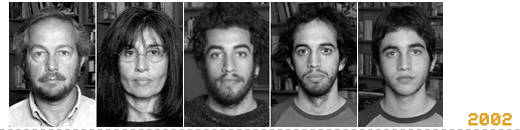
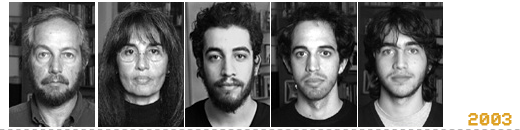
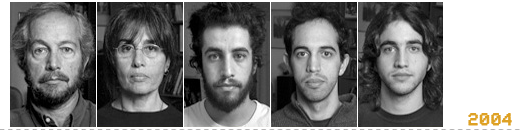
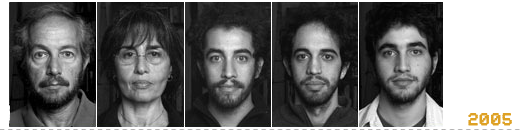
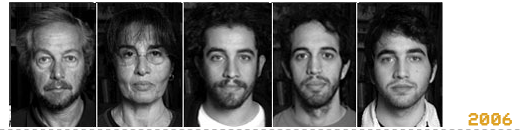
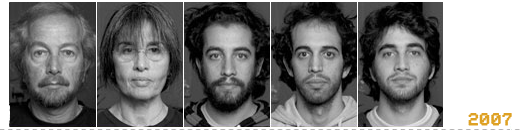
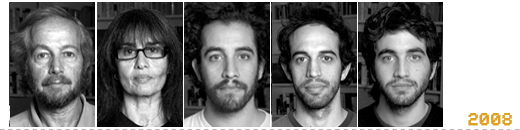
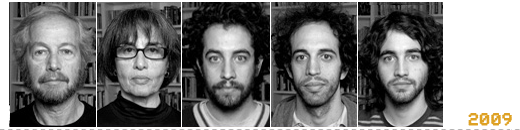
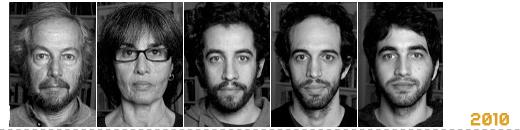
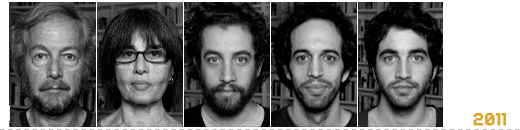
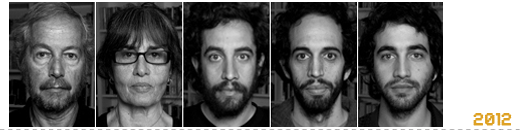
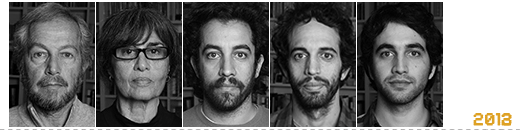
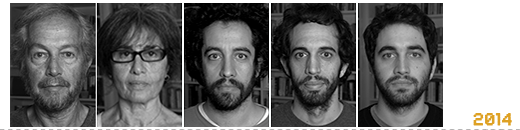



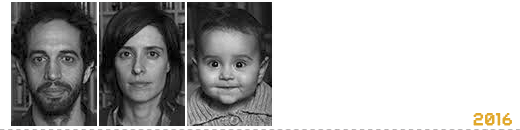
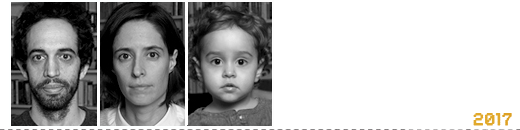
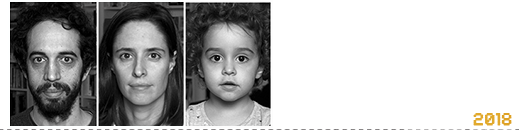

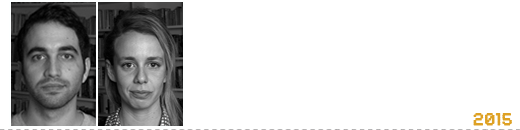



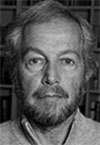 Diego Goldberg (Argentina, 1946). Lives and works in Argentina. He has taken part in group and solo exhibitions. Among other distinctions, Goldberg has won the Gold Medal 1998 from the Society of Publications Design; the Award of Merit 1998 from the Art Directors Club of New York for The Arrow of Time; second prize at the World Press Photo (Amsterdam, 1983) for Chile Ten Years After the Coup; and First Prize in the New York Press Award 1981 for Alphonse D’Amato, commissioned by the New York Times Magazine. He also won the FNPI (Gabriel García Márquez Foundation) Prize in 2006 for the
 Alejandro Malo (Mexico, 1972). Lives and works in Mexico and is the director of ZoneZero. Since 1993, he has taken part in various cultural projects and worked as an information technology consultant. He has collaborated in print and electronic publications, and given workshops and conferences on literature, creative writing, storytelling and technology. In 2009, Malo joined the team of the Fundación Pedro Meyer, where he directs the Archives and Technology departments.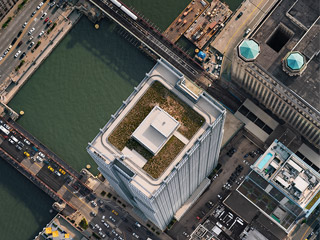

 Yang Yongliang (Shanghai, 1980). He graduated from China Academy of Art in 2003, majored in





 Max de Esteban (Spain). A fine-art photographer. Holds a Graduate degree from UPC, a Master from Stanford University and a PhD from URL. He is a Fulbright Alumni. His work is organized in two distinct bodies: Elegies of Manumission and Propositions. Awards: the 2010 National Award of Professional Photography (Spain)- Gold LUX.[2] and Grand Prix Jury's Special Award, Fotofestiwal 2010, Poland.
 Thomas Sauvin (Francia) A photography collector and editor who lives in Beijing. Since 2006 he exclusively works as a consultant for the UK-based Archive of Modern Conflict, an independent archive and publisher, for whom he collects Chinese works, from contemporary photography to period publications to anonymous photography. Sauvin has had exhibitions of his work, and published through Archive of Modern Conflict.
 Lei Lei (China) An up-and-coming multimedia Chinese animation artist with his hands on graphic design, illustration, short cartoon, graffiti and music also. In 2009 he got a master's degree from Tsinghua University. In 2010, his film This is LOVE was shown at Ottawa International Animation Festival and awarded The 2010 Best Narrative Short. In 2013 his film Recycled was selected by Annecy festival and was the Winner Grand Prix shorts - non-narrative at Holland International Animation Film Festival. In 2014 he is the Jury of Zagreb / Holland International Animation Film Festival. and he was the winner of 2014 asian cultural council grant.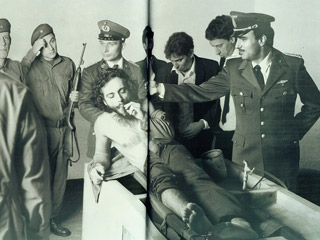

 Zbigniew Libera (Poland, 1959) Is one of the most interesting and important Polish artists. His works - photographs, video films, installations, objects and drawings - piercingly and subversively play with the stereotypes of contemporary culture. His shocking video works from the 80s preceded body art by 10 years. In mid-90s, Libera began to create Correcting Devices - objects which are modifications of already existing products - objects of mass consumption. He also designs transformed toys - works that reveal the mechanisms of upbringing, education and cultural conditioning, the most famous of which is Lego Concentration Camp. From that moment on, he is one of the pillar of the so-called critical art. In recent years he has also been preoccupied with photography, especially the specificity of press photography and the ways in which the media shape our visual memory and manipulate the image of history.