PDF

© Pedro Meyer

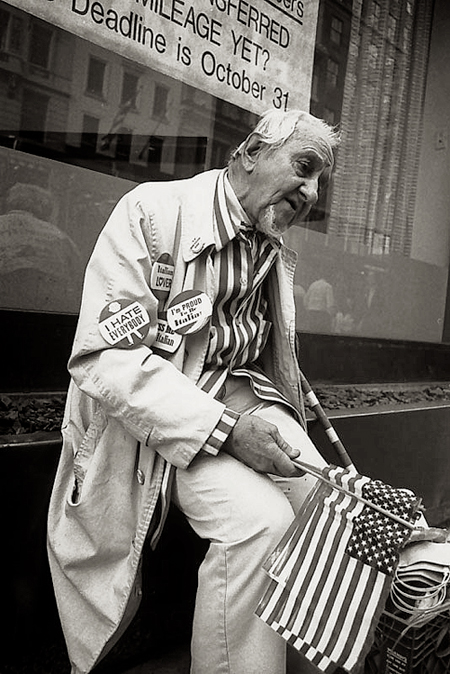
New York, the United States. 1987 © Pedro Meyer


Singing to life
by Pedro Meyer

Versión en espanol


The crisis is global. And it’s not only economic.

We talk about the many ills that afflict all countries, where the economic dimension is a very important one, but it’s by no means the only one. It would seem that the crisis is going to last for quite a while.

As a friend, Rubén Aguilar, put it, “Not all of us can act on the causes, but all of us are in a position to act on the effects.”

In the world of photography, all of us have many opportunities to do our part in the context of this crisis.

In Mexico, one of the most dynamic and active cities in contemporary photography is none other than Tijuana, one of the cities most severely struck by the mafias of organized crime in Mexico.

I recall that not long ago at a photography symposium, the work that was presented that impressed me the most came from Colombia, a nation equally ravaged by wars against drug dealers.

Wars have been a rich source of creativity throughout history. We have seen magnificent photographic essays that have reached us from Kosovo and Sarajevo. And what about all the artists and intellectuals who devoted themselves to the task of expressing their visions and feelings in the most extraordinary way during World War II? The Holocaust also left its trail of creative work, despite all the destruction surrounding it.

The social struggles that have been unleashed in Asia have also bore witness to how photography has been able to contribute to the raising of awareness in the societies portrayed. The same may be said about what has taken place in Africa.

The most interesting Cuban works dated to an era when they didn’t even have paper for printing. I can still remember when we invited Cuban photographers to participate in the First Latin America Photography Colloquium; we had to send them two boxes of photo paper. The material was distributed at night (so the paper wouldn’t get exposed) with incredible rationing: one sheet for each photo that was going to be sent to the Colloquium.

For some reason, which I personally can only observe, even though I can’t explain it, there is a direct correlation between human beings trapped in enormous hardship and uncommon creative expression.

Not everything has to be documentary or journalistic photography. Remember how a visual work of art, like Picasso’s Guernica, also arose at a time of crisis. We should also not forget that Goya’s Disasters of War have been so emblematic that they have also inspired photographers.

This is an extremely important moment in the history of humanity, in which we have to make a collective effort to take advantage of the situation. Each one of us, from our respective trenches, with our own moral and aesthetic values, must find a way to express ourselves against or in favor of something, but making our presence felt in our comments and not letting life and its problems pass us by.

Pedro Meyer
Mexico City, Coyoacán
February 2009.


Write your comments:
Name:
E-mail:
Comment:


March 25, 2009 -- 10:17
Belén Carranza
 
Inspirador, das aliento con tus palabras, porque entonces nos damos cuenta que no estamos solos en esta lucha contra la desesperación y la tristeza. Como bien dices no es sólo una crisis económica, es sobre todo una crisis humana.

Una felicitación.


March 25, 2009 -- 08:35
ayudante de santa
 
aburrido


March 23, 2009 -- 11:26
Ernesto Leal
 
Querido Pedro.
Tus palabras como siempre tan acertadas y tan poéticas. Que más quiere un ser humano, que poder expresarse, sabemos que en épocas duras es cuando más dificil se hace este expresarse, a los poderosos les molesta que la gente se exprese y más aún cuando esa expresión es artística. Molesta porque interpela, pregunta, pone en evidencia aquello que el poder quiere ocultar y ahí siempre están los artistas, sea el arte que sea desde donde se pueda siempre hay que molestar, hay que decir algo, hay que demostrar, remostrar, decir, repreguntar, contestar, hay que hacer una nueva revolución expresiva y artística que nos dé la posibilidad de empèzar a cambiar en algo este mundo que así como está no durará mucho.
Un abrazo.
Soy reportero gráfico de la Argentina y desde hace 3 años recorro Latinoamérica, ahora estoy en México...


March 22, 2009 -- 08:50
raul leis
 
Es mas que una crisis economica, una criis de civilización, y de ahi las apuestas por cambios de fondo y entre ellos la revolucion ética que nos urge. La palabra, la imagen, las voces y la esperanza deben danzar juntos.
Felicitaciones por Zonacero que me retroalimenta y anima!


March 19, 2009 -- 11:52
Irene Sanchis
 
Gracias por abrirme a este espacio.
Yo también creo que vivimos una crisis muy profunda, no se si agónica, del capitalismo.
Al leer el último párrafo, me ha venido, como un flashazo, este recuerdo:
"¿Permanecen en silencio las musas en la guerra? No, al contrario, es sobre todo en la guerra cuando se manifiestan. La guerra es un invernadero para el arte y la ciencia. Naturalmente se trata de una "cultura" de especiales características, cuyo deber es el de destruir a los oponentes y el de cuidar y preparar a los hombres de la misma horda bajo las condiciones más inhumanas.
La guerra y la paz, como el día y la noche, guardan poca relación. Ya en el crepúsculo de la paz se pueden percibir de manera clara las musas de la guerra. En la Alemania hitleriana marchaban las musas armadas hasta los dientes ya antes de la guerra: sección lírica, sección dramática, batallón arte y batallón ciencia. La paz no era realmente una paz."
John Heartfield , 1941.
Lo voy a publicar en facebook junto con una imagen.


March 11, 2009 -- 13:31
Isabel
 
Este sitio siempre trae cosas interesantes


March 1, 2009 -- 19:46
Darinel Becerra
 
Sin duda alguna la parte violenta del ser humano inspira por mucho una buena parte creativa del artista.

Saludos y felicidades por darnos este maravilloso medio de comunicación a través de zonezero.


February 28, 2009 -- 10:21
qist
 
how do we redefine a photography?